Parents looking for a mild flavour
If your child dislikes little curds and salty flavours, look for plain fromage blanc described as smooth or creamy. Check the ingredients rather than assuming that all fresh cheeses taste the same.


For a child who prefers mild flavours and smooth textures, plain fromage blanc may be a better choice than the Danone cottage cheese described as salty and grainy. However, check the ingredients of the specific product you choose. Cottage cheese is still an option if your child likes its curds and slightly salty taste. Manger Bouger advises against weight-loss diets for children and says that any concerns about excess weight should be followed up with a health professional.
If your child dislikes little curds and salty flavours, look for plain fromage blanc described as smooth or creamy. Check the ingredients rather than assuming that all fresh cheeses taste the same.
You want to offer your child a variety of dairy products without putting them on a diet. The ingredients list and nutritional values per 100 g make it easier to compare different recipes and pack sizes.
Salty, grainy cottage cheese may suit a child who already likes this texture, especially on toast or in a savoury dish. It is less suited to anyone looking for a smooth, mildly flavoured dairy product.
When choosing a fresh dairy product for a child, taste and texture matter just as much as the nutritional information and how you plan to use it.
| Criteria | What to check | Who is it for? |
|---|---|---|
| Taste and texture | Check the ingredients for salt and compare descriptions of the texture: grainy, smooth or creamy. | If my child turns down curds or a salty taste, I look for a milder recipe they will enjoy. This is the top priority for around 42% of consumers in this group. |
| Choosing without dieting | Compare energy, fat, sugars, protein and salt per 100 g. Don’t focus only on the “0%” claim. | I want to choose a dairy product without turning its fat content into a diet rule for my child. This is the top priority for around 33% of consumers in this group. |
| Pack size and intended use | Choose a pack size that suits how you plan to use it, and read the ingredients, particularly if a milk allergy is a concern. | Whether it’s for savoury toast or plain fromage blanc in small pots, I look for a format that suits our needs. Convenience or protein content comes first for around 25% of consumers in this group. |
Carrefour’s listing for Danone cottage cheese states that it contains 0.8% salt, and describes its texture as grainy. These features may not appeal to a child who prefers a smooth, mildly flavoured product.
Before you buy, read the ingredients and check the texture description. If mildness is your top priority, compare these with the details for plain fromage blanc.
The “0%” claim refers to fat, not the whole recipe or whether the product meets a child’s needs. Manger Bouger advises against weight-loss diets for children.
Compare the nutritional values per 100 g. If you are concerned about your child’s weight, speak to a health professional rather than changing their diet yourself with the aim of helping them lose weight.
Choosing plain fromage blanc doesn’t tell the whole story of what ends up in the bowl: honey, jam or sweetened cereal can all be added to the original product.
If you want a milder taste, consider adding fruit and take any other ingredients you add into account.
The ingredients listed for the Danone, Président, Jockey and Vrai products mentioned here include milk. Switching to a different type of fresh cheese will not remove this allergen.
If your child has a confirmed milk allergy, check the ingredients of the exact product and follow the advice of the health professional supporting your child.
The cottage cheese product reviewed is different from smooth, plain fromage blanc.
The product mentioned is a 180 g pot of cottage cheese.
The plain 3% fat product is fromage blanc, sold in eight 100 g pots, not cottage cheese.
The product mentioned is a 500 g pot of organic plain fromage blanc.
The product mentioned is a 1 kg pack of plain fromage blanc labelled “0% fat”.
This is a dairy dessert for babies aged 6 months and over, not cottage cheese or fromage blanc intended to help an older child manage their weight.
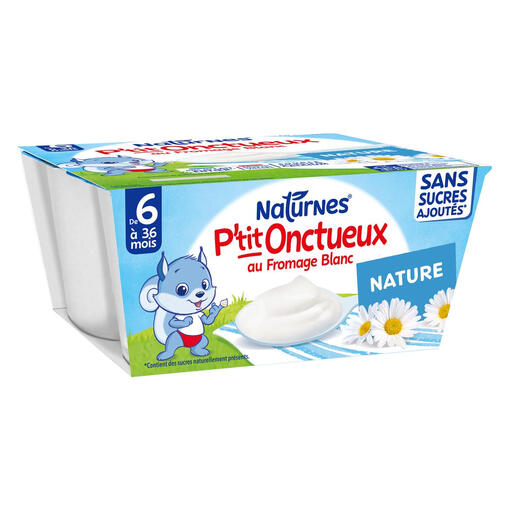 Image unavailable
For a baby aged 6 months and over, this dairy dessert may be worth considering if you’re looking for a mild texture. Check the ingredients on the packaging before choosing it.
Pack size: four 90 g pots. As it is intended for babies, that does not mean it is suitable for helping an older child manage their weight.
No. The Danone cottage cheese mentioned here is described as lightly salted and grainy, and Carrefour’s listing states that it contains 0.8% salt. If your child prefers a smooth texture and a mild taste, compare the ingredients and texture of plain fromage blanc.
The “0%” claim alone can’t answer this question: it refers to fat, not the whole recipe. Manger Bouger advises against weight-loss diets for children and recommends professional support if a child is overweight.
Compare the nutritional information per 100 g, including energy, fat, sugars, protein and salt. Using the same basis makes it easier to compare products sold in different pack sizes, as explained by the Directorate-General for Competition Policy, Consumer Affairs and Fraud Control.
The Danone, Président, Jockey and Vrai products mentioned here list milk in their ingredients, so they are not suitable alternatives for someone with a confirmed milk allergy. Read the label on the product you actually buy and follow the advice of your child’s health professional.