Choose cottage cheese if your child is happy with its curds and savoury flavour. If you’re mainly looking for a smooth texture, compare fromage frais instead, as it’s a different category. The word ‘mild’ doesn’t guarantee a salt-free recipe or a product designed for children. Check that it’s pasteurised, whether it contains milk and the size of the pot, particularly if you’re also shopping for a very young child or someone over 65.
Who is this choice for?
Parents offering cottage cheese to a child
You want to tell the difference between cottage cheese, with its curds and savoury taste, and the smoother texture of fromage frais. Carrefour’s listing for Danone cottage cheese mentions salt, while Danone describes Jockey as a creamy fromage frais.
Households looking to avoid wasting fresh food
To find out whether your child likes the curds, you’re choosing between the 180 g Président pot and the 400 g Danone pot listed by Carrefour. The portions you plan to serve and the use-by date matter just as much as the pack size.
Households with a young child or someone over 65
It’s particularly important to check whether the product is pasteurised. Assurance Maladie recommends choosing pasteurised cheeses for young children, while Anses advises people over 65 to avoid raw-milk cheeses.
What should you look for?
Start by checking the label and considering who will be eating the product. Then choose between cottage cheese and fromage frais based on the texture you’re looking for and the portions you plan to serve.
| Criteria |
What to check |
Who it matters to |
| Pasteurisation and milk |
Check whether the product is labelled as pasteurised and whether milk is listed as an allergen, taking your child’s age into account. |
If I’m choosing something for a young child, I want to know what’s in it before offering it to them; around 42% of consumers would put this check first. |
| Texture and recipe |
Tell the difference between cottage cheese curds and creamy fromage frais, and check the ingredients for salt. |
If my child might not like the curds, I’d rather compare a different texture without assuming that ‘mild’ means salt-free; texture would be the priority for around 33% of consumers. |
| Pack size and storage |
Compare the net weight with the portions you plan to serve, then check the use-by date and storage instructions after opening. |
For a first try, I want an amount the household can finish in time; around 25% of consumers would prioritise pack size and storage first. |
Mistakes to avoid
-
Assuming ‘mild’ means ‘salt-free’ or ‘without curds’
Carrefour’s listing for Danone cottage cheese shows 0.7% salt in the ingredients; the Président listing also mentions salt. Danone describes Jockey as fromage frais, not cottage cheese with the same texture.
Check the product description and ingredients before choosing. If you’re looking for a smooth texture, compare a specific fromage frais product rather than relying on the word ‘mild’ alone.
-
Buying a large pot before trying the texture
Carrefour lists Danone cottage cheese in a 400 g pot and Président in a 180 g pot. A size that works for several portions may not be the best choice for a first try.
Plan how many portions your household will eat, and follow the use-by date and the storage instructions on the pot after opening.
If you open a pot that’s too large for the meals you’ve planned, some of it may end up being thrown away.
-
Forgetting about milk allergens and pasteurisation
Carrefour’s listings for Danone and Président cottage cheese both mention milk. Assurance Maladie recommends pasteurised cheeses for young children; Anses also advises caution with raw-milk cheeses for young children and people over 65.
Check the allergens and pasteurisation information on the packaging, especially when the product is for someone in one of these groups.
Brands to know when comparing these categories
Danone
Carrefour lists a savoury Danone cottage cheese in a 400 g pot, intended for uses such as toast, cooking and salads.
- Carrefour’s listing shows pasteurised skimmed milk and cream, as well as 0.7% salt in the ingredients.
- This pack size and recipe don’t indicate that the product has been specially formulated for children.
Président
Président cottage cheese, listed by Carrefour and Auchan, comes in a 180 g pot – a size worth considering when trying the texture.
- Carrefour’s listing mentions skimmed milk, cream, salt and cultures; Auchan specifies pasteurised cow’s milk.
- For this product, Auchan advises storing it between +2 °C and +6 °C and eating it within 3 days of opening.
Jockey
Danone describes Jockey as a creamy, smooth fromage frais. It’s a different category to consider if your child doesn’t like cottage cheese curds.
- Danone’s description makes it easy to distinguish this fromage frais from cottage cheese with curds.
- Check the recipe, allergens and nutritional information for the product you choose; this category isn’t the same as cottage cheese.
Related Joybuy product
This option is for anyone looking for a smooth texture for a child: it’s a fromage frais dessert to consider as a textural alternative, not as cottage cheese.
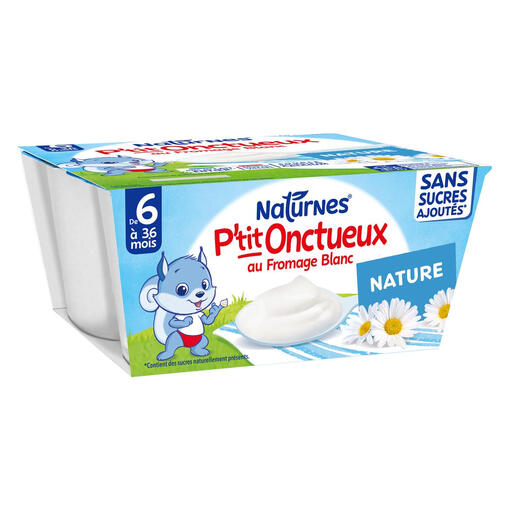 Image unavailable
Nestlé P'Tit Smooth plain fromage frais, from 6 months, 4 × 90 g
If you’re comparing a smooth texture with cottage cheese curds, this fromage frais dessert is another category to consider.
The pack contains 4 pots of 90 g. Before offering it to a young child, check the recipe, allergens and pasteurisation of the dairy ingredients on the packaging. Also check the salt content if it’s important to your choice.
View on Joybuy
Frequently asked questions
Is cottage cheese suitable for a child under 3?
It isn’t a substitute for milk suited to your child’s age. Assurance Maladie recommends choosing pasteurised cheeses for young children. Check the pot for pasteurisation information, milk allergens and the exact recipe.
Is Jockey a cottage cheese?
No. Danone describes Jockey as a creamy, smooth fromage frais. You can compare this texture if your child doesn’t like curds, but the two categories aren’t the same product.
Can you keep cottage cheese after its use-by date?
Follow the use-by date shown on the cottage cheese pot. The allowance mentioned by Anses for products labelled ‘yoghurt’ doesn’t apply to other fresh dairy products. After opening, follow the product’s own storage instructions too; Auchan says to eat its 180 g Président cottage cheese within 3 days.
What should you check if you’re also shopping for someone over 65?
Check that the cheese is pasteurised. Anses advises people over 65 to avoid raw-milk cheeses, subject to the exceptions it specifies for certain cooked, pressed cheeses. The information on the packaging will help you identify the product you’re buying.


