
Livraison le jour même ou le lendemain

Qualité garantie

Débloquez vos offres de bienvenue: Livraison GRATUITE | Jusqu'à -80 % | 30 jours d'essai gratuits à JoyPlus
Téléchargez l'application
Drilling into a wall, assembling furniture, sanding a 3D-printed part or repainting a fence does not necessarily require a fully equipped workshop. Cordless power tools make household projects simpler, but product listings can sometimes make comparisons difficult.
Several pitfalls come up time and again:
To choose the right DIY tools, it is therefore best to start with the intended use, then compare the specifications that can actually be measured.
Wattage is mainly relevant to mains-powered equipment, such as certain multi-tools or paint sprayers. For a cordless model, pay closer attention to:
A cordless drill driver with 25 torque settings allows more precise adjustment than a model with a single control. Conversely, a mini rotary tool with multiple speed settings is better suited to finishing work such as deburring, sanding, polishing or engraving.
For automotive maintenance, an impact wrench should be selected based not only on its stated torque, but also on the type of bolts involved. A higher figure does not mean the tool will be suitable for every mechanical task.
Check the voltage, capacity and charging method. A removable battery can be especially useful for extended projects, while USB-C charging is better suited to smaller devices such as an electric screwdriver, glue gun or electric scissors.
You should also check:
The Greenworks circular saw featured below is sold without a battery or charger. This is worth bearing in mind if you do not already own a Greenworks 24 V battery.
Accessories must match the diameter of the chuck or collet. The Fanttik F2 Master accepts 2.3 mm accessories, equivalent to 3/32 inch. This is a common size for precision work, but do not assume that every bit in your toolbox will be compatible.
Maintenance is equally important for tools that spray or generate heat. An electric paint sprayer should be cleaned promptly after every use to prevent residue from drying inside the nozzle. With a cordless glue gun, also check the diameter of the glue sticks. The Tilswall models featured here use 7 mm sticks.
Finally, look for a manual in English, the contact details of the EU-based responsible person and complete safety information. For electrical equipment, check that all applicable regulatory markings are present, including the CE mark where required.
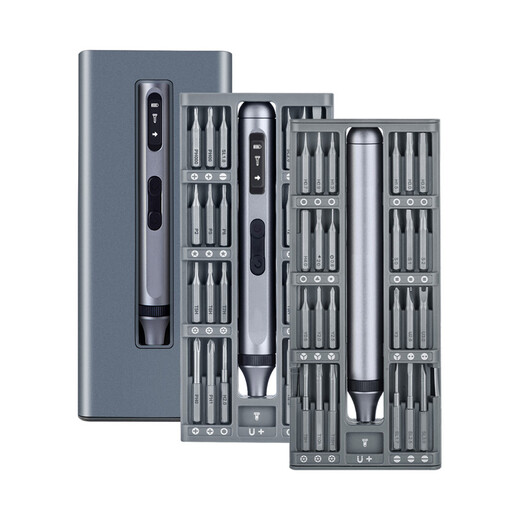
Why it suits this profile: Its compact design is made for household repairs, small appliances and furniture assembly, with built-in storage for the included bits.
The product listing clearly distinguishes the 0.3 N·m electric torque from the 3.5 N·m manual torque and specifies the tool’s limitations. It will not replace a drill for demanding jobs.
350 mAh battery, up to 120 minutes of no-load use, a stated 90-minute charging time and 48 bits.
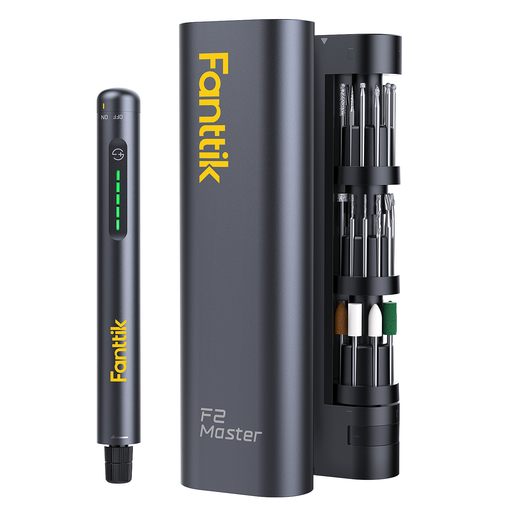
Why it suits this profile: Weighing just 100 g, it is well suited to delicate finishing work, DIY creations and post-processing 3D-printed parts.
The five speed settings and compatibility with 2.3 mm accessories are clearly stated. You can therefore check your existing bits before buying.
Stated maximum speed of 25,000 rpm, 35 accessories, LED lighting and 60-minute USB-C charging according to the product listing.
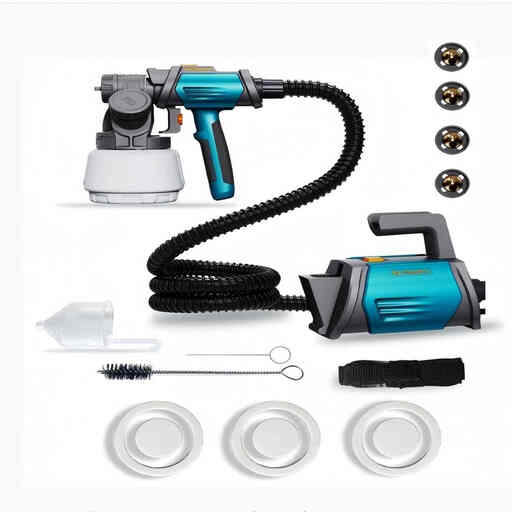
Why it suits this profile: It is designed for users renovating walls, furniture, fences or ceilings who want to adjust the spray pattern.
The stated maximum viscosity is 120 DIN-S. Testing the paint on a sample of the material remains essential before tackling a large surface.
800 W of power, a 1,300 ml tank, four 1–3 mm nozzles, three spray patterns and a 2.5 m hose.
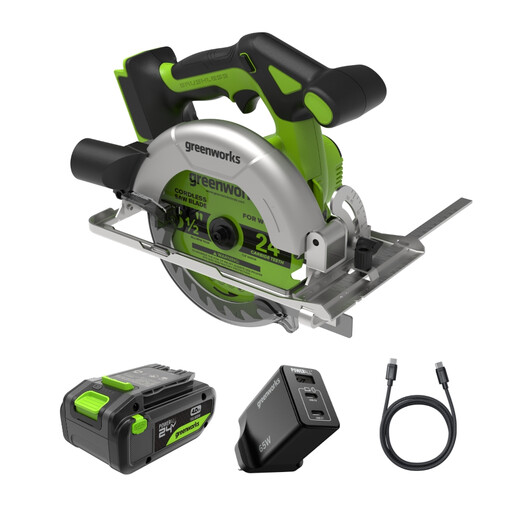
Why it suits this profile: A solution designed for cutting wood during home improvement, furniture making or regular renovation work.
The product listing specifies that the battery and charger are not included. This allows you to calculate the total cost before placing your order.
165 mm blade, stated cutting depth of 57 mm at 90°, bevel adjustment from 0 to 45° and a no-load speed of 5,000 rpm.
We have brought together an up-to-date selection of portable tools for different projects, budgets and levels of use.
To round out your renovation tools, several categories can meet specific requirements:
Battery life depends on the battery capacity, the material being worked on and the pressure applied. “No-load” runtimes provide a useful benchmark for comparing models, but they do not necessarily reflect continuous use under load. For longer projects, keep a spare battery on hand or choose a model with fast charging.
A cordless drill driver covers everyday drilling and screwdriving tasks. For engraving, polishing, fine cutting or painting, a specialised tool will generally offer better-suited settings and accessories. The right choice depends on how often you work on projects and how much storage space you have available.
Compare the price of the tool with the cost of batteries, the charger, blades and bits. Clean your tools after every use, store accessories in a dry place and observe the torque, diameter and material limits specified in the manual. These simple precautions help prevent premature replacements, although they cannot guarantee a specific service life.