
Livraison le jour même ou le lendemain

Qualité garantie

Débloquez vos offres de bienvenue: Livraison GRATUITE | Jusqu'à -80 % | 30 jours d'essai gratuits à JoyPlus
Téléchargez l'application
A cordless hard floor washer picks up dry dirt and spills, and washes hard floors in one pass. Its versatility appeals to families, pet owners and anyone who wants to spend less time cleaning. But models can vary considerably, particularly when it comes to battery life, water recovery and roller maintenance.
Before comparing prices, it’s worth separating genuinely useful features from marketing claims that can sometimes be misleading.
A high figure in pascals, such as 16 000, 20 000 or 22 000 Pa, indicates the suction power highlighted by the manufacturer, but it isn’t enough to judge overall performance. The type of roller, water flow rate, how well sealed the system is and the appliance’s ability to maintain its power as the tank fills all play an important part too.
So, a powerful hard floor washer may be very effective at picking up crumbs, hair or spills, without necessarily replacing an upright vacuum on a thick-pile carpet. Always check which surfaces the appliance is suitable for.
The stated battery life often applies to the most energy-efficient mode. In automatic or intensive mode, it can drop quickly. If you have a larger home, check the tank capacity too, as well as how long the battery takes to recharge.
A model that runs for 30 minutes but has small tanks may require several breaks. Conversely, a heavier model with a long-lasting battery won’t necessarily be pleasant to use in a small flat.
The self-cleaning hard floor washer function makes it easier to rinse the roller, but it doesn’t remove the need for all maintenance. You’ll generally still need to empty the dirty water tank, clean the filters and leave the removable parts to dry.
Hot-air drying can reduce residual moisture, but an automatic rinse alone doesn’t guarantee that the roller will be completely dry. Check the instructions and make sure compatible rollers, filters and cleaning solutions are available.
For everyday cleaning of tiles, sealed wood flooring, vinyl or laminate flooring that’s suitable for use with water, look for a model with two separate tanks. This keeps clean water separate from the water picked up from the floor.
A wet and dry vacuum designed for hard floors should also let you adjust the water flow rate. A low flow rate is generally suitable for surfaces that are sensitive to moisture, while a higher rate can tackle stubborn stains on tiles. However, avoid using it on untreated floors or surfaces that are particularly sensitive to water without first checking the manufacturer’s recommendations.
For a medium-sized home, a stated battery life of 30 to 40 minutes may be enough. Larger homes and intensive cleaning will benefit from a longer-lasting battery. Also consider the charging time, which generally ranges from a few hours to around four hours, depending on the model.
The clean water tank capacity matters just as much as that of the dirty water tank. A larger capacity means fewer refills and fewer times emptying the tank, but it can also add to the appliance’s overall weight.
A 180-degree hard floor washer with an adjustable head can reach under some low furniture. Check the clearance stated by the manufacturer and make sure the appliance can still recover water effectively when tilted.
If you have a pet, look for an anti-tangle roller and a system that makes it easier to remove pet hair and human hair. Edge cleaning close to walls, sometimes advertised as just a few millimetres from the skirting boards, is also useful in the kitchen and along walls.
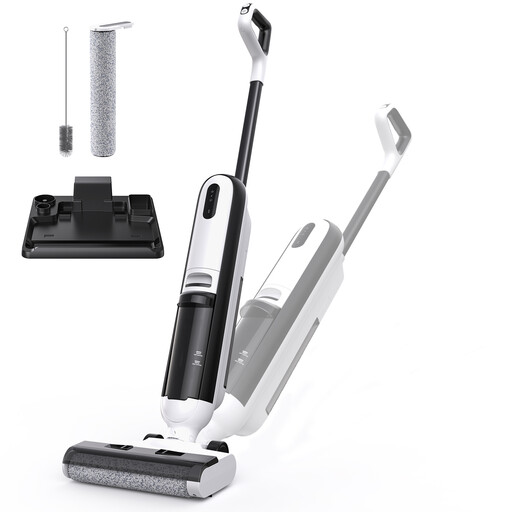
Why it suits this type of user: Its cordless design and stated 30-minute battery life make it a good choice for regular cleaning in a flat or small house.
The self-cleaning function reduces the need to rinse the roller by hand, but you’ll still need to empty the dirty water tank after every use.
Stated suction power of 16 000 Pa, a 540 ml clean water tank and a 460 ml dirty water tank.
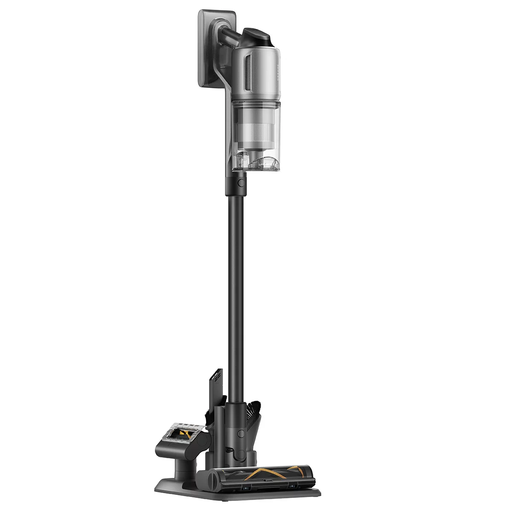
Why it suits this type of user: It combines wet cleaning with accessories to clean different areas of your home effectively.
The product specifications list a removable battery and a self-cleaning wet roller with hot-air drying.
Stated power of 28 kPa, up to 90 minutes of battery life and a main unit weighing just 2,2 kg.
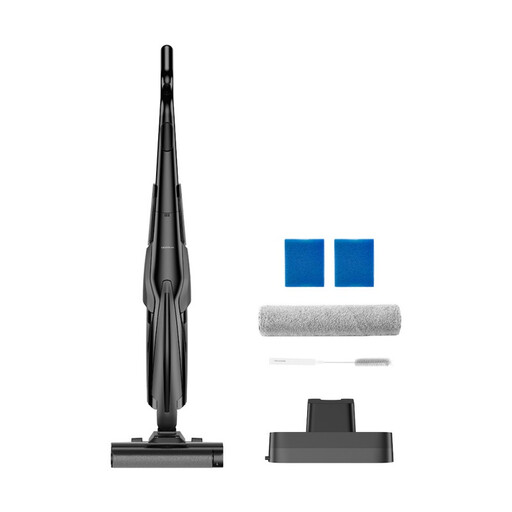
Why it suits this type of user: Its 180-degree tilting head and stated 50-minute battery life make it suitable for larger areas and cleaning under low furniture.
Washing the roller at 70 °C and drying it at a stated 100 °C helps reduce residual moisture, as long as you follow the maintenance cycle.
Stated suction power of 22 000 Pa, 120-degree swivel and a stated weight of 4,6 kg.
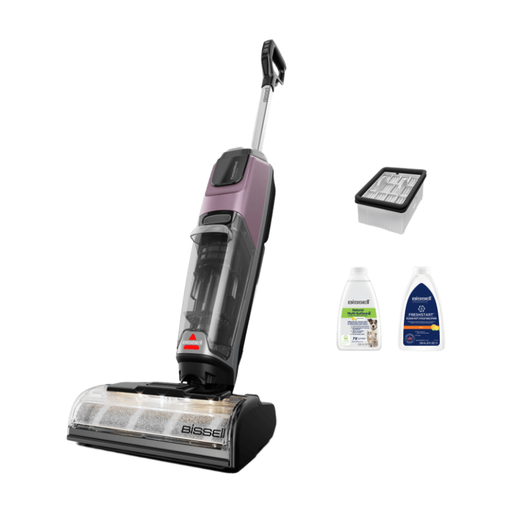
Why it suits this type of user: The anti-tangle brush, illuminated head and edge cleaning close to the skirting boards help tackle the challenges of pet hair.
Self-cleaning and two separate tanks mean less handling, but you’ll still need to empty the dirty water after each cleaning session.
Up to 45 minutes of stated battery life, ZeroGap edge cleaning and FurFinder lighting to help you spot pet hair.
We’ve put together a comprehensive, real-time updated selection of products that meet these strict criteria as well as European safety requirements.
After each use, empty the dirty water tank, rinse the parts specified in the instructions and leave the filters to dry. Use only a compatible cleaning solution and follow the recommended dosage. A solution that produces too much foam can affect water recovery or sensor performance.
Running costs aren’t limited to the purchase price: they include rollers, filters, cleaning products and, where necessary, replacement batteries. Before ordering, check that these consumables are available in France or the European Union. Over time, this could make a bigger difference than the few euros saved at the checkout.
It’s ideal for everyday cleaning of hard floors and picking up spills. However, some models are less effective on thick rugs, carpets or large amounts of dry dust. If your home has several types of flooring, choose a model with suitable accessories or a clearly indicated dry vacuuming mode.
Allow a few minutes after each use to empty the dirty water tank, run the self-cleaning cycle and rinse the removable parts. Some models dry automatically, but filters often need to be dried separately.
For a larger home, compare the battery life in the mode you’ll actually use, the tank capacity and whether you can recharge or replace the battery. A stated battery life of 45 to 50 minutes is a comfortable starting point, but intensive mode and the type of flooring can reduce this.