
Livraison le jour même ou le lendemain

Qualité garantie

Débloquez vos offres de bienvenue: Livraison GRATUITE | Jusqu'à -80 % | 30 jours d'essai gratuits à JoyPlus
Téléchargez l'application
A cordless wet-dry vacuum sucks up dust, picks up liquids and cleans hard floors in a single pass. This versatility is especially popular with families, pet owners and anyone who wants to spend less time on household chores. But some models disappoint after a few weeks, often because the battery life was misjudged, the maintenance was underestimated or the appliance isn’t suited to the floor covering.
Here are the criteria to consider before buying a cordless stick vacuum mop, along with a selection of models for different needs.
Manufacturers sometimes highlight power expressed in Pa, watts or air watts. These units don’t measure exactly the same thing and aren’t enough on their own to predict how well the appliance will perform on a wet floor or in tile grout.
To compare two models, also look at:
A powerful cordless vacuum should therefore be judged as a whole, not just on the maximum value shown on the spec sheet.
An appliance with a self-cleaning function doesn’t run entirely on its own. The dirty water tank usually needs to be emptied and rinsed promptly. Filters must dry completely before being put back in place, and the brush may require manual removal of hair and fur.
Without this routine, bad smells develop and the ducts eventually become clogged. Hot-air drying reduces residual moisture, but it doesn’t replace cleaning the removable parts.
Most wet-dry vacuums for hard floors are suitable for tiles, vinyl and some varnished parquet. That doesn’t mean all parquet, laminate or delicate surfaces can handle the same amount of water.
Before buying, check the manufacturer’s recommendations and adjust the water flow if the appliance allows it. A wet-dry vacuum intended for the garage or DIY work doesn’t necessarily replace a wet-dry vacuum designed for everyday floor care.
The advertised battery life varies depending on the mode used. Turbo mode consumes more power than automatic or standard modes. In a flat, 30 to 40 minutes may be enough. For a large house, it’s better to aim for a model with longer battery life, a removable battery or automatic power management.
Also consider the charging time. A battery that takes several hours to recharge can become a problem if you need to clean several rooms in a row.
The two-tank system separates clean water from recovered water. A larger capacity reduces the number of refills, but it can also make the appliance heavier.
For reference, the Dreame H12 Dual has a 900 ml clean water tank and a 700 ml dirty water tank. The Tineco iFLOOR 5 Breeze Complete is designed for hard floors and claims up to 35 minutes of battery life. In practice, the actual usable capacity depends on how much water is dispensed and how dirty the floor is.
A brush that can run along skirting boards reduces the need for manual touch-ups. The claimed performance varies between models: some mention a distance of a few millimetres, while others promise cleaning on one side or both sides.
A tilt of up to 180° makes it easier to get under low furniture. However, check the manufacturer’s instructions regarding the dirty water tank level in this position. If you have pets, a tangle-free brush and an easily accessible squeegee will make removing fur much simpler.
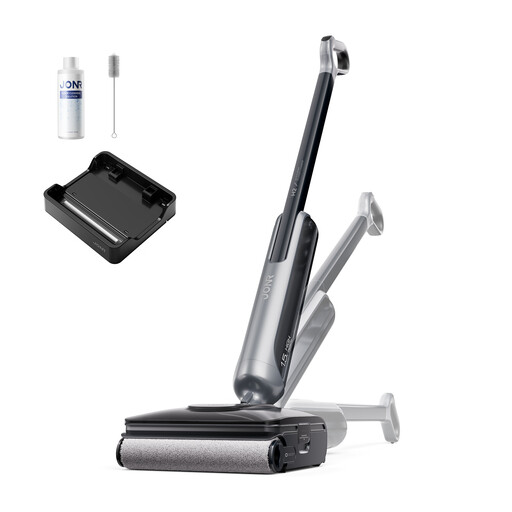
Why this choice suits this profile: Cordless and tiltable to 180°, it’s aimed at those who want to vacuum and wash hard floors with a single appliance, without complicating everyday maintenance.
The spec sheet clearly states it is not suitable for thick carpets or delicate floors sensitive to water. A clear indication to avoid using it on the wrong surface.
A claimed suction of 20,000 Pa and a 2-in-1 design for vacuuming and washing hard floors.
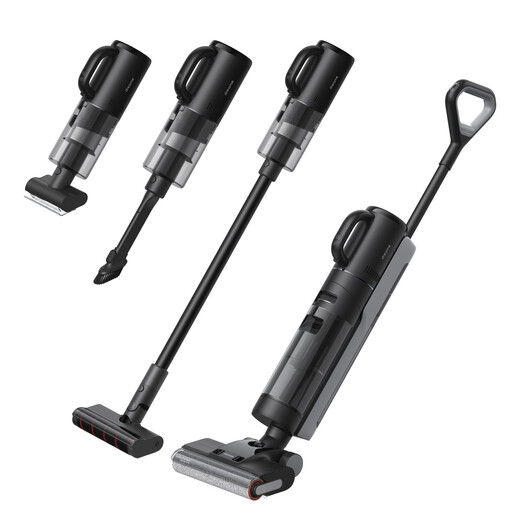
Why this choice suits this profile: With its different modes and 4-in-1 format, it can handle floors, liquids, certain rugs and even surfaces like furniture.
The self-cleaning cycle and hot-air drying at 55°C for 30 minutes reduce residual moisture. You still need to empty the dirty water tank after use.
Dirt detection, cleaning up to 6 mm from skirting boards and a claimed 35-minute battery life in wash mode.
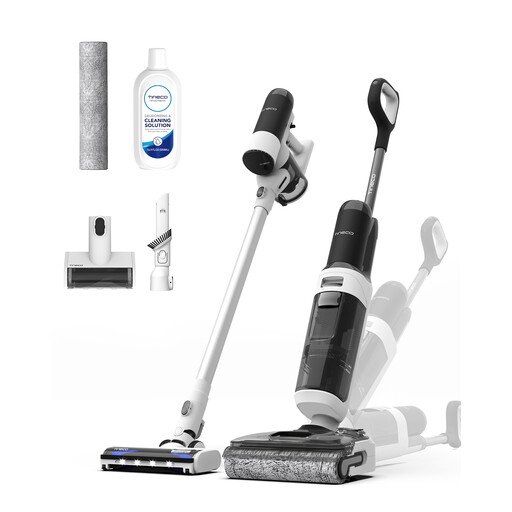
Why this choice suits this profile: Its claimed 65-minute battery life and versatile design make it suitable for large areas and long cleaning sessions.
The instructions include a self-cleaning cycle and require emptying the dirty water tank immediately. Maintenance is therefore not left unclear.
A 180° flat position and edge cleaning on both sides, with a claimed 65-minute battery life.

Why this choice suits this profile: Households dealing with fur, everyday messes and low furniture will benefit from its water settings and design dedicated to hard floors.
The water flow can be adjusted according to the floor type or dirt level, whether it’s wood, tiles or stubborn stains. The brush with a squeegee also helps reduce hair build-up.
A claimed suction of 17,000 Pa, edge cleaning at 2–4 mm and hot-air drying at 60°C on the station.
We’ve put together a comprehensive, real-time updated list of products that meet these demanding selection criteria and European safety standards.
Yes, provided the manufacturer allows it and the parquet is sufficiently protected. Reduce the water flow if the appliance offers this setting and avoid unvarnished or moisture-sensitive surfaces. A discreet test in an inconspicuous area is a sensible precaution.
The cost includes the electricity needed for charging, water, any cleaning solutions, as well as replacing filters and rollers. Self-cleaning cycles also use water. To keep costs under control, only use recommended solutions, maintain the filters regularly and don’t let dirty water sit.
It depends on how often you use it, how well you follow the instructions and the availability of spare parts. Emptying the tanks after each session, letting the filters dry, removing hair from the brush and placing the station on a dry surface all help extend the appliance’s life. Before buying, also check the warranty terms, the quality of after-sales service and the availability of consumables.