
Livraison le jour même ou le lendemain

Qualité garantie

Débloquez vos offres de bienvenue: Livraison GRATUITE | Jusqu'à -80 % | 30 jours d'essai gratuits à JoyPlus
Téléchargez l'application
A cordless wet and dry vacuum cleaner simplifies everyday cleaning by vacuuming up dust and removing wet dirt in a single pass. In a family with children or pets, or in a home with plenty of tiled surfaces, this format means you do not have to switch between a vacuum cleaner and a mop.
However, technical specifications do not always tell the whole story. High suction power does not guarantee effective liquid pick-up, nor does a self-cleaning programme mean you can skip emptying and rinsing the tanks. Here are the criteria to consider before you buy.
A figure such as 22,000 Pa may look impressive, but it is not enough to assess an appliance’s performance. You also need to consider the design of the head, water flow rate, rollers, filtration and its ability to pick up hair. Pascal measurements are not always taken under the same conditions by every manufacturer, either.
When comparing two models, also check whether they feature a dual brush roller, an anti-tangle system and automatic dirt detection. In practice, these features can reduce the number of passes required.
A wet and dry vacuum cleaner retains organic residue in its dirty-water tank, ducts and brush. Even when an automatic programme is available, you will generally need to:
Without this routine, unpleasant odours can develop quickly and performance may deteriorate. A hot-air drying system limits residual moisture, but it does not replace the manual cleaning of the parts specified by the manufacturer.
The advertised 40-minute battery life generally applies to a specific mode and particular usage conditions. Turbo mode, carpet cleaning, the amount of dirt and the condition of the battery can all significantly reduce this duration.
In a larger home, also remember to check the charging time, tank capacity and how easy the tank is to fill. A clean-water tank that is too small may require frequent breaks, even when the battery provides sufficient endurance.
For tiles, sealed wooden flooring or PVC floors suitable for wet cleaning, choose a head that follows the floor properly and distributes water evenly. Edge cleaning is particularly useful along skirting boards, where crumbs and pet fur tend to accumulate.
The Deerma VX200 features a dual motorised brush, advertised at 840 scrubbing movements per minute, as well as bidirectional drive. Its advertised suction power reaches 22,000 Pa. On paper, these specifications are suitable for homes where dry and wet dirt regularly end up mixed together.
Tank capacity should be considered in relation to the area you need to clean. The VX200 has a 650 ml clean-water tank and a 550 ml dirty-water tank. Meanwhile, the Deerma DEM-VX900W offers up to 40 minutes of battery life and a station capable of automatically filling the water tank, according to its product listing.
A wet and dry vacuum cleaner should only be used with the products specified in the instructions. Avoid flammable liquids, concentrated chemicals and sharp debris. To pick up a spilt liquid, select the appropriate mode and follow the manufacturer’s recommendations.
Hot-water self-cleaning can help limit residue left on the roller after washing. The VX200 advertises a cycle at 70°C, combined with 70°C hot-air drying. The Dreame H12 Dual, meanwhile, claims 55°C hot-air drying for 30 minutes, with automatic dual-rotation cleaning.
These figures describe the functions built into the appliances, but do not guarantee the complete removal of odours or microorganisms in every situation. The VX200’s stated 99.9% electrolysed-water sterilisation should also be understood as a feature advertised by the manufacturer, rather than a guarantee with medical implications.

Why this choice suits this profile : Its 2-in-1 operation is ideal for anyone who wants to care for hard floors without using several appliances. Its advertised maximum battery life of 40 minutes may be enough to clean several rooms regularly.
The hot-water self-cleaning cycle and drying at 70°C reduce the risk of leaving a damp brush after washing.
Advertised suction power of 22,000 Pa, dual brush roller, edge cleaning, and 650 and 550 ml tanks.
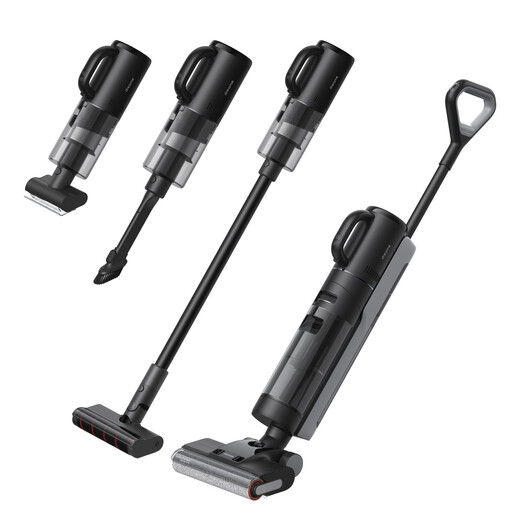
Why this choice suits this profile : Its four modes, dirt detection and conversion into a handheld vacuum cleaner will appeal to households that want to clean several surfaces with a single appliance.
The brush reaches an advertised distance of up to 6 mm from skirting boards, reducing the strip of floor that needs to be cleaned manually.
900 and 700 ml tanks, advertised suction power of 16,000 Pa, LED display, voice controls and drying at 55°C for 30 minutes.

Why this choice suits this profile : Its station with advertised automatic filling and maximum battery life of 40 minutes can make repeated cleaning sessions in a family home easier.
Dynamic dirt detection and advertised bidirectional cleaning reduce the need for repeated adjustments during everyday tasks.
Dual brush with edge-to-edge cleaning, drying at 55°C and a minimum two-year statutory guarantee stated on the product listing.
We have selected a complete, real-time updated list of products that meet these exacting selection criteria and European safety standards.
Before using it for the first time, fully charge the battery and fill only the clean-water tank. Remove any objects that could damage the roller, particularly pieces of glass and metal items. When faced with a thick stain, it is better to move the appliance slowly than to make several quick passes.
After cleaning, run the automatic programme if the appliance offers one, then inspect the roller and dirty-water tank. Place the station on a stable, dry and unobstructed surface. This routine helps preserve the battery, ducts and seals.
It depends on the type of flooring and the manufacturer’s recommendations. On sealed wooden flooring suitable for wet cleaning, use a moderate amount of water and avoid leaving the appliance stationary. Untreated wooden floors, particularly those that are sensitive to moisture or have open joints, are generally not suitable for this type of cleaning.
The cost mainly depends on the electricity used for charging and drying, the replacement of rollers and filters, and the amount of water used. A hot-air drying cycle may consume more energy than air-drying. Before comparing offers, check the station’s power consumption, how often it will be used and the price of replacement parts.
It depends on how often it is used, maintenance, storage and the battery. Emptying the dirty-water tank after every session, cleaning the filters and avoiding the suction of unauthorised liquids reduce the risk of breakdowns. Also check the guarantee terms, the availability of accessories and the battery replacement procedure before buying.