
Livraison le jour même ou le lendemain

Qualité garantie

Débloquez vos offres de bienvenue: Livraison GRATUITE | Jusqu'à -80 % | 30 jours d'essai gratuits à JoyPlus
Téléchargez l'application
A cordless stick vacuum with an auto-empty station promises to revolutionize your cleaning routine: all the power of a cordless model, without the chore of emptying the bin. However, this appealing promise can quickly turn into a headache. The wrong choice can transform a significant investment into a costly disappointment. To navigate the jungle of tech specs and marketing claims, here are the pitfalls to avoid before you buy.
The 3 pitfalls to avoid when buying:
To avoid falling into the trap, focus on the criteria that truly matter for judging the performance and convenience of a cordless stick vacuum.
Suction power, measured in Pascals (Pa), indicates the "vacuum pressure" force created by the motor. A good cordless stick vacuum will have a high value, often around 27?kPa (or 27,000?Pa). This is a great starting point for assessing its ability to lift fine dust and heavier debris.
But this raw power needs to reach the floor. That's where the cleaning head comes in. An effective brush, often V-shaped with bristles of varying stiffness, will dislodge dirt from carpet fibers and guide it into the airflow. For use on carpets and hard floors, check that the brush is versatile and, ideally, equipped with an anti-tangle system so you don't spend your time freeing it from long hair and pet fur.
If you have pets or are prone to allergies, the filtration system is non-negotiable. A multi-stage filtration system equipped with a HEPA (High-Efficiency Particulate Air) filter is essential. It captures up to 99.9% of the finest particles like pollen, dust mites, and pet dander.
The auto-empty station must then take over hygienically. The best stations use a sealed bag that traps dust during the transfer, preventing allergens from escaping back into the ambient air.
It's the practical details that transform a good appliance into an indispensable daily ally.
Rather than an endless list, here are a few models that meet specific needs and perfectly illustrate how to avoid the pitfalls we've discussed.
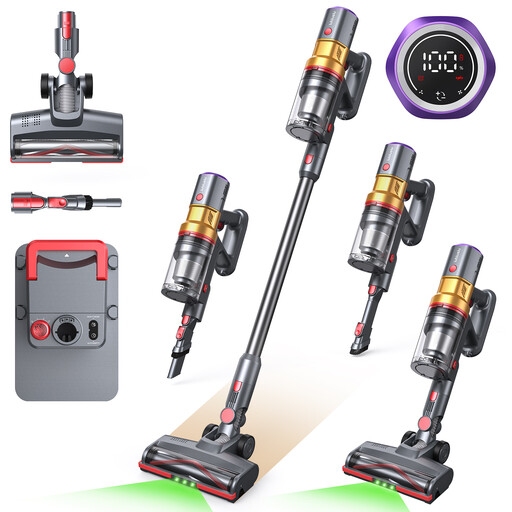
Why it's a match: This user wants to see the results. The combination of high power and detection technologies gives them total control for an undeniable clean.
It sidesteps the "power on paper" trap by combining its 27 kPa with a green light that makes its effectiveness visible. Its self-standing design solves the wall-mounting issue.
The synergy between the detection light and suction power guarantees a surgical clean, hunting down every last particle.
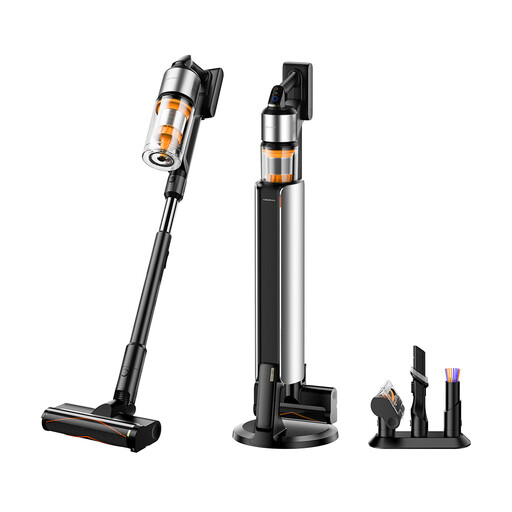
Why it's a match: This household needs a robust and versatile do-it-all device for a hectic daily life. The full suite of accessories and the anti-tangle brush are built for the challenges posed by kids and pets.
It avoids the "false zero effort" trap with a station designed for long-term autonomy and an anti-tangle brush (T?V-certified, according to the brand) that minimizes the cleaning chore associated with pet hair.
Its extreme versatility (6-in-1 pack) and a brush specially designed for hair and fur make it an all-terrain solution for the home.
We have curated a full range of products that meet our selection criteria and current safety standards.
The replacement frequency depends on the bag's size, the area you clean, and whether you have pets. Generally, expect between 30 and 100 days of autonomy. Remember to check the price and availability of bags before you buy—it's an operating cost that shouldn't be overlooked.
Yes, self-standing models are designed with a low center of gravity and a brush head that ensures they remain stable upright. They are reliable for taking a pause or for storage, but as a precaution, avoid leaving them in the middle of a high-traffic area where they could be knocked over.
Far from being a gimmick, this technology is incredibly effective. It uses a precise wavelength and angle of light to create a striking contrast with dust particles on hard floors, making them much more visible than with conventional lighting. It's a real asset for a deep clean, especially for hunting down the fine dust and allergens that often go unnoticed.