
Livraison le jour même ou le lendemain

Qualité garantie

Débloquez vos offres de bienvenue: Livraison GRATUITE | Jusqu'à -80 % | 30 jours d'essai gratuits à JoyPlus
Téléchargez l'application
The cordless stick vacuum has revolutionised home cleaning, offering unmatched freedom of movement and convenience. But with a saturated market and sometimes misleading marketing claims, it's hard to know what to choose. Disappointing suction power, battery life that melts away, a brush that constantly gets tangled… disappointments are common.
As a product expert for Joybuy, my role is to help you see things more clearly. In this guide, we'll break down the key points to help you make the right choice and never regret your purchase again, based on concrete technical criteria, far from marketing jargon.
Before diving into spec sheets, let's review the classic mistakes that turn a purchase into a regret.
To ensure you don't make a mistake, focus on these three technical pillars.
This is THE performance criterion for a powerful cordless vacuum. Expressed in Pascals (Pa), it measures the device's real ability to lift dirt from the floor.
A long-runtime stick vacuum must deliver on its promises under real-world conditions. Demand to know the runtime for each power mode, not just Eco mode. The holy grail? A removable battery. It allows you to recharge it anywhere or, even better, have a second one on hand to double your cleaning session. The battery's capacity, expressed in milliampere-hours (mAh), is also a good indicator of its endurance.
If you have allergies or pets, a vacuum with a HEPA filter isn't an option, it's a must-have. It traps up to 99.97% of the finest particles (pollen, dust mites, pet dander…) and expels cleaner air. A complete filtration system (cyclonic + foam + HEPA) not only ensures pure air but also protects the motor and maintains suction over time. Opt for washable filters: they are simpler and more economical to use.
To illustrate our point, here are three models that check all the right boxes, each meeting a specific need.
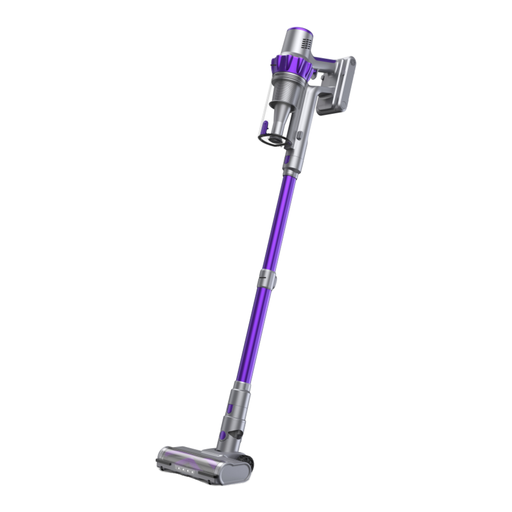
Why it stands out: Its impressive 50 kPa of power and a brush specifically designed to prevent tangles make it the ultimate weapon against pet hair, even when embedded in carpets or sofas.
It checks two essential boxes: measurable raw power (the famous Pascals) and a brush that doesn't turn cleaning into a detangling session.
Its 50 kPa striking power ensures an impeccable clean, while its HEPA filtration purifies the air.
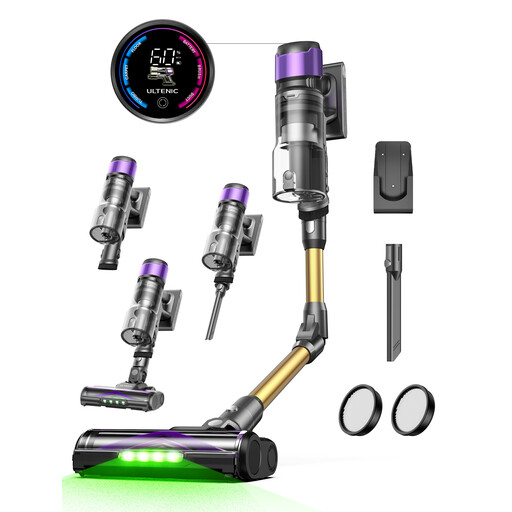
Why it stands out: Its endurance (up to 60 minutes), large 1.5L dustbin, and advanced 7-stage filtration make it the champion for large spaces and homes where air quality is paramount.
It solves the problem of unrealistic battery life with a battery that goes the distance, and tackles low-end filtration with a multi-layer system that traps allergens.
Its winning trio: an XXL runtime (60 min), a removable battery, and top-tier filtration for a healthy home.
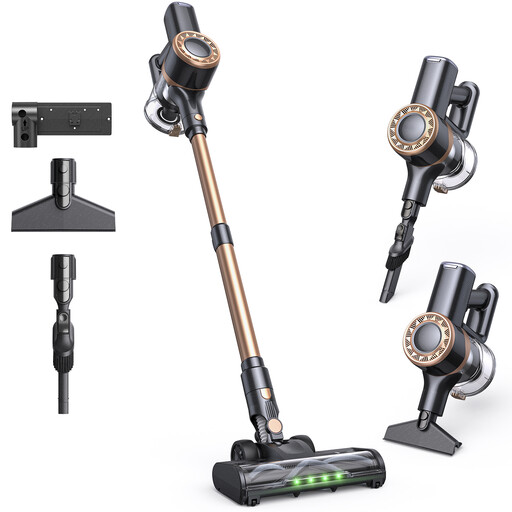
Why it stands out: Its brilliant feature: it stands up on its own! No more need for a wall mount; you can park it anywhere during a break. Lightweight and manoeuvrable, it's the king of spot cleaning and easy storage, especially in apartments.
No more storage headaches or precarious balancing against a wall. Its self-standing design is the simple, effective solution to a daily problem.
Its life-changing "parking" position and its green LED light, which is formidable for tracking down dust.
Explore our complete collection of vacuums that meet our quality charter and the most demanding standards.
Yes, most modern HEPA filters are washable with plain water. Cleaning every 2 to 4 weeks is recommended, depending on use. Crucial point: let it air dry completely (24 hours minimum) before putting it back, or you risk damaging the motor. Even with proper maintenance, a HEPA filter should generally be replaced every 6 to 12 months. The bonus? Some models come with a spare filter.
For most households and for daily use, the answer is a resounding yes. Recent models with high suction power (over 40,000 Pa) are incredibly effective on hard floors as well as on rugs and carpets. Their light weight and lack of a cord offer a life-changing level of convenience. However, for very large areas or very thick-pile carpets, a good old canister vacuum remains a valuable ally for deep spring cleaning.
Absolutely not. Watts (W) measure the motor's electrical consumption, not its real-world performance. To judge effectiveness, the only number that matters is the suction pressure, expressed in Pascals (Pa). The higher this number, the better the vacuum will be at pulling up fine dust, heavy debris, and dirt embedded in fibres. It's the most direct indicator of its performance in the field.