
Livraison le jour même ou le lendemain

Qualité garantie

Débloquez vos offres de bienvenue: Livraison GRATUITE | Jusqu'à -80 % | 30 jours d'essai gratuits à JoyPlus
Téléchargez l'application
Assembling flat-pack furniture with sheer wrist strength is the fastest way to turn a DIY afternoon into an ordeal. Your wrists start aching, screws go in crooked, and the whole process drags on forever. Fortunately, a cordless power screwdriver turns this chore into child's play. But with an overwhelming number of options on the market, how do you find your way? Should you prioritize power, precision, or a compact design?
This guide is here to help. We'll break down the key criteria and present our top picks, whether you're a flat-pack pro, a weekend warrior, or a micro-electronics enthusiast.
Before diving into our selection, let's review the essential points to help you make an informed decision that perfectly suits your needs.
Torque, expressed in Newton-meters (N·m), is simply the rotational force of your screwdriver. High torque is essential for tackling dense materials like hardwood. Conversely, low torque is crucial to avoid damaging fragile screws or delicate threads.
Rotational speed (in RPM) affects how quickly the job gets done. The ideal setup? Variable speed to adapt to any situation: slow to start a screw without slipping, then faster to drive it all the way in.
A good screwdriver must be comfortable, even after an hour of assembly, and easy to handle in the most awkward corners. Be sure to check:
The main advantage of a cordless tool is freedom of movement. But this freedom comes at a price: battery life. The higher its capacity, expressed in milliampere-hours (mAh), the longer you can work. The good news is that most recent models charge via USB-C. No more hunting for a proprietary charger!
Finally, a good rechargeable screwdriver kit should come with a generous set of accessories. A wide range of bits (flat, Phillips, Torx, etc.) will save you from having to make another purchase for a specific need.
We've selected three models that excel in their category, from the occasional DIYer to the high-tech enthusiast.
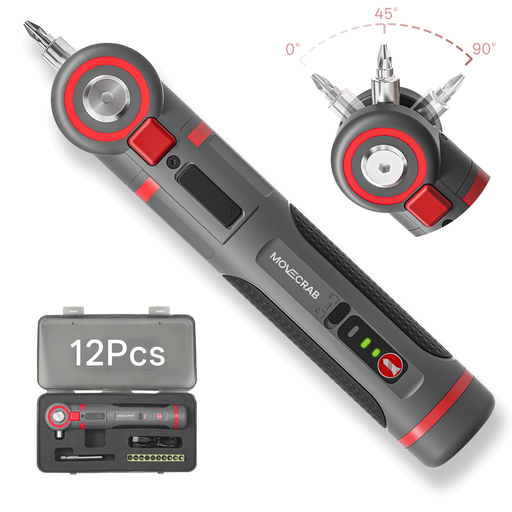
Why it stands out: Its secret is its pivoting head, which adjusts to 0°, 45°, and 90°. It can get into places where a standard screwdriver gives up. This is a game-changer for assembling furniture against a wall or working in a tight corner.
Key Features:
Who is it for? For those who frequently assemble furniture and handle small home repairs. Its versatility makes it an excellent all-rounder for everyday DIY tasks.
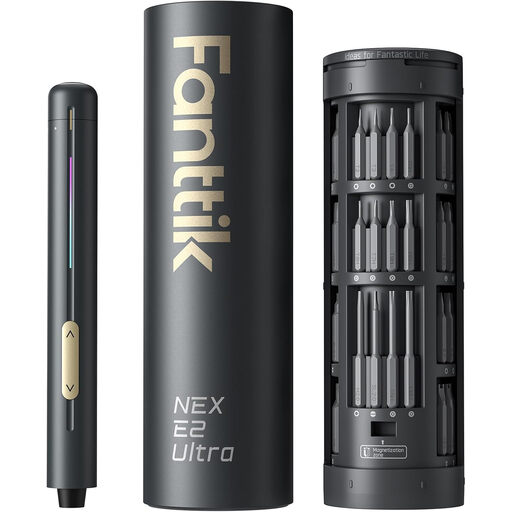
Why it stands out: This electronics screwdriver is a true precision instrument. With its ultra-low torque and 50 precision bits, it's the dream tool for working on the delicate components of a laptop, smartphone, or gaming console without risking any damage.
Key Features:
Who is it for? For tech enthusiasts, electronics repair specialists, and model makers who demand surgical precision. Be warned, don't expect to assemble a wardrobe with it: that's not what it's designed for.
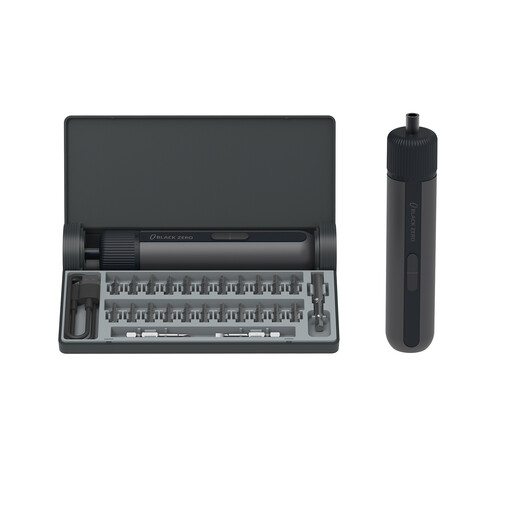
Why it stands out: This model hits the sweet spot. With enough torque (8?N·m!) for common DIY tasks, it remains a featherlight tool (298g) that can be handled with one hand without any fatigue.
Key Features:
Who is it for? The smart choice for a first tool or as a handy multi-purpose DIY tool. Perfect for assembling furniture, installing shelves, and all the small repairs of daily life.
Our selection focuses on specific needs, but the world of cordless tools is vast. If your projects require more power, a drilling function, or other special features, there's a model out there for you.
Discover our full range of cordless power tools to find the model that matches all your projects.
A cordless power screwdriver, like the ones in our selection, specializes in driving and removing screws. It is therefore lighter and more compact. A drill driver is more versatile: in addition to driving screws, it can drill holes in wood, metal, and sometimes even masonry, thanks to a more powerful motor and a specific chuck.
For most flat-pack furniture (particle board, pine, etc.), an adjustable torque between 3 and 5?N·m is perfect. It's enough for a solid connection but not so much that you risk splitting the wood or stripping the screw head. Models like the MOVECRAB or the BLACKZERO are perfectly calibrated for this task.
Absolutely not. A precision electric screwdriver like the Fanttik E2 Ultra is a low-torque tool designed to avoid damaging printed circuit boards and tiny screws. Trying to assemble furniture with it would demand an effort its motor is not designed for, and you would risk burning it out. Every tool has its purpose.