
Livraison le jour même ou le lendemain

Qualité garantie

Débloquez vos offres de bienvenue: Livraison GRATUITE | Jusqu'à -80 % | 30 jours d'essai gratuits à JoyPlus
Téléchargez l'application
Achieving a pristine lawn takes time and energy. The cordless robotic mower has emerged as the game-changing solution for a perfect lawn with zero effort. The problem: the market is flooded with marketing promises that often lead to disappointing purchases. Our mission as editors is to help you decode the spec sheets to make a truly informed choice—one that’s right for your garden, not just for advertising slogans.
Navigating the jungle of robotic mowers can quickly become a headache. Behind the marketing claims often lie significant limitations. Here are the most common traps to watch out for.
Many entry-level models proudly feature "GPS," implying intelligent navigation. The reality is often far less impressive. A basic GPS robotic mower, without correction technology like RTK or an advanced vision system, severely lacks precision. It can get lost near buildings, under dense trees, miss entire areas, or, conversely, get stuck mowing the same spot over and over. The result is an unevenly mown lawn and the need for manual intervention. The ultimate irony for a device that's supposed to save you time!
A spec sheet might claim the ability to handle 40% slopes. Be warned, this figure is almost always achieved under lab conditions: dry grass and perfectly smooth terrain. In real-world conditions on damp grass, a slope-mowing robot with inadequate wheels or a motor lacking torque will slip, get stuck, or simply give up on climbing the steepest parts of your garden, leaving entire patches untouched.
The absence of a boundary wire is a major selling point. However, some so-called "wireless" systems require an initial mapping via an app so unintuitive that the setup turns into a nightmare. Not to mention the cost and frequency of replacing blades or the battery—details that are rarely highlighted but weigh heavily on the long-term budget.
To avoid falling into these traps, focus on the technical features that determine a robotic mower's real-world performance.
This is the robot's brain. A high-performance cordless robotic mower never relies on simple GPS alone.
Don't just trust the maximum number advertised. The recommended mowing area is calculated for a simple, flat garden. If your terrain is complex, with flowerbeds, trees, or multiple separate zones, aim high and choose a model designed for an area 20% to 30% larger than your own.
For slopes, the percentage is the key indicator. A 45% slope corresponds to a 45 cm rise over a horizontal distance of 1 metre. This is a serious incline that demands deep-tread wheels for excellent traction and a high-torque motor.
A connected robotic mower is now standard. What matters is the quality of the companion app. Make sure it offers essential features:
Instead of an endless list, here are models that address specific needs, based on the performance criteria we've just discussed.
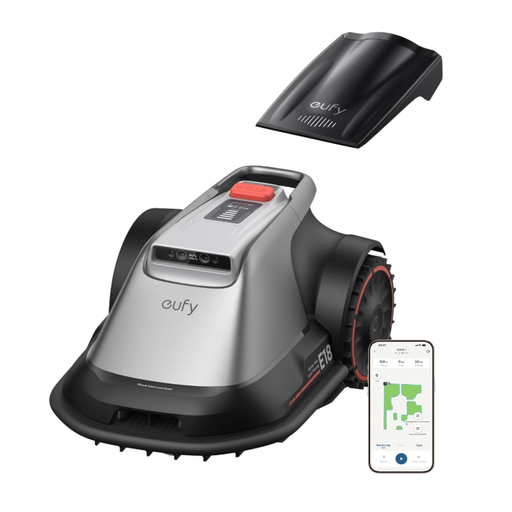
Why we recommend it: Perfect for owners of large properties who demand pinpoint mowing accuracy. Its 1200 m? coverage and ability to climb 40% slopes make it a powerful ally for expansive gardens, even with some uneven terrain.
It shatters the "GPS-only" myth by combining RTK technology with the TrueVision + GNSS system. This fusion ensures reliable, centimetre-level navigation, even when the satellite signal is weak.
100% wireless installation; Ultra-precise edge mowing; Comprehensive and intuitive app.
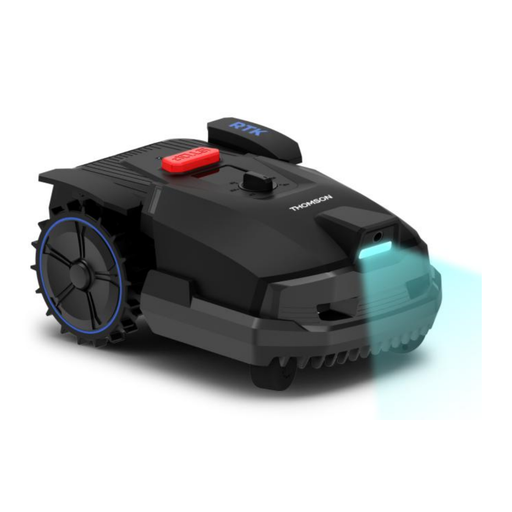
Why we recommend it: The ideal compromise for mid-sized gardens. It packs cutting-edge technologies (AI camera, RTK navigation) into an accessible package. It's the smart choice for anyone who wants an "intelligent" solution without the hassle.
It avoids the complex setup trap thanks to its app (MowMate), which is designed to be intuitive. The integrated AI camera provides active obstacle avoidance, reducing jams and manual interventions.
AI camera obstacle detection; Ultra-precise RTK navigation; App-based control and scheduling.
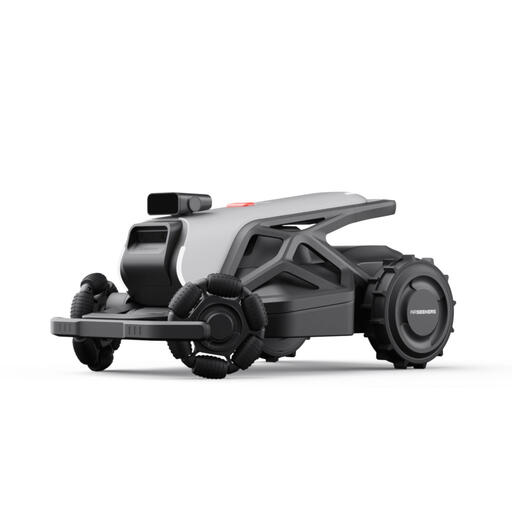
Why we recommend it: Built for challenges. If your garden looks more like a black diamond ski run than a golf green, this model is for you. Its ability to conquer slopes up to 65% is simply stunning and puts it in a class of its own.
It tackles the pitfall of underestimated slopes head-on. Where others give up, its specific design (hub motors, wide tires) ensures unbeatable grip to mow the steepest areas.
Exceptional slope capability (up to 65%); Triple VIO+VISION+RTK navigation; Coverage up to 1800 m?.
We have curated a complete range of products that meet our demanding selection criteria as well as UK safety standards.
Most models are equipped with a rain sensor and automatically return to their base during a downpour to protect their electronic components. As for mowing at night, it all depends on the navigation technology. Models that rely solely on a camera may struggle in low light. Those that integrate complementary sensors (like ToF - Time-of-Flight) or primarily rely on RTK are much more effective at night. In any case, check the robot's IP (Ingress Protection) rating, such as IPX5 or IPX6, which guarantees its water resistance.
The lithium-ion batteries in these robots are generally designed to last for several years, or between 800 and 1500 charge cycles. This translates to a lifespan of 3 to 5 years, depending on the frequency of use and the size of the garden. The replacement cost varies greatly from one brand to another; this is an important point to factor into the long-term budget.
The initial setup is much simpler than burying a perimeter wire over hundreds of metres. It mainly involves positioning the RTK antenna correctly in an area of the garden with a clear view of the sky. Then, you just use the app to guide the robot along the boundaries during an initial mapping run. The process takes about an hour and only needs to be done once. For those who prefer a turnkey solution, professional installation services are also available.