
Livraison le jour même ou le lendemain

Qualité garantie

Débloquez vos offres de bienvenue: Livraison GRATUITE | Jusqu'à -80 % | 30 jours d'essai gratuits à JoyPlus
Téléchargez l'application
Maintaining a large lawn, especially a complex or sloped one, can quickly become a real headache. The cordless robotic mower promises a flawless lawn, effortlessly. But be warned: the market is saturated with marketing claims that often lead to disappointing purchases. As tech experts, our mission is to help you decode the spec sheets to make an informed decision that's perfectly suited to your property and your expectations.
Before you dive in, let's review the 3 most common pitfalls that cost owners dearly (in both money and peace of mind):
To avoid making a mistake, rely on objective technical criteria rather than marketing slogans. Here are the three non-negotiable points to scrutinise.
The mowing precision of a robotic mower for large areas depends entirely on its ability to know its position.
Getting a robotic mower on a steep slope to climb is a real mechanical challenge. The advertised slope percentage (65% for example, which is about a 33° angle) must be backed by a design that's up to the task. Check for:
A cordless mulching mower doesn't just cut the grass; it shreds it into fine clippings that settle on the ground to fertilise it. This natural fertiliser nourishes your lawn, making it denser and healthier, while saving you the chore of collecting clippings. Make sure the robot offers an electronically adjustable cutting height via the app. This allows you to adapt the mow to the season and your lawn's growth, without even getting your hands dirty.
The perfect robot doesn't exist. But the perfect robot for you does. Here are our selections to help you find it.
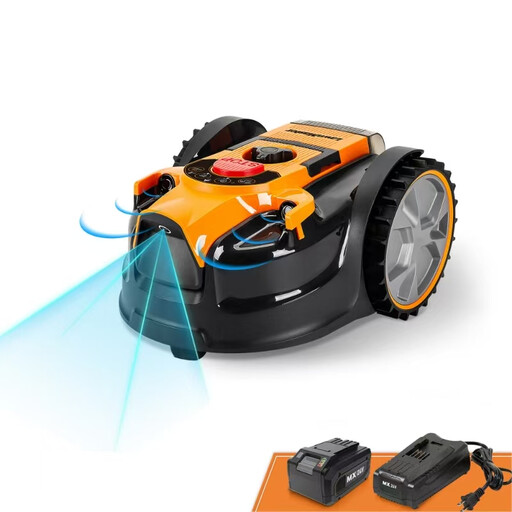
The Editor's Verdict: Ideal for owners of small gardens (up to 150 m?) who want to experience the joys of a robotic mower without breaking the bank. Its ultra-simple setup makes it the perfect entry-level model.
This model doesn't overpromise. It's clearly positioned for small, flat areas, which prevents any disappointment from unfulfilled claims on more demanding terrain.
Its key strength: simplicity. No wire to lay out—just place it on the grass, press a button, and it's off. The camera-based obstacle avoidance is sufficient for its small work area.
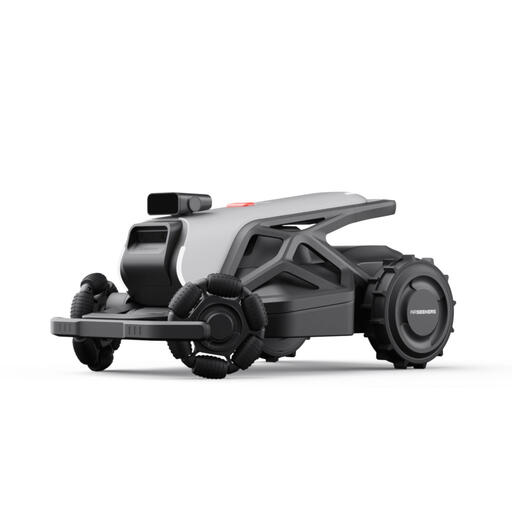
The Editor's Verdict: Designed for owners of large properties (up to 1800 m?) with significant challenges: steep slopes, numerous obstacles, and the need for surgical precision. It's the premium solution for those seeking total, no-compromise automation. Reviews for the AirSeekers TRON SE often highlight its ability to succeed where others give up.
It combines the best of both worlds: the surgical precision of RTK mapping and 300° AI vision for proactive obstacle avoidance. Its advertised 65% slope capability isn't just a marketing claim; it's backed by a robust design and all-terrain wheels.
Extreme performance. It covers a large area at high speed (240 m?/h), and its cordless mulching mower function is incredibly efficient thanks to a wide cutting deck and an adjustable height of 30 to 90 mm.
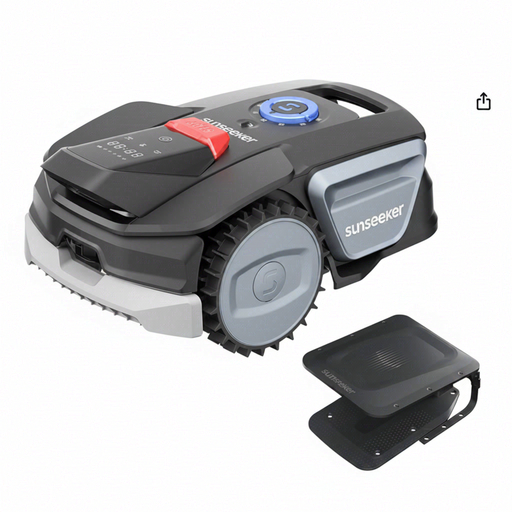
The Editor's Verdict: An excellent compromise for gardens up to 300 m? with moderate slopes (up to 27%). It packs modern technologies like AI vision and app control into a coherent and well-priced package.
Its advertised specs (300 m?, 27%) are realistic and in line with its market position. Its AI vision navigation is a proven technology that avoids the pitfall of unreliable "smart" systems.
Its features-to-price ratio is its main selling point. It offers a complete "wire-free" experience with intelligent obstacle management and an included protective garage, which is rare at this price point.
Beyond robotic mowers, discover our complete selection of equipment to design and maintain your outdoor space. All products have been tested and approved by our editors.
1. What is the lifespan of a cordless robotic mower? Several factors come into play. The lithium-ion battery is the heart of the machine: expect between 800 and 1,500 charge cycles (or 3 to 6 years of use) before you notice a significant drop in battery life. The cutting blades are consumables that should be replaced once or twice per season. With regular maintenance (cleaning, dry winter storage), the robot itself can operate well beyond 5 years.
2. Is installing a cordless robotic mower really that simple? Yes, it's far simpler than installing models that use a perimeter wire. For robots with vision-based navigation (AI), setup is as easy as plugging in the charging station and launching an initial mapping run via the app. For models with RTK mapping, you also need to install the relay antenna in a clear, open area of your garden. This step only takes a few extra minutes but guarantees surgical navigation precision.
3. Is a mulching robotic mower effective on tall or wet grass? Mulching works best on dry grass that is mown very regularly. Remember that a robotic mower is designed to maintain a lawn, not to clear an overgrown field. It needs to run several times a week to trim just the tips of the grass blades. Mowing tall, wet grass can cause clogs in the cutting deck and leave unsightly clumps of grass on your lawn. Our advice: if the grass is too high, do an initial cut with a conventional mower before letting the robot take over for regular maintenance.