
Livraison le jour même ou le lendemain

Qualité garantie

Débloquez vos offres de bienvenue: Livraison GRATUITE | Jusqu'à -80 % | 30 jours d'essai gratuits à JoyPlus
Téléchargez l'application
Between smart mapping, satellite navigation and obstacle detection, choosing a cordless robotic lawnmower for 800 m² can quickly become a headache. For a medium-sized lawn, the right model needs to suit your garden’s layout, your connectivity and the level of maintenance you’re still willing to do.
A robotic mower without a boundary wire makes installation much simpler, but this technology isn’t suitable for every garden. Here are the criteria to consider before buying, along with a selection of models for different needs.
The absence of a boundary wire means you don’t have to dig or fix a wire around the garden. However, a model with RTK navigation may require installing a reference mast in a clear, open area. Buildings, dense trees and walls can interfere with the satellite signal.
Models with an AI camera or 3D vision sometimes reduce this requirement, but they still need to map the garden correctly before the first mow. So check the installation conditions for the base station, the RTK mast and the Wi-Fi connection.
An automatic mower advertised for a lawn of up to 800 m² won’t necessarily cope well with a very fragmented 800 m² garden. Narrow passages, separate areas, slopes and borders all reduce the surface that’s genuinely easy to maintain.
For a garden made up of several spaces, look for a sector-mapping function, the ability to create virtual no-go zones and an app that can schedule each area independently.
A robotic mower with obstacle detection can recognise certain objects, but it doesn’t let you off preparing the ground. Small toys, hoses, thin branches or low-contrast objects can still go unnoticed.
Before each mowing session, remove any movable objects and protect delicate flowerbeds. Lift and tilt sensors are also essential to minimise risks during use.
RTK navigation uses a corrected satellite signal to improve positioning accuracy. It’s particularly suited to relatively open gardens and allows you to set virtual boundaries with good precision when the signal remains stable.
A robotic mower with an AI camera instead relies on visual recognition. Some models combine a camera, 3D ToF sensor or LiDAR to detect obstacles and move more efficiently in varied environments. These features are useful in a residential garden, but their effectiveness can vary depending on light, vegetation and the layout of the space.
For an 800 m² area, check in particular:
The Greenworks AI Mowbot C8, for example, claims a cutting width of 200 mm, an adjustable height of 20 to 90 mm and the ability to climb slopes of up to 45%, which is roughly 24°. However, these figures should be compared with the actual slope of your garden.
A quiet robotic mower is especially welcome on a housing estate or near bedrooms. The stated noise level of 58 dB(A) on some models gives a useful comparison point, even though perception varies with distance and surrounding surfaces.
A rating like IPX5 indicates resistance to certain water jets, but it doesn’t mean the device can be submerged. Clean the underside of the mower regularly, check the blades and keep the charging contacts clean. In winter, manufacturers generally recommend storing the device indoors.
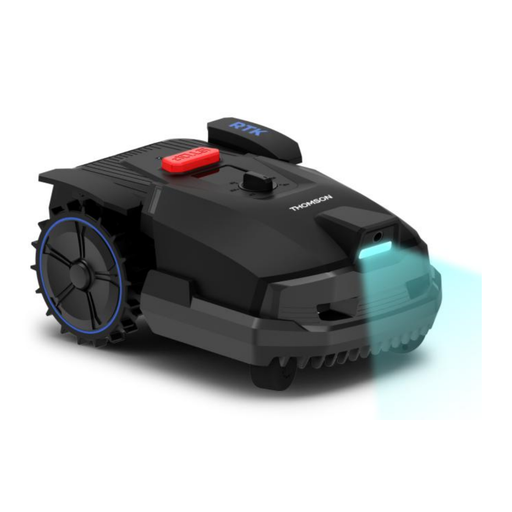
Why this model suits this profile: It combines an AI camera, RTK navigation, Wi-Fi and Bluetooth, with an app compatible with Android and iOS. It’s aimed at users who want to schedule mowing from their smartphone without installing a boundary wire.
The spec sheet states a recommended area of 800 m², an adjustable cutting height of 20 to 70 mm and the presence of rain, lift and tilt sensors.
Integrated AI camera, claimed battery life of up to 100 minutes per charge, automatic return to the base station and remote software updates.
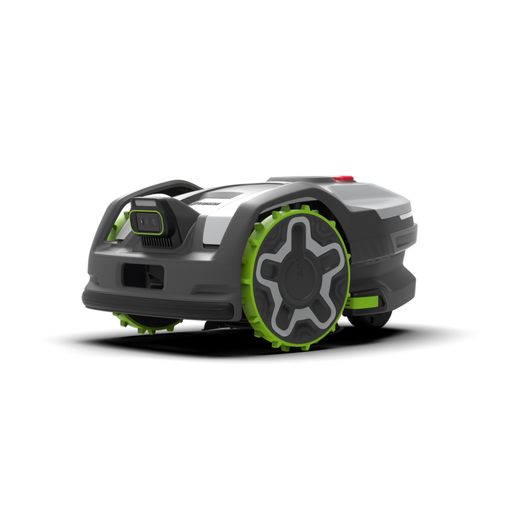
Why this model suits this profile: Its combination of RTK, dual camera and 3D ToF sensor is aimed at homeowners who want automatic mapping, multi-zone management and precise control from an app.
The spec sheet details the installation conditions for the RTK mast, which must be placed at least 2 metres from buildings and obstacles. A requirement to consider before buying.
Cutting height from 20 to 90 mm, cutting width of 200 mm, no-go zone management, IPX5 resistance and a stated noise level of 58 dB(A).
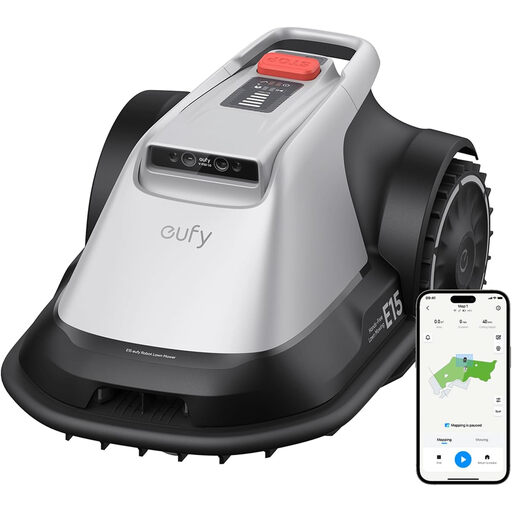
Why this model suits this profile: Its vision-based navigation requires neither a boundary wire nor an RTK base station. It can suit gardens where installing a satellite mast is tricky, provided the mapping matches the garden’s layout.
The spec sheet mentions cameras, 3D perception and automatic mapping. It’s still essential to remove low or hard-to-see objects before mowing.
TrueVision technology, 3D obstacle detection, claimed GPS tracking and automatic return in rain or low light.
For a trouble-free setup, start by measuring the lawn, identifying narrow passages and removing any permanent obstacles. Place the charging station on a level surface, near a protected power socket. With an RTK model, position the mast by following the manufacturer’s instructions carefully.
The mobile app usually lets you set schedules, manage multiple zones and create no-go areas. A connected robotic mower can also receive updates, but some features depend on the quality of the Wi-Fi, Bluetooth or mobile network required.
Running costs mainly include electricity, regular blade replacements and, depending on the model, any connected services. Check the pricing terms before choosing a feature that requires a subscription.
No. Some models use RTK navigation, an AI camera, 3D vision or a combination of these technologies. They define virtual boundaries directly in the app. However, accuracy depends on the garden’s layout and, in the case of RTK, the quality of the satellite signal.
Allow time to position the base station, connect the app and map the entire area. Installation can be quicker without a boundary wire, but setting up zones, passages and no-go areas deserves careful attention.
Lifespan depends on mowing frequency, area, grass type and usage conditions. Check the blades regularly and replace them as soon as they become blunt. For the battery, use the supplied charger, avoid storing it for long periods in a very hot or damp place, and follow the manufacturer’s recommendations.