
Livraison le jour même ou le lendemain

Qualité garantie

Débloquez vos offres de bienvenue: Livraison GRATUITE | Jusqu'à -80 % | 30 jours d'essai gratuits à JoyPlus
Téléchargez l'application
A cordless robotic lawn mower can save you many hours of mowing, but not every model is suited to the same gardens. The term ‘cordless’ may refer to battery power, the absence of a boundary wire or navigation without an external antenna. Before placing your order, check exactly what the product listing includes.
For UK homeowners, three mistakes come up time and again:
Choose a model whose capacity is at least equal to the area that actually needs mowing. A 300 m² garden dotted with flowerbeds and paths may require more flexibility than an open lawn of the same size.
For a robotic lawn mower for 150 to 1500 m², check in particular:
The app can be used to schedule mowing sessions, adjust virtual boundaries and separate the different areas of the garden. However, make sure that Wi-Fi or Bluetooth works reliably at home and that controls are available directly on the robot.
A robotic lawn mower without a boundary wire generally uses virtual mapping, a camera, an RTK system, LiDAR or a combination of these technologies.
The word ‘intelligent’ is no substitute for a detailed technical description. Instead, look at the number of zones supported, the minimum passage width and the accessories included.
When choosing a robotic lawn mower for sloping ground, compare the maximum gradient as a percentage rather than relying solely on degrees. A 45% gradient is equivalent to approximately 24 °, but traction also depends on soil moisture, the surface and the wheel tread.
You should also check:
An IP rating does not mean that the robot can be left outside, permanently exposed to the elements. For cleaning, storage and use in wet weather, the manufacturer’s instructions remain the best reference.
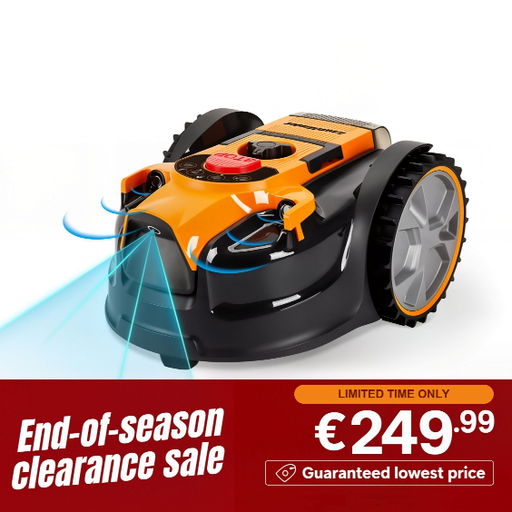
Why this choice suits this type of user : With an advertised capacity of 150 m² and boundary-wire-free operation, this model is suitable for small lawns that do not require a complex installation.
The target area is clearly stated and the listing specifies a wire-free installation. You will still need to follow the instructions for protecting the mower from rain.
Autonomous movement, obstacle detection and rechargeable battery operation for lawns of up to 150 m².
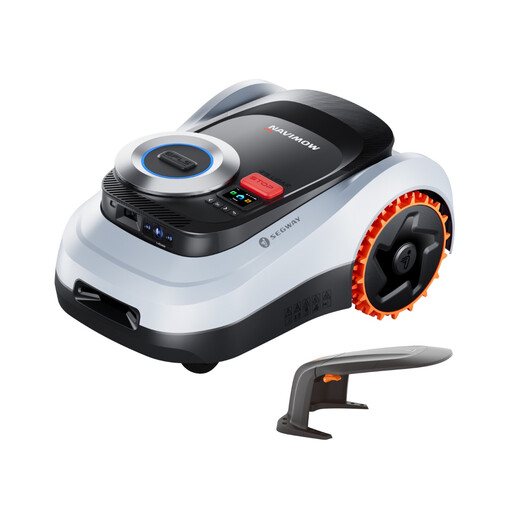
Why this choice suits this type of user : This model is designed for large properties of up to 1500 m², offering mapping without a wire or antenna and precise control through the app.
Navigation uses LiDAR and vision, with automatic mapping advertised. The listing also specifies that multiple zones can be managed.
Advertised detection of more than 200 obstacles, mowing on slopes of up to 45 % and the ability to create 20 zones in the app.
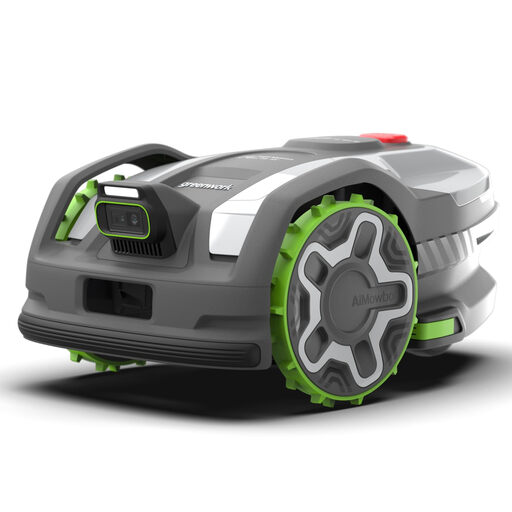
Why this choice suits this type of user : Its RTK and vision-based navigation, multi-zone management and advertised capacity of 600 m² make it an interesting option for complex gardens.
The listing details the technologies used: RTK, two cameras and a ToF sensor. This makes it easier to assess the obstacle-detection claims.
Cutting height adjustable from 20 to 90 mm, advertised slope capability of up to 45 % and a stated noise level of 58 dB(A).
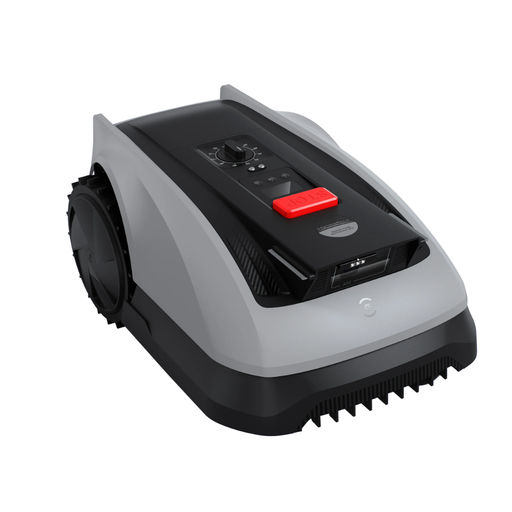
Why this choice suits this type of user : It combines RTK navigation, a detection camera and app control for lawns of up to 600 m².
The listing clearly distinguishes between the RTK reference station, the AIVI camera and the settings available in the app.
Cutting height from 30 to 80 mm, advertised slope capability of up to 45 %, app control and an IPX6 rating.
We have put together a complete, real-time updated selection of products that meet these demanding criteria, as well as European safety requirements.
Yes. Remove stones, toys, branches and cables that could interfere with the blades or sensors. Also identify borders, flowerbeds and narrow passages. Depending on the model, you may need to create a map in the app, install an RTK station or set virtual boundaries.
Electricity consumption depends on the area being maintained, mowing frequency and charging time. Remember to factor in the cost of replacement blades, wheel maintenance and, depending on the system you choose, boundary accessories or the reference station. A rechargeable battery eliminates the need to buy fuel, but its lifespan depends on how intensively it is used and the storage conditions.
It depends on the model. Some have a start button or display directly on the robot, while mapping, scheduling, remote control and multi-zone management are handled through the app. Before buying, check the quality of the connection available in your garden and whether the device can be controlled locally.