
Livraison le jour même ou le lendemain

Qualité garantie

Débloquez vos offres de bienvenue: Livraison GRATUITE | Jusqu'à -80 % | 30 jours d'essai gratuits à JoyPlus
Téléchargez l'application
An underinflated tire isn't just an inconvenience?— it's a genuine safety hazard and a drain on your wallet at the pump. If the thought of waiting in line at the gas station for an often-broken machine frustrates you, a cordless portable air compressor is your best ally for regaining your independence. The problem? The market is flooded with models making enticing marketing claims, but their performance is often disappointing.
As the Head of the Equipment section at Joybuy, my mission is to help you cut through the noise. Here are the common pitfalls to avoid and the criteria that truly matter for making the right choice.
The promise of cordless freedom can sometimes hide major flaws. Keep an eye out for these three crucial points.
To avoid falling for the marketing hype, focus on the technical specifications that truly make a difference for a cordless portable air compressor.
Maximum pressure (often around 150 PSI / 10.3 bar) is a good indicator, but it's not enough on its own. For a car tire, airflow is what really matters.
A good mini compressor for cars must therefore offer the right balance between a pressure suitable for all passenger car tires and an airflow rate that ensures fast inflation.
The battery capacity in milliampere-hours (mAh) is a starting point. A battery of 4000?mAh or more provides enough runtime for several top-ups or to fully reinflate one or two car tires.
The holy grail? Dual-power models. They operate as a battery-powered inflator for maximum portability but can also be plugged into a 12V cigarette lighter socket. This versatility is a key advantage: your compressor is always ready for action, even with a dead battery.
A rechargeable air pump worthy of the name must include a reliable pressure sensor. The auto-shutoff feature is a must-have for peace of mind and safety: you set the target pressure, and the compressor stops automatically once it's reached. This eliminates the risk of overinflation and guarantees perfectly consistent pressure across all your tires.
Rather than an endless list, we've selected a few models that check all the boxes for performance and reliability, catering to different user profiles.
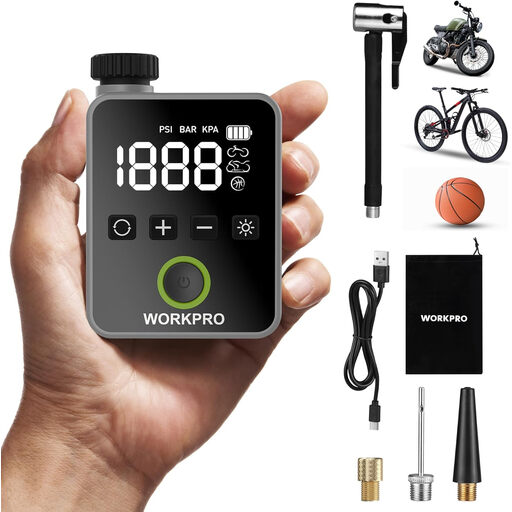
Why we love it : Ideal for those who want an ultra-compact backup solution to slip into a glove box or backpack. Perfect for emergency top-ups on a car, or for regular maintenance of electric bike or scooter tires.
Its featherweight design (270g) and preset modes make its purpose clear: it's built for portability and small top-ups, not heavy-duty use. No false promises mean no disappointment on battery life.
Its extreme portability and handy bonus features (flashlight, emergency power bank) in a mini package.
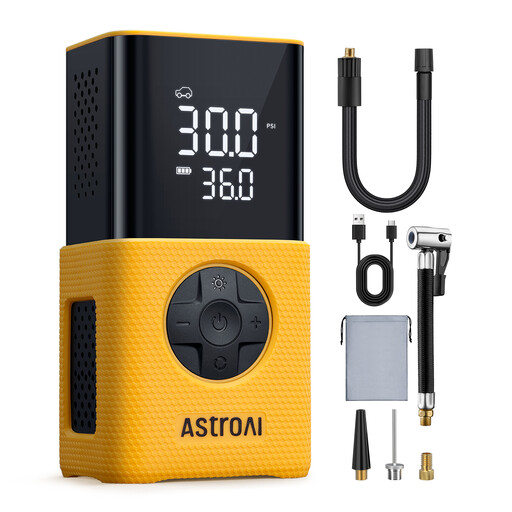
Why we love it : For those who frequently check their car or motorcycle tire pressure and demand a reliable, fast, and accurate tool. Its 4000 mAh battery and superior airflow make it perfect for regular use.
It tackles the speed and accuracy pitfalls head-on. AstroAI advertises a 17 L/min airflow for faster inflation and improved sensors for more precise measurements.
The perfect balance of speed, accuracy, and battery life (thanks to the 4000 mAh battery), all in a package that's still easy to carry.
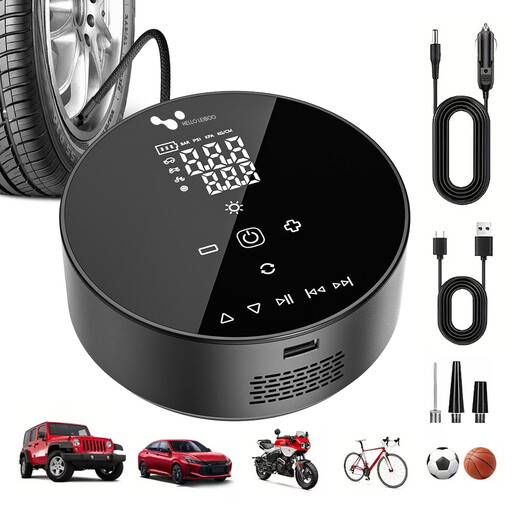
Why we love it : The Swiss Army knife for road-trippers and long-haul drivers. It combines an inflator, a high-capacity power bank (4500 mAh), a work light, and even a Bluetooth speaker.
It thumbs its nose at the battery life pitfall with its dual-power system: cordless on battery, or plugged into the vehicle's 12V socket. The result: you're never out of juice.
Its absolute versatility with its 4-in-1 design and dual-power system, making it ready for any situation.
Discover our full selection of portable compressors, all tested and approved by our editors according to these same demanding criteria.
It all depends on usage and maintenance. Generally, a lithium-ion battery can handle several hundred charge cycles. The pro tip to make it last: avoid fully depleting it and store the device in a cool, dry place. Also, remember to recharge it every 2-3 months, even if you don't use it.
Yes, most models that go up to 150 PSI can inflate an SUV tire without a problem. Just expect it to take longer, as the air volume is larger. For frequent use on a large vehicle, opt for a model with a high airflow rate (L/min) and a robust battery (4000?mAh or more) or, even better, a 12V power option.
Here's a great tip: the first time you use it, compare the pressure displayed by your compressor with that of a trusted gauge (like one at a garage or a modern gas station). Once you've calibrated it this way, you can fully trust the auto-shutoff feature to deliver consistently accurate and identical pressure on all your tires.