
Livraison le jour même ou le lendemain

Qualité garantie

Débloquez vos offres de bienvenue: Livraison GRATUITE | Jusqu'à -80 % | 30 jours d'essai gratuits à JoyPlus
Téléchargez l'application
A cordless pool-cleaning robot can make pool maintenance considerably easier, but not every model meets the same needs. A device designed solely for the floor will not replace a robot that can clean both the floor and the walls. Conversely, a highly capable model may be excessive for a small above-ground pool.
Before placing your order, it is therefore worth looking beyond the marketing claims and checking three essential points: which areas are actually cleaned, how the battery life compares with the pool’s surface area, and how easy the robot is to retrieve.
A stated battery life in minutes does not guarantee that the robot will complete its cycle across the entire pool. The pool’s shape, steps, corners and slope can all affect its route. Check whether the stated duration applies only to the floor or also includes the walls and waterline.
For a large pool, also compare the maximum surface area stated in square metres. A self-contained robot designed for 60 m² will not necessarily be suitable for a 100 m² pool, even if its battery life appears sufficient on paper.
The phrase “complete cleaning” can mean very different things. Some devices are limited to the floor, others climb the walls, while a few models also tackle the waterline or surface.
If deposits build up around the waterline, specifically look for the term waterline pool-cleaning robot. For an above-ground pool with flexible walls, also check compatibility with the lining and whether the robot can adhere to it properly.
A heavy device that remains on the bottom after every cycle can quickly become a chore to remove. Surface parking, automatic drainage and return-to-edge functions make retrieval easier, but they do not make a retrieval hook unnecessary.
The basket should also be easy to remove and rinse. Very fine filtration traps more particles, but it often requires more frequent cleaning. It is therefore best to match the filter fineness to the type of dirt your pool typically encounters.
Start by categorising devices according to how they are used:
Check the maximum depth, recommended surface area and compatible surfaces: liner, reinforced PVC, tiles, polyester or painted concrete. In an above-ground pool, adhesion requirements may differ from those of an in-ground pool.
A rechargeable pool robot should offer battery life that matches the duration of its cycles. As a guide, technical specifications sometimes state between 90 minutes and several hours, depending on the selected mode. Always compare these figures with the pool’s surface area and the areas actually cleaned.
Charging time also deserves your attention. A two- to four-hour charge may be suitable for regular use, while a higher-capacity battery limits interruptions in large pools. A cable-free charging and storage station makes storage easier, provided it is installed in a dry, well-ventilated place protected from water splashes.
The basket capacity determines how much debris can be collected before it needs emptying. A 2.5 to 6 litre tank can be useful for pools that are heavily exposed to leaves, but it can make the device heavier when full.
Filter fineness is measured in micrometres: the lower the value, the smaller the particles the filter can trap. Filtration of 120 or 180 µm is suitable for leaves, insects and everyday debris. Some models offer ultrafine 3 µm filtration, generally using a specific element that needs to be maintained separately. Expressed in litres per hour, the flow rate indicates the circulation claimed by the manufacturer, but on its own it is not enough to assess the actual cleaning performance.
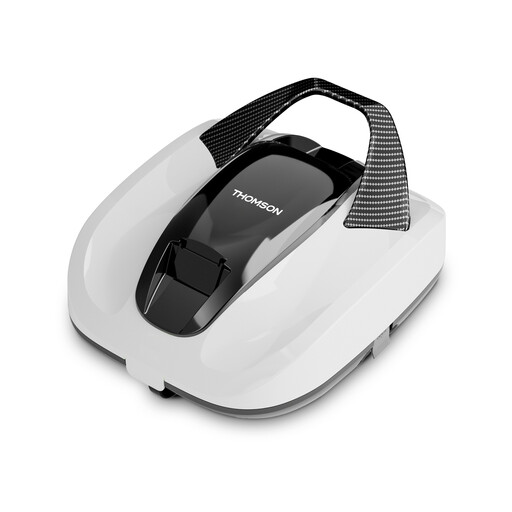
Why this choice suits this profile : This cordless model is designed for pools of up to 85 m² and runs for up to 90 minutes per charge. Its straightforward operation is well suited to routine floor cleaning.
Its specifications clearly state the maximum surface area, 2.6 m depth and 180 µm filtration fineness, reducing the risk of misunderstanding.
5 000 mAh battery, 2.5 L tank, stated flow rate of up to 7 200 L/h and IPX8 protection.
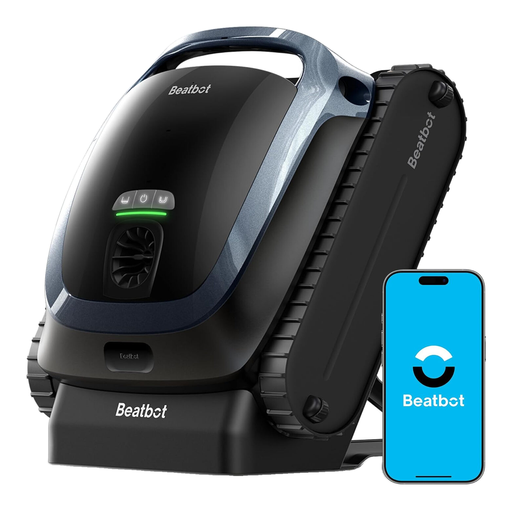
Why this choice suits this profile : It is aimed at owners looking for an intelligent pool robot that can clean the floor, walls and waterline, while making retrieval easier.
Automatic surface parking, SmartDrain drainage and the supplied hook address the challenge of retrieving an underwater device.
Stated battery life of up to 4 hours on the floor, dual brush for the waterline and a wireless charging station.
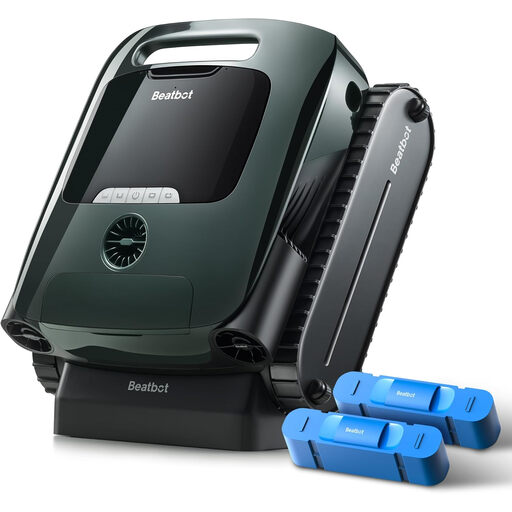
Why this choice suits this profile : Its 5-in-1 design is intended for large pools of up to 360 m², covering the floor, walls, waterline and surface.
The specifications distinguish between the stated battery lives: up to 11 hours on the surface and 5 hours for the floor or walls, rather than giving one general duration.
Two-layer filtration with a stated 150 µm element, app control, automatic parking and clarification kit included.
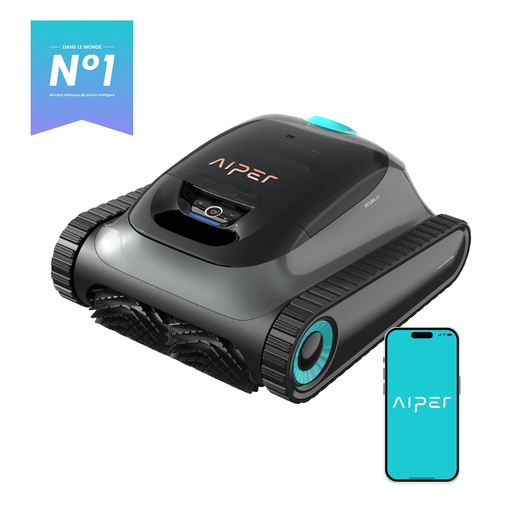
Why this choice suits this profile : The app, weekly scheduling and dedicated modes are ideal for planned maintenance of the floor, walls and waterline.
Durations are broken down by mode: up to 240 to 270 minutes in Eco mode and up to 180 minutes for several cleaning cycles.
Stated dual filtration with a 3 µm ultrafine filter and a standard 180 µm filter, 11 sensors and app-based updates.
We have put together a comprehensive, real-time updated selection of products that meet these demanding criteria as well as European safety standards.
Fully charge the battery in a dry place, then carefully place the robot in the water, following the instructions in the manual. Keep the charger away from the pool. Make sure swimmers and pets leave the area while the robot is operating, then switch off the device before retrieving or handling it.
It depends on how often it is used, filter maintenance, storage conditions and the condition of the battery. Rinse the basket and brushes after every cycle, dry the components designed for this and store the robot away from sunlight, frost and excessive heat. Before buying, check the warranty terms and make sure spare parts are available.
The app generally does not involve any additional cost, but the robot uses electricity while charging. Ongoing expenses mainly involve replacing filters, brushes or the battery at the end of its service life. Check the compatibility and price of these consumables before choosing a connected model.