
Livraison le jour même ou le lendemain

Qualité garantie

Débloquez vos offres de bienvenue: Livraison GRATUITE | Jusqu'à -80 % | 30 jours d'essai gratuits à JoyPlus
Téléchargez l'application
Maintaining your garden, cutting wood for a DIY project, or preparing for a campfire… these tasks can quickly become a chore without the right equipment. For cutting a tree branch or trimming small logs, the cordless mini-chainsaw has established itself as the ultimate smart tool. Lighter and more manageable than a gas-powered model, it offers complete freedom of movement, without the noise and fumes.
To help you find the perfect model, this guide breaks down the essential criteria to consider before you buy. We'll then present a selection of products that caught our eye, suitable for everything from intensive pruning to small, occasional jobs.
Don't get lost in the technical jargon. To make the right choice, three points deserve your full attention.
The heart of a battery-powered chainsaw is its motor. Today, the gold standard is the brushless motor. Its advantages are clear: it's quieter, wears out more slowly, and delivers consistent torque. In practical terms, this means more efficient cutting and a longer lifespan for your machine. The power, expressed in watts (W), will give you an idea of its ability to tackle thicker sections of wood.
The main advantage of a battery-powered pruner is its freedom of movement. But for how long? It all comes down to the battery's capacity, in ampere-hours (Ah), and its voltage, in volts (V). The higher these numbers, the longer you can work. Some packages include two batteries, which is ideal for ensuring you never run out of power. Also, consider compatibility: a battery that fits other tools from the same brand is a significant saving if you're already invested in their ecosystem.
The length of the guide bar determines the maximum diameter of the branches you can cut. A 15 to 20 cm guide bar is an excellent compromise for most common pruning tasks. For more portable needs, like hiking or bushcraft, the manual folding saw is a formidable alternative. Compact, lightweight, and with no battery to recharge, it slips into a backpack and proves perfect as a camping saw for clean cuts on smaller diameters.
Our editors have reviewed several models to bring you a selection that stands out from the crowd, adapted to different use cases.

What Sets It Apart: This model packs a punch with its 1000W brushless motor and flexible power supply. Delivered with two 20V batteries, its stroke of genius is its compatibility with the Makita 18V LXT ecosystem—a decisive advantage for users already equipped with Makita tools. The automatic chain lubrication and tool-free tensioner make maintenance nearly non-existent.
Key Features:
Who is it for? For demanding gardeners looking for a powerful, versatile, and low-maintenance tool for regular pruning. Its compatibility with Makita batteries makes it a very smart choice for DIY enthusiasts.
For finer tasks, camping, or surgical cuts, the manual saw remains an indispensable option.
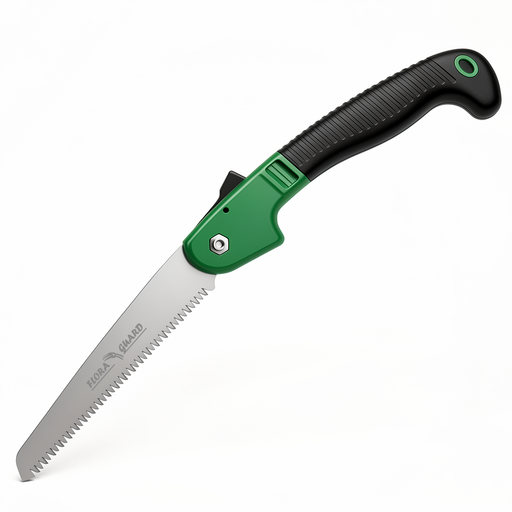
What Makes It Unique: This folding saw was designed first and foremost for mobility. With its 17.8 cm blade and ergonomic TPR handle, it ensures a comfortable grip that reduces fatigue. Its compact size makes it the ideal tool as a secondary garden saw or for camping.
Key Features:
Who is it for? For campers, hikers, and gardeners looking for a lightweight and reliable tool for occasional cuts on small branches.
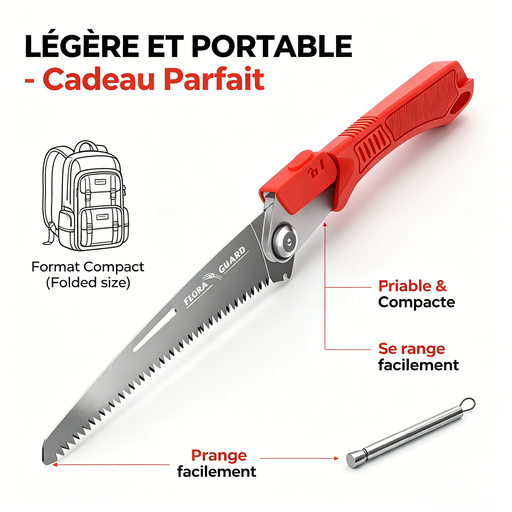
What Puts It a Step Above: This model is a step up, featuring a longer 20.32 cm blade made of SK-5 steel, renowned for its strength and durable edge. The secure locking mechanism inspires confidence with every use.
Key Features:
Who is it for? For bushcraft enthusiasts, demanding gardeners, and anyone who needs a robust hand saw to tackle larger sections of wood.
Our selection covers the most common uses, but the world of cutting tools is much broader. If your project requires a hand saw, a corded electric model, or a professional-grade gas chainsaw, our full catalog will meet your needs.
Explore Our Full Range of Saws
It all depends on the length of its guide bar. A model with a 15 cm (6-inch) bar can effortlessly tackle branches from 12 to 14 cm in diameter. With a 20 cm (8-inch) bar, you can aim for diameters up to 18-20 cm. Our advice: avoid pushing it to its limits continuously to preserve the motor.
Not at all! It's actually one of its biggest advantages over a gas model. Maintenance comes down to a few simple steps:
The two tools are more complementary than they are competitors. For high-volume work (cutting firewood, pruning many branches), the mini-chainsaw is unbeatable in speed and comfort. However, for a precision cut, difficult access, or an outing in nature (hiking, camping), the folding saw is lighter, quieter, and easier to transport.