
Livraison le jour même ou le lendemain

Qualité garantie

Débloquez vos offres de bienvenue: Livraison GRATUITE | Jusqu'à -80 % | 30 jours d'essai gratuits à JoyPlus
Téléchargez l'application
Whether you're a mechanic, maintenance technician, or construction professional, a seized bolt or a long series of fasteners can quickly turn into a nightmare. When faced with a stubborn nut, manual tools reveal their limitations, leading to wasted time and effort. In this context, a high-performance cordless impact wrench isn't a luxury—it's an essential ally for boosting your efficiency and productivity.
This guide breaks down the key criteria for choosing the right tool and presents our selection of the best models for the most demanding applications, from heavy-duty truck tyre changes to assembling steel frames.
Before comparing models, let's review the technical specifications that make all the difference for heavy-duty use.
Expressed in newton-metres (Nm), torque is the number one indicator of your machine's power. For a professional-grade impact wrench, there are two values to watch:
For work on light vehicles, a torque of 400 to 600?Nm may be sufficient. However, to tackle heavy-duty trucks, agricultural machinery, or industrial structures, aim for an impact wrench with 1,000?Nm or more. A high-torque impact wrench is your best insurance against the most frustrating situations, like nuts that are rusted or welded by corrosion.
No cord means total dependence on the battery. Today's models run almost exclusively on Lithium-Ion, which offers excellent energy density. For professional use, there are several points to check:
The heart of the tool, the motor, has a direct impact on its performance and lifespan. The brushless motor has established itself as the standard for high-end tools. Its advantages over traditional brushed motors are decisive:
We have selected tools that meet distinct needs, from raw power for tough loosening jobs to surgical precision for finishing touches.
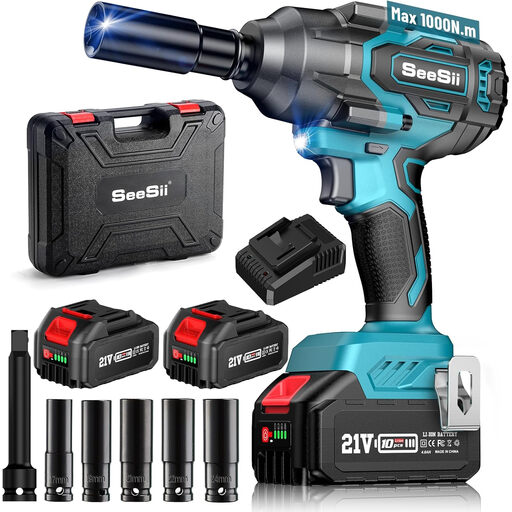
Why It Stands Out
The SEESII doesn't pull any punches: it's all about raw power, with a stated breakaway torque of 1,000?Nm. Built for the toughest jobs, it features a brushless motor and a robust impact mechanism. The complete kit, including two 21?V 4.0?Ah batteries, a fast charger, and a set of sockets, makes it a turnkey solution for the most demanding job sites.
Pros
Who is it for? For automotive/heavy-duty truck mechanics, maintenance technicians, and construction professionals looking for an impact wrench for truck wheels or to overcome the most stubborn fasteners.
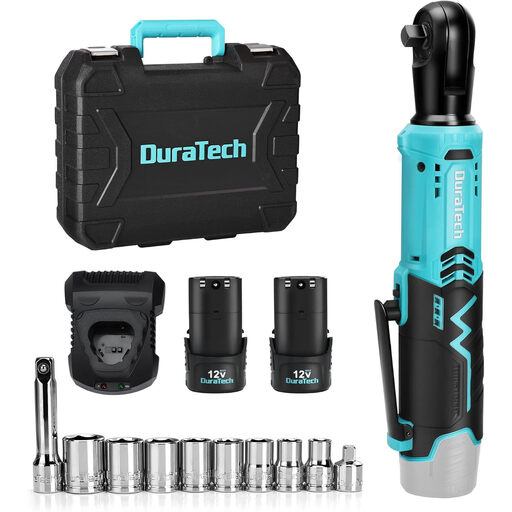
Why It Stands Out
Note that the DURATECH is not an impact wrench, but its ideal companion. Here, the goal isn't power, but speed and access to the tightest spaces. With its 65?Nm of torque, it won't break a seized bolt loose, but it excels at rapidly fastening and unfastening once the bolt is free. Its slim head is a godsend for working in an engine bay or on compact equipment.
Pros
Who is it for? For mechanics and expert DIYers who frequently perform assembly and disassembly in hard-to-reach corners (engine bays, etc.), where speed trumps brute force.
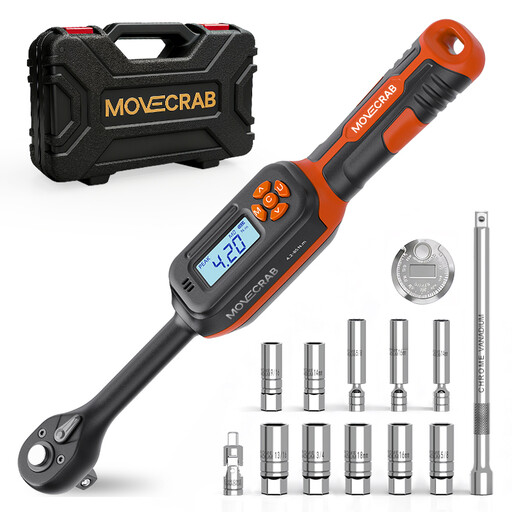
Why It Stands Out
Now for something different: this tool isn't for loosening, but for the crucial step that follows: precision tightening. After snugging up a nut with an impact wrench, a torque wrench becomes essential for applying the exact torque setting recommended by the manufacturer. The MoveCrab model delivers digital precision (±2%) with its LCD screen, preset modes, and data-saving capabilities.
Pros
Who is it for? For all professionals and demanding enthusiasts for whom precision is non-negotiable. It's the mandatory finishing tool to use after a cordless impact wrench, guaranteeing you'll never strip a thread or damage a component.
Our selection highlights tools that meet specific needs for power, accessibility, and precision. However, the world of power tools is a vast and constantly evolving universe.
To discover a wider range, including other impact wrench models, accessories, and various kits, we invite you to browse our complete category of socket tools.
Although their names are similar, their purposes are very different. An impact wrench uses a square drive (usually 1/2-inch) to fit sockets. It's designed to generate extremely high torque to tighten and loosen large-gauge bolts and nuts. An impact driver, on the other hand, is equipped with a hex chuck (1/4-inch) for driver bits and delivers much lower torque, suitable for driving screws into wood or metal.
It all depends on your jobs. For changing the wheels on a passenger car, 400 to 600?Nm is more than enough. However, if you work on trucks, tractors, or construction equipment, or if you frequently encounter bolts welded shut by rust, 1,000?Nm of torque is not excessive. It's a power reserve that will prevent you from getting stuck and having to bring out the heavy artillery (like a giant breaker bar or a blowtorch).
Absolutely not for the final tightening of critical components! The power of an impact wrench is too raw to be metered with precision. The risk of over-tightening and damaging a thread or the component itself is very real. The professional method is simple: use the impact wrench to quickly snug up the nut, then finish the job with a torque wrench (like the MoveCrab model) to apply the final torque specified by the manufacturer. It's the only way to guarantee a clean and safe job.