
Livraison le jour même ou le lendemain

Qualité garantie

Débloquez vos offres de bienvenue: Livraison GRATUITE | Jusqu'à -80 % | 30 jours d'essai gratuits à JoyPlus
Téléchargez l'application
Whether you're a professional mechanic, a construction worker, or just an enthusiast who loves tinkering with your car, the cordless impact wrench is the tool that turns a chore into a breeze. But in a market saturated with marketing promises and confusing spec sheets, choosing the right model can quickly become a headache.
As a Product Expert at Joybuy, my mission is to help you see things more clearly. Let's break down the common pitfalls to avoid and the criteria that truly matter, so you can make a smart choice that cuts through the marketing hype.
Before you even start comparing spec sheets, learn to spot the seemingly good ideas that lead straight to buyer's remorse.
To find the right cordless impact wrench for your needs, you don't have to drown in technical details. Focus on these three key technical points.
Torque is the rotational force the tool can apply. It's essential to distinguish between:
Warning: Over-tightening can strip a thread or damage a component. For sensitive tasks (like mounting wheels), it is imperative to finish the job with a torque wrench (digital or manual) to adhere strictly to the manufacturer's specifications.
The motor technology is a determining factor for the tool's performance and lifespan. A brushless motor offers a significant advantage. Unlike traditional brushed motors, there is no friction between brushes and a commutator.
The benefits are immediate:
For regular or professional use, the investment in a brushless model quickly pays for itself.
A cordless impact wrench is completely dependent on its battery. Consider the following points:
Here are a few options that stand out for their balanced specifications and suitability for specific user profiles.
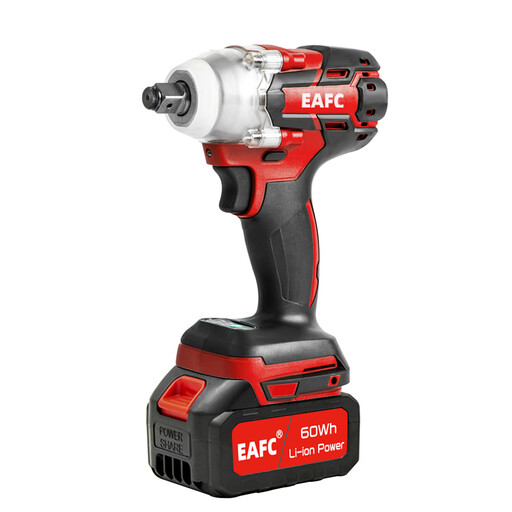
Why it's a great choice: Perfect for changing tyres twice a year or for small assembly jobs. Its 200 N.m of torque is more than enough for a passenger car's wheels, without the risk of over-tightening.
This model advertises a realistic 200 N.m of torque, perfectly calibrated for its intended use. It thus avoids the trap of inflated and misleading marketing numbers.
Its brushless motor ensures good longevity and decent runtime. The fact that it comes with a battery and a simple USB charging cable makes it an ultra-convenient and budget-friendly solution.
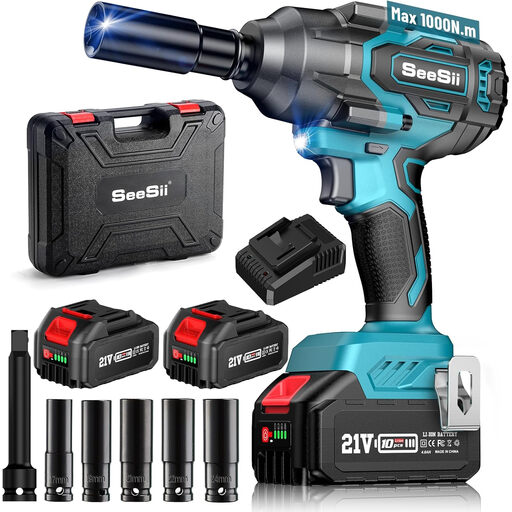
Why it's a great choice: For those who regularly get their hands dirty (working on suspension, chassis, or engine components). This kit offers the perfect balance of ample power (1000 N.m breakaway, 800 N.m fastening), excellent runtime, and great versatility.
Supplied with two 4.0Ah batteries and a fast charger, it solves the runtime issue right out of the box. You can work without interruption, unlike single-battery kits that will leave you high and dry.
The kit is very comprehensive, including 5 sturdy-looking sockets and a carrying case. Its 3 adjustable speeds allow you to fine-tune the power for perfect control on any job.
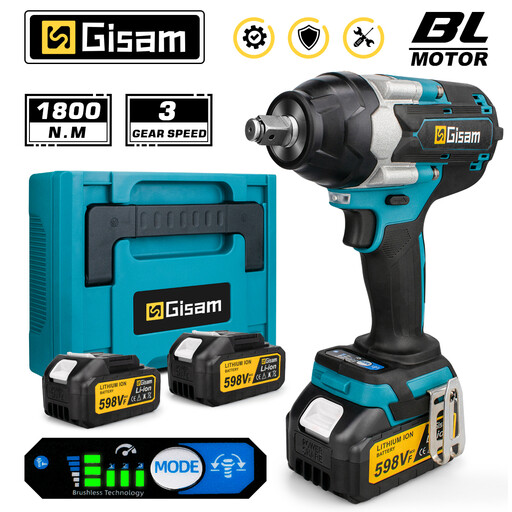
Why it's a great choice: Built for heavy-duty tasks: truck mechanics, steel framework, industrial maintenance. Its raw power tackles the most stubborn bolts without breaking a sweat.
The spec sheet is honest: it clearly distinguishes between the maximum breakaway torque (1800 N.m) and the nominal fastening torque (700 N.m). This transparency prevents any unpleasant surprises on the job.
Phenomenal nut-busting power and a brushless motor built to last. The icing on the cake is its compatibility with Makita 18V batteries, a decisive advantage for pros already invested in that platform.
Explore our full selection of impact wrenches, chosen for their performance-to-price ratio and reliability.
For a standard passenger car, a model offering 300 to 500 N.m of real fastening torque is ideal. That's enough to loosen most lug nuts, even if they're a bit seized. However, be warned: the final tightening of wheel nuts must be done with a torque wrench set to the exact specification recommended by the vehicle manufacturer. This is a non-negotiable safety issue.
For very occasional use, a classic brushed motor can suffice. But for regular use, a brushless motor is a very wise investment. It will give you better runtime, a longer lifespan (no more replacing brushes!), and rock-solid reliability. In the long run, the math is simple.
Absolutely not. It is crucial to only use batteries designed for your tool's specific brand and voltage. Using an incompatible battery is the surest way to damage your equipment or even cause an accident. The only exception: if the impact wrench manufacturer explicitly states compatibility with another battery platform (like Makita's 18V system, for example), then you can use it with confidence.