
Livraison le jour même ou le lendemain

Qualité garantie

Débloquez vos offres de bienvenue: Livraison GRATUITE | Jusqu'à -80 % | 30 jours d'essai gratuits à JoyPlus
Téléchargez l'application
A cordless handheld vacuum cleaner makes quick clean-ups a breeze: crumbs on the table, dust in window tracks, pet hair on the sofa, or dirt in the car interior. But you need to pick the right model. Battery life measured in ideal conditions, a filter that clogs after just a few uses, or poorly designed accessories – some devices end up at the back of a cupboard before long.
Before you start comparing options, here are the most common pitfalls and the criteria that really matter.
The power expressed in watts mainly tells you about the motor and electricity consumption. On its own, it doesn’t let you judge the effectiveness of a powerful cordless vacuum. When the information is available, suction pressure in kPa gives you a more direct indicator of the device’s ability to dislodge dust and debris.
However, this figure needs to be considered alongside the nozzle being used, the airflow, the battery charge level, and the selected mode. Turbo mode generally delivers more power, but it also noticeably reduces battery life.
Battery life depends on the power setting you choose and the accessory you’re using. A device advertised for 30 or 40 minutes may last much less on maximum suction. For everyday use, make sure to check:
A rechargeable handheld vacuum is only truly practical when it’s charged and easy to grab.
A small dustbin is easy to empty, but it fills up quickly, especially with pet hair and textile fibres. A washable filter cuts down on the need to buy replacements, as long as you let it dry completely before putting it back in. People who are sensitive to dust may also want to consider a vacuum cleaner with a HEPA filter, though this shouldn’t be seen as a medical guarantee.
For picking up crumbs, cleaning a keyboard, or dusting car seats, moderate power is often enough. If you’re looking for a vacuum for pet hair or a sofa vacuum, a nozzle with a brush will generally be more useful than a high figure on the spec sheet.
Two suction modes let you save battery on light dirt and save maximum power for more stubborn debris. For floors, a 2-in-1 vacuum with a tube and floor head offers more versatility. On the downside, it will often be bulkier than a strictly portable device.
A capacity of 150 to 500 ml is fine for quick clean-ups. A 50 ml dustbin keeps things compact, but you’ll need to empty it frequently, especially in a car or after cleaning a sofa.
Go for a removable dustbin, easy opening, and an accessible filter. Never vacuum up liquid, hot ashes, sharp objects, or flammable materials, unless the manual explicitly says it’s suitable. Even a vacuum marketed as “Wet & Dry” should be used according to the manufacturer’s instructions.
For the most common uses, make sure you have at least:
The weight, handle shape, and stated noise level quickly become important with repeated use. A charging station makes storage simpler, while a USB-C port can be handy for a compact device intended for the office or travel.
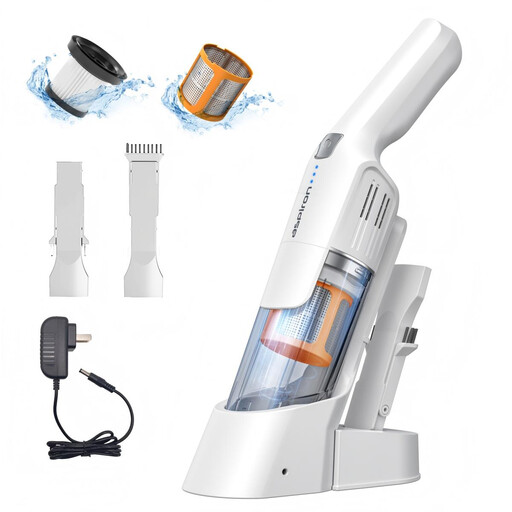
Why this choice suits this profile: This model is ideal for touch-ups in a small home, cleaning car seats, and picking up everyday crumbs. Its charging station keeps it within easy reach.
The spec sheet mentions two suction levels, a 500 ml dustbin, and a washable, reusable filtration system. The stated battery life ranges from 13 to 25 minutes depending on the mode selected.
Suction stated at up to 15 kPa, 500 ml dustbin, two nozzles, and a noise level below 70 dB according to the product sheet.
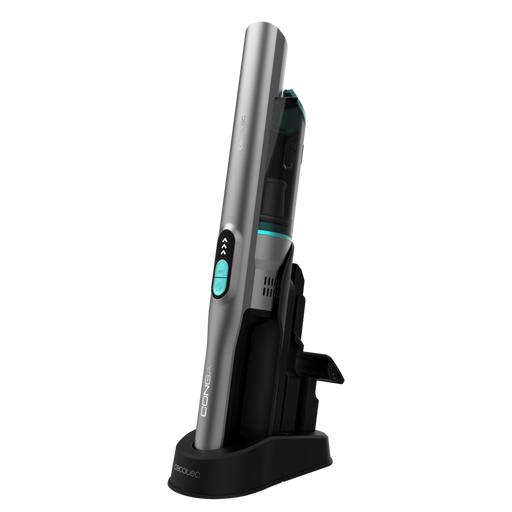
Why this choice suits this profile: Its lightweight design and charging base appeal to users who want a well-finished device for the home, the car, and fabric surfaces.
Eco and Turbo modes let you distinguish between routine maintenance and tougher dirt, rather than constantly using maximum power.
The product sheet states 20 kPa of suction, up to 40 minutes of battery life, and a removable 2,500 mAh battery.
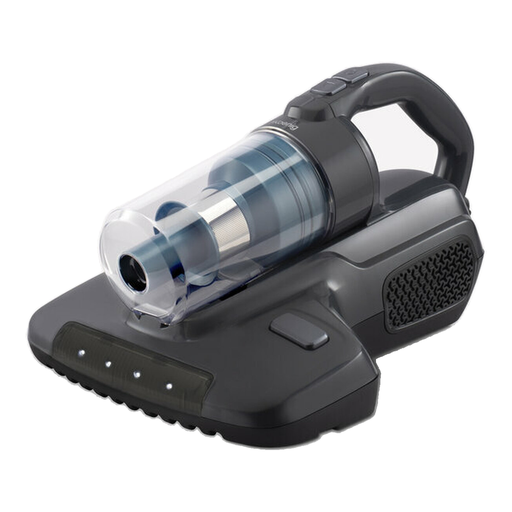
Why this choice suits this profile: This corded model is designed for regularly cleaning mattresses, pillows, and sofas, where run time matters more than freedom of movement.
Its 4.5 m cable avoids the limitations of a finite battery. The device is specialised for fabric surfaces, rather than being marketed as a universal model.
Stated power of 400 W, 0.4 l dustbin, HEPA filtration, and a beating function. The UV lamp should be used in accordance with safety instructions.
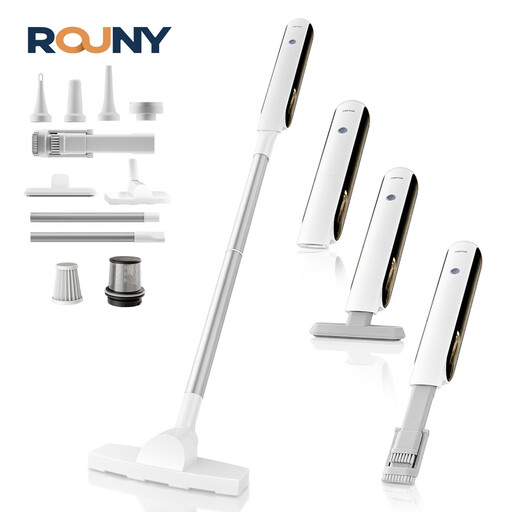
Why this choice suits this profile: Its compact size is ideal for flats, offices, student rooms, and cleaning the car. The light helps you spot dirt in hard-to-see areas.
The spec sheet distinguishes between a stated battery life of 15 minutes on high power and 30 minutes on reduced power. With its 150 ml capacity, the dustbin is well suited to small jobs.
Two modes, suction stated at up to 18 kPa, washable HEPA filter, seven nozzles, and a blowing function.
We’ve put together a comprehensive, real-time updated selection of products that meet these demanding criteria and European safety standards.
For picking up crumbs, hair, and doing targeted touch-ups, a stated battery life of 15 to 30 minutes can be enough. If you plan to clean several rooms or use Turbo mode regularly, go for a removable battery or a device with fast charging. Always compare the stated run times for the different modes.
Empty the dustbin after sessions that have generated a lot of dust, then clean the filter according to the manufacturer’s instructions. A washable filter must be completely dry before you put it back. Also check the nozzles and remove any hair or threads that could reduce airflow. Unplug the base or charger before any maintenance.
A compact model is perfectly suited to spot cleaning, the car, stairs, keyboards, and furniture. It won’t necessarily replace a standard vacuum for large areas, thick carpets, or long cleaning sessions. In that case, a 2-in-1 device or a corded model can effectively complement your equipment.