
Livraison le jour même ou le lendemain

Qualité garantie

Débloquez vos offres de bienvenue: Livraison GRATUITE | Jusqu'à -80 % | 30 jours d'essai gratuits à JoyPlus
Téléchargez l'application
On paper, the cordless handheld vacuum is the ideal tool for everyday messes: crumbs on the sofa, dust on your desk, or a quick car clean-up. Yet, disappointment is often just around the corner: a device that loses suction after a few weeks, a battery that doesn't go the distance... To avoid buyer's remorse, you need to know how to read between the lines of spec sheets and sidestep marketing traps. Our mission: to help you cut through the noise and focus on the features that really matter. Follow this guide to make an informed choice.
The market is flooded with models making tempting promises, which unfortunately often hide deal-breaking flaws in daily use.
To make the right choice, forget the marketing speak and focus on these three technical indicators. They are what determine the performance and lifespan of your future cordless handheld vacuum.
The only reliable measure of effectiveness is suction, expressed in kilopascals (kPa). This, not Watts, indicates the device's real ability to lift dust and debris.
A good handheld vacuum is a chameleon. Its accessories are what will make the difference in your daily routine:
Look for the stated runtime for each power level, not just the most flattering number. A duration of 15 to 20 minutes in normal (non-eco) mode is a good benchmark. On the filtration side, a washable HEPA filter is a must-have. It traps the finest allergens (pollen, dust mites) and can be simply rinsed with clean water. This guarantees consistent suction and near-zero maintenance costs.
Let's get practical with a few models that meet different needs, all selected based on the objective criteria we've just defined.
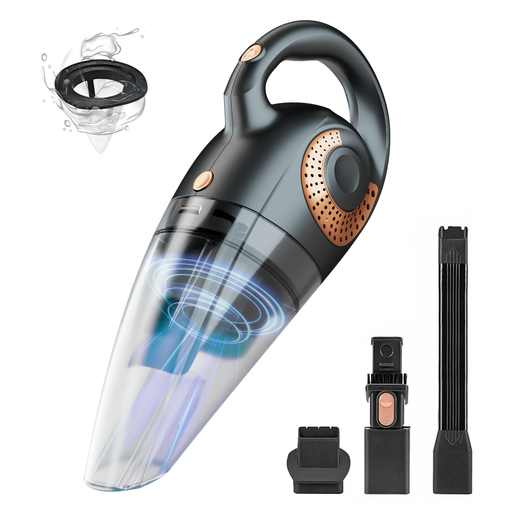
Who is it for? For those who want a simple, effective device for small, everyday clean-ups. Perfect for breakfast crumbs, dust on shelves, or a quick touch-up in the car. Its lightweight design is a real bonus.
The spec sheet is honest: the 6,000 Pa (6 kPa) power is clearly stated and sufficient for everyday messes. Its HEPA filter is washable, which saves you from nasty surprises and hidden costs.
Simplicity. Effective for its price, it's also easy to live with: its transparent dustbin shows you when to empty it, and it opens with a single press.
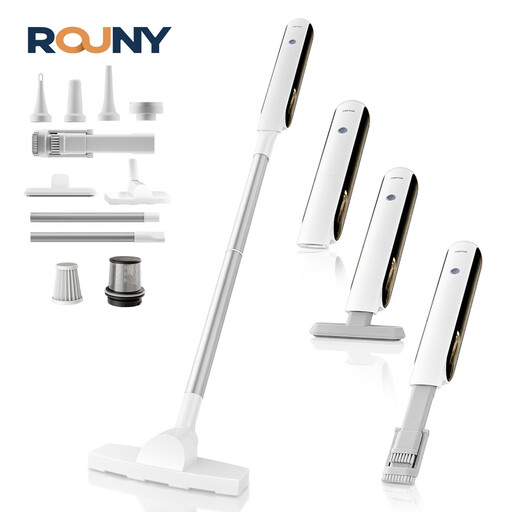
Who is it for? For those looking for more than just a backup vacuum. With its blower function, LED light, and two suction levels, it's the Swiss army knife of cleaning for the home, office, and the perfect mini car vacuum.
Total transparency on performance, with two distinct modes: 9 kPa for 30 min of runtime, and a boost mode at 18 kPa for 15 min. No unpleasant surprises, you know what to expect. Its dual filter system, including a washable HEPA, is a guarantee of longevity.
Its formidable versatility. A handheld vacuum, backup stick vacuum with its extension tube, or a blower: it does it all. The LED light isn't a gimmick; it's a real advantage that gives dust no place to hide.
Discover our other selections of products tested and approved by our editors, all compliant with safety standards.
The lifespan of a cordless handheld vacuum is typically 2 to 4 years. The weakest link is almost always the lithium-ion battery, whose capacity diminishes with each charge cycle. To preserve it, avoid leaving the device plugged in permanently after it's fully charged and never store it with a completely dead battery. Regular filter maintenance is just as crucial to avoid straining the motor.
For allergy sufferers, pet owners, or anyone who wants cleaner air, the answer is yes. A washable HEPA filter is practically essential. It captures over 99% of allergens (pollen, dust mites, dander...). For simple dusting, a standard washable filter might suffice, but a HEPA filter provides real peace of mind.
Most recent models are equipped with lithium-ion batteries. Here are a few simple steps to take care of them: