
Livraison le jour même ou le lendemain

Qualité garantie

Débloquez vos offres de bienvenue: Livraison GRATUITE | Jusqu'à -80 % | 30 jours d'essai gratuits à JoyPlus
Téléchargez l'application
Does assembling flat-pack furniture give you blisters? Tired of manually driving dozens of screws for a single shelf? The cordless electric screwdriver is the essential tool that turns this chore into a quick, effortless task.
But with the overwhelming number of models available, it's not easy to find your way. This guide is here to help you decode the key features and find the perfect tool for your needs, whether it's for high-precision electronics repair or assembling your new bookshelf.
Choosing the right tool is about more than just power. To make the right choice, here are the three key points to evaluate.
Torque, measured in Newton-metres (N.m), defines the tool's rotational force. It's the number one criterion for determining what your screwdriver is best suited for.
A cordless tool is only useful if it has stamina. Most current models feature a rechargeable lithium-ion battery, which offers an excellent power-to-weight ratio. Keep an eye on two indicators:
An electric screwdriver is nothing without good bits. A quality precision screwdriver kit or a versatile set will ensure you're never caught unprepared. Check that the included kit contains the most common bits (Phillips, flathead, Torx, hex) and that their quality (S2 steel, for example) guarantees their longevity. The inclusion of accessories like tweezers or a pry tool can even turn your device into a true miniature toolbox.
To illustrate these criteria in action, here is a selection of three products designed for very different needs.
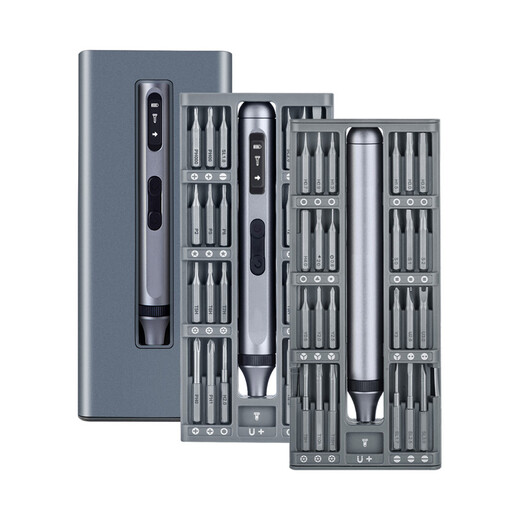
Why it stands out: This set is tailor-made for high-precision work. Its aluminium body and ultra-comprehensive 48-bit kit make it the ideal companion for the most meticulous tasks.
Pros:
Who is it for? Electronics enthusiasts, model makers, and anyone who regularly works on small devices (smartphones, laptops, glasses).
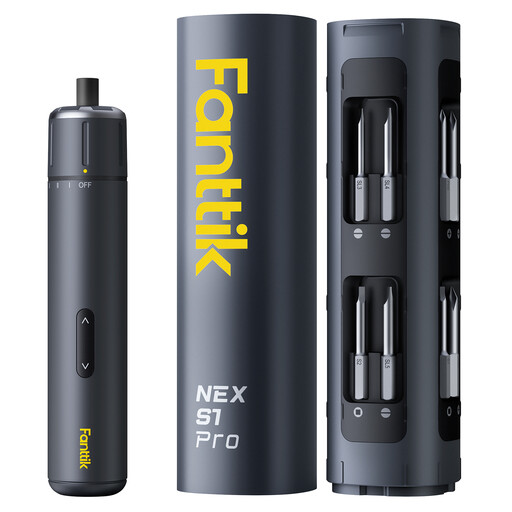
Why it stands out: The Fanttik S1 Pro strikes the perfect balance between controlled power and ease of use. Its adjustable torque and high-performance battery make it the Swiss Army knife for home DIYers.
Pros:
Who is it for? For the weekend warrior and the everyday DIYer alike. It's the ideal companion for furniture assembly, installing shelves, building a gaming PC, or handling small daily repairs.
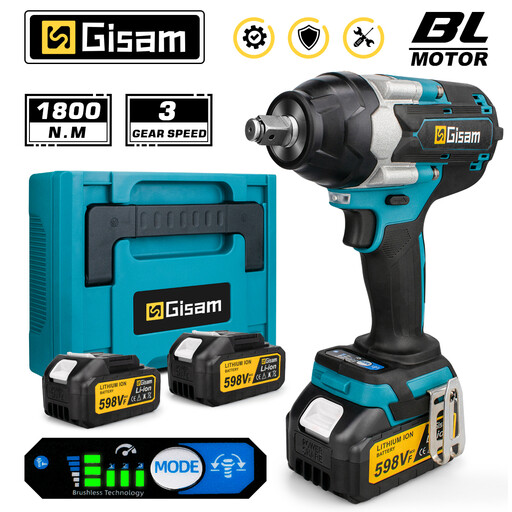
Why it stands out: Heads up, we're moving into a different category. This is an impact wrench built for raw power. Its colossal torque makes it suitable for demanding applications in mechanics and construction.
Pros:
Who is it for? Amateur mechanics, construction pros, or expert DIYers who need maximum power for specific projects (auto mechanics, construction, etc.).
Our selection covers three user profiles. If you don't see yourself in these or simply want to explore other avenues, the market is full of models.
To discover a wider range of tools, check out our complete category dedicated to torque tools.
The electric screwdriver applies a continuous, controlled rotational force (torque), ideal for furniture, electronics, and precision DIY. The impact driver (or impact wrench), on the other hand, works by delivering rapid impacts to generate much higher torque. It's designed for tightening and loosening very resistant bolts and nuts, typically in mechanics or construction.
For most flat-pack furniture (MDF, particleboard, pine), a torque between 2 and 5 N.m is more than enough. A model with adjustable torque is ideal: it allows you to start gently to avoid damaging the wood or stripping a screw head, then increase the force if needed.
In a word: no. An electric screwdriver is simply not designed for that. Its rotation speed is too slow, and its chuck is not made to hold drill bits. For drilling, you'll need a drill/driver, a much more versatile tool that combines both functions.