
Livraison le jour même ou le lendemain

Qualité garantie

Débloquez vos offres de bienvenue: Livraison GRATUITE | Jusqu'à -80 % | 30 jours d'essai gratuits à JoyPlus
Téléchargez l'application
Pruning shrubs, rose bushes, or fruit trees is an essential task for a healthy and beautiful garden. But let's face it, this job can quickly become a chore, especially when dealing with numerous or overly thick branches. Sore hands and wrists after a long gardening session? It's a classic complaint many of us know all too well.
This is precisely where cordless electric pruning shears are a game-changer. By replacing your hand strength with motorised assistance, they allow you to make clean, powerful cuts with far less fatigue. But with the jungle of available models, how do you make the right choice?
As the Head of Product Recommendations at Joybuy, my role is to test and select hundreds of tools to provide you with clear, practical advice. This article will help you decipher the key criteria for choosing a battery-powered pruner and present a selection of products for every need. The goal: to help you find the perfect pruning tool for your garden.
Before you decide on a model, let's review a few technical features that will make all the difference in practice.
This is THE number-one criterion. The cutting diameter indicates the maximum thickness of branches the tool can cut through without strain. A model with a 25?mm capacity is already very versatile for routine maintenance of shrubs and flowers. For pruning larger shrubs or if you're looking for a pruner for thick branches, a capacity of 35?mm or more will be necessary. Nearly all electric pruners use bypass blades, where a sharp blade glides past a non-sharpened hook. This guarantees a clean cut that helps the plant heal better.
Cordless means freedom of movement, which makes battery life crucial. Models that come with two lithium-ion batteries are a real bonus, as they allow you to work without interruption while the first battery recharges. Don't overlook the tool's weight and grip, either. An ergonomic design and a well-balanced weight make all the difference during long gardening sessions—an essential point if you're aiming for a professional-grade garden pruner.
With power comes the need for flawless safety. Check for a safety lock to prevent accidental start-ups. The quality of the blade steel (like SK5 steel, known for its durability and sharp edge) is also a guarantee of longevity. Finally, simple maintenance—cleaning and lubricating the blade after each use—is the secret to maintaining optimal performance over the long term.
Let's get to the specifics with our selection, designed for every type of gardener, from the most casual to the most demanding.
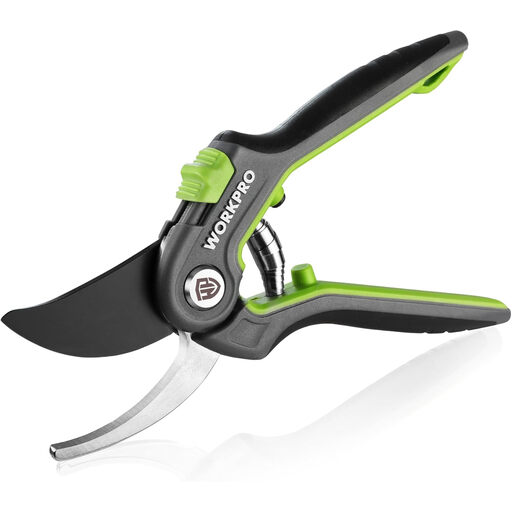
Even in a guide about electric tools, an excellent manual option has its place. For small gardens or precision finishing work, a good pair of manual pruners is simply unbeatable.
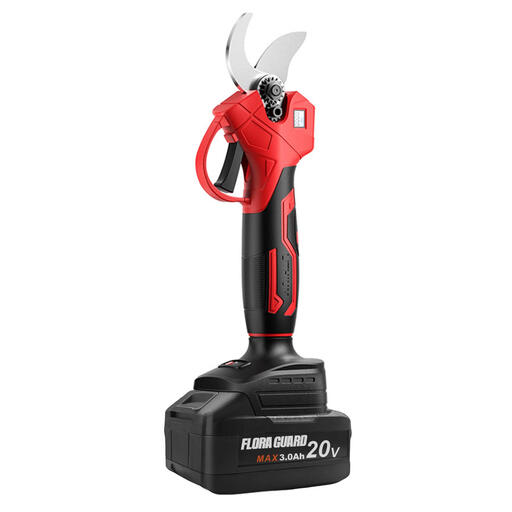
This model strikes the perfect balance between power, battery life, and handling for the vast majority of gardening tasks.
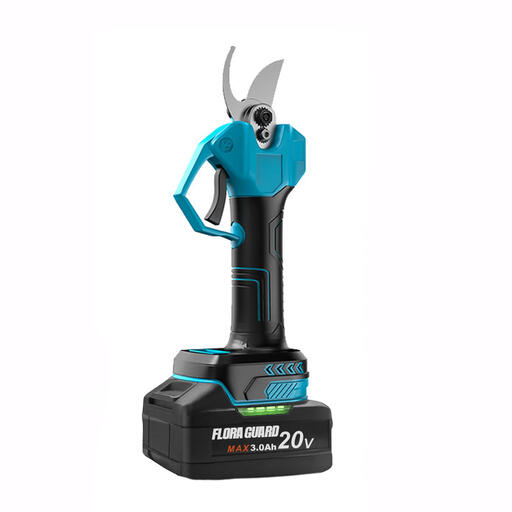
When the gardening gets tough and the branches get serious, this model delivers the power needed to tackle them effortlessly.
Our selection is just a sneak peek. If you want to explore other types of pruners—whether manual, electric, pole-mounted, or specialised for vineyards—feel free to browse our full range.
? Discover our entire category of pruning tools
A bypass pruner works like a pair of scissors: a sharp blade glides past a non-sharpened hook. It makes a clean, precise cut that's ideal for living wood because it preserves the plant's health. An anvil pruner has a blade that closes against a flat surface (the anvil). It's more powerful for cutting dead, hard wood but tends to crush and damage the tissues of green wood. The recommended electric models are almost always the bypass type.
Maintenance is simple but crucial. After each use, wipe the blade with a dry cloth to remove sap and debris. Occasionally apply a few drops of fine oil to protect it from rust and ensure smooth movement. The golden rule: always engage the safety lock and remove the battery before handling the blade.
Rest assured, manufacturers have made huge progress on the weight of these tools. Although a cordless electric pruner is necessarily heavier than a manual model (due to the motor and battery), its weight is often well-balanced by an ergonomic design. Most importantly, the fact that you no longer have to strain to cut a branch changes everything. Overall fatigue is significantly reduced, making them much less strenuous to use over time.