
Livraison le jour même ou le lendemain

Qualité garantie

Débloquez vos offres de bienvenue: Livraison GRATUITE | Jusqu'à -80 % | 30 jours d'essai gratuits à JoyPlus
Téléchargez l'application
Buying a cordless drill driver kit with accessories sounds practical: one case, several bits and a battery ready to go. But some kits are packed with accessories you’re unlikely to use, while the drill lacks torque or the batteries are difficult to replace.
Whether you’re working in a flat, a house, a workshop or on maintenance jobs, three common pitfalls are worth watching out for:
Torque, measured in newton metres (N·m), indicates the rotational force available for driving screws or drilling. For assembling furniture, putting up shelves and tackling everyday DIY, moderate torque may be enough. Longer screws, dense wood and bolts, however, need more power in reserve.
The number of clutch settings matters too. A precise adjustment helps prevent you driving a screw too deep or damaging a soft material. A tool with 25+1 or 28+3 settings will generally offer finer adjustment than a model with only a few settings. Bear in mind, though, that the figures quoted are manufacturer specifications: actual performance also depends on the bit, the material and the condition of the battery.
Two mechanical speeds are particularly useful:
Lithium-ion batteries are now standard in cordless tools. Lighter than older battery technologies, they generally hold their charge better when stored correctly. Check these points in particular:
Two 4,000 mAh batteries can be a good choice for longer jobs, provided the charger and protection system are up to the task. For occasional DIY, two 2,000 mAh batteries may be enough, while keeping the overall weight down.
A 10 mm keyless chuck makes it quicker to change drill bits and driver bits. Check what else is included in the case: wood and metal drill bits, sockets, screwdriver bits, adaptors, wall plugs and screws all serve different purposes.
The storage case deserves a closer look. Dedicated compartments make it easy to check that everything is there. A multi-level design can also keep the drill, consumables and hand tools separate. Finally, don’t confuse a drill driver with a cordless hammer drill: the latter adds a hammer action for use on certain masonry materials. A cordless impact wrench, meanwhile, is designed mainly for tightening and loosening bolts with sockets.
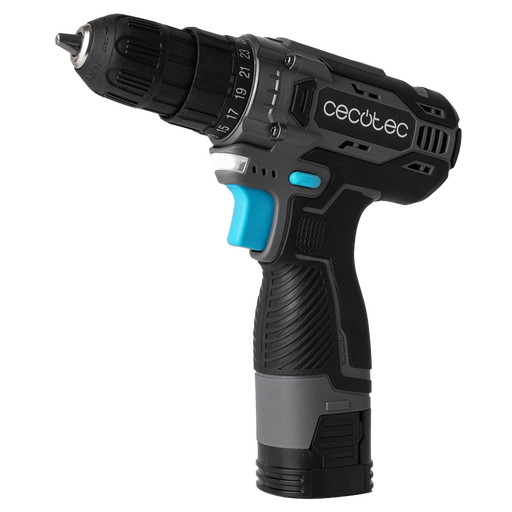
Why this is a good fit for this user: This kit is suited to assembling furniture, putting up small wall fixings and everyday DIY jobs. It includes a cordless drill driver, two batteries and a case at an accessible price.
Two batteries help reduce downtime, while the kit saves you from buying several basic consumables separately.
Claimed torque of 38 N·m, 25+1 settings, two 2,000 mAh batteries, 10 mm keyless chuck and LED light.
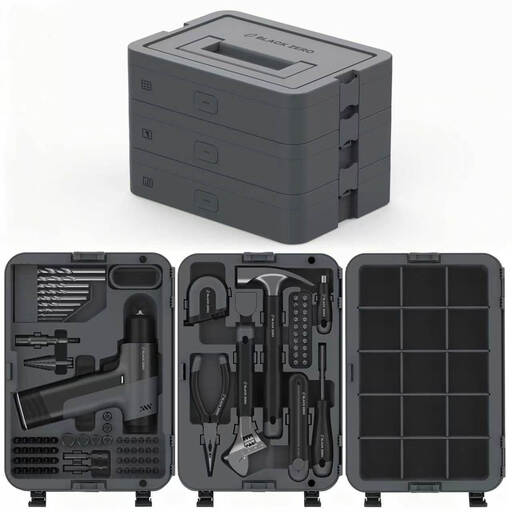
Why this is a good fit for this user: Its three-tier design is ideal if you want a complete, well-organised tool kit that’s easy to carry between home, the workshop and the job site.
A dedicated drill compartment and slots for each accessory make it less likely that items will get mixed up or go missing.
Rated at 16 V, with a 1,600 mAh battery, a 329.5 × 236.5 × 75 mm case and storage designed for hand tools and accessories.
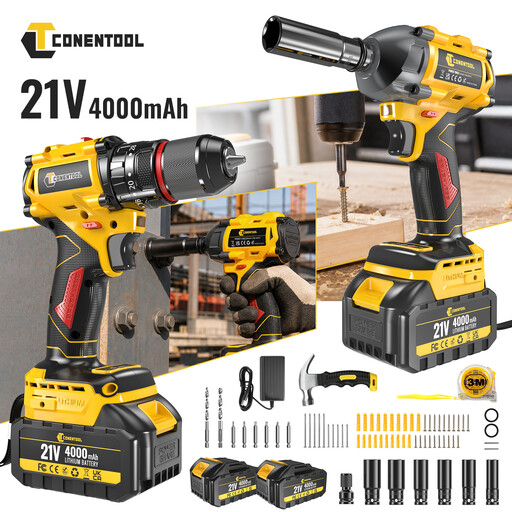
Why this is a good fit for this user: This kit is aimed at maintenance, mechanical repairs and regular jobs that call for both a drill and a cordless impact wrench.
It means you don’t have to expect one tool to handle different jobs, and includes two batteries so you can carry on working while the other one charges.
Brushless motor, drill with a claimed torque of 55 N·m, impact wrench delivering up to 700 N·m, two 4,000 mAh lithium-ion batteries and a 71-piece kit.
We’ve put together a comprehensive selection, updated in real time, of products that meet these demanding selection criteria and European safety standards.
It’s suitable for driving screws, assembling furniture and drilling wood or certain metals with the right drill bits. For masonry, check that it has a hammer function. Tightly fastened nuts are often easier to deal with using a dedicated impact wrench.
Battery life depends on the torque setting, the material, the drill bit diameter and the capacity in mAh. Having two batteries mainly helps prevent the whole job from grinding to a halt. Store them away from damp and follow the manufacturer’s advice on charging and storage.
The most useful kit isn’t necessarily the one with the highest piece count. If you’re just starting out, look for commonly used driver bits, wood and metal drill bits, a few sockets, a tape measure and accessories that fit the chuck. For maintenance tools, add consumables that are genuinely suited to the jobs you do.