
Livraison le jour même ou le lendemain

Qualité garantie

Débloquez vos offres de bienvenue: Livraison GRATUITE | Jusqu'à -80 % | 30 jours d'essai gratuits à JoyPlus
Téléchargez l'application
Buying a cordless drill driver seems straightforward… until you start comparing voltage, torque, batteries and accessories. A tool advertised as powerful can turn out to be impractical for assembling furniture, while a compact model may lack stamina during repeated tasks.
To avoid a purchase that doesn't quite fit, it's worth distinguishing the genuinely useful features from the marketing hype. Here are the criteria to examine before choosing a cordless drill for home DIY, weekend projects or more demanding repairs.
A 12V cordless drill is generally designed for light tasks and everyday screwdriving. A 16V drill driver often has extra reserve for drilling into different materials, but voltage alone isn't enough to gauge the actual power available.
Torque, measured in Nm, the transmission, speed and battery quality all play a significant role. A tool with a high voltage but limited torque won't necessarily be better suited to your needs.
A well-stocked kit might look appealing, but some bits and drill pieces will only get occasional use. Instead, check:
A handful of unnecessary accessories will never make up for a battery that's a pain to recharge or a chuck that's incompatible with your drill bits.
With only one battery, a job can grind to a halt at the worst moment. For longer tasks, two lithium-ion batteries let you swap them over during charging cycles. Also check the capacity in Ah, the charger supplied and whether you can replace the battery.
Stated runtimes vary depending on the material, drill bit diameter, selected torque and frequency of use. So they don't represent a guaranteed duration in every situation.
Adjustable torque stops you driving a screw too deep into a soft material. For assembling furniture, a low setting is usually best; for drilling, just select the right mode. The more torque settings there are, the more precise your control.
Some models also offer a hammer action. A cordless hammer drill can handle occasional work in light masonry, depending on its specifications. However, it won't replace a rotary hammer for hard concrete or heavy-duty use.
A brushless motor — that is, one without brushes — is often described as more durable, less prone to mechanical wear and quieter. It's still essential to check the spec sheet for maximum speed, torque and operating conditions.
Two speed ranges let you adapt the tool to the task: a slow speed for screwdriving and a higher speed for drilling. A variable-speed trigger makes starting easier and reduces the risk of the bit slipping.
A 10 mm chuck is sufficient for most household needs. On a precision tool, though, check the diameter accepted by the accessories you plan to use. LED lighting is handy under a cabinet, inside a cupboard or in a poorly lit area, but it doesn't replace proper task lighting.
The weight, handle shape, tool balance and access to the forward/reverse switch all directly affect comfort. For regular use, a machine with slightly fewer accessories can be more pleasant to handle than a complete kit that's bulky to carry.
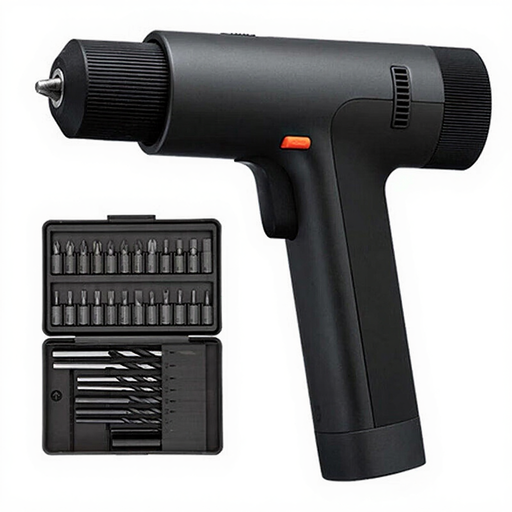
Why this choice suits this profile: Its 12V format and intuitive controls are ideal for assembling furniture, small repairs and everyday screwdriving around the house.
The spec lists 30 torque positions, a secure pulse mode and an integrated lithium-ion battery. However, check the weight and kit contents before ordering, as these details aren't given in the description provided.
Brushless motor, stated maximum speed of 1,400 rpm and claimed runtime of over 550 self-drilling screws per charge.
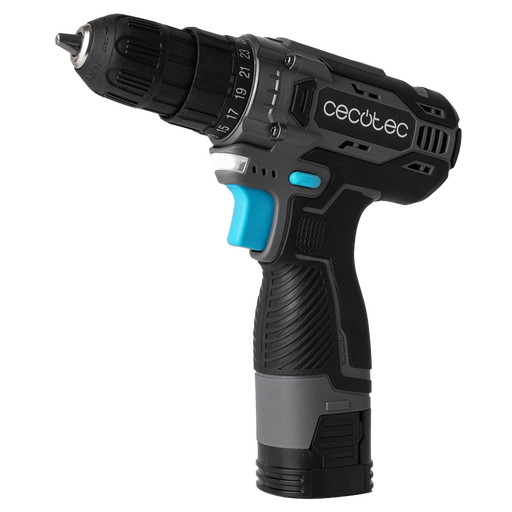
Why this choice suits this profile: This kit is aimed at those looking for a versatile drill driver for wood, metal and regular DIY tasks.
Two 2,000 mAh batteries are stated, which helps minimise downtime. The product name mentions 16V, but some lines refer to 21V batteries: be sure to check the charger and battery voltage before buying.
Stated torque of 38 Nm, 25 + 1 settings, 10 mm keyless chuck, LED light and included accessories.
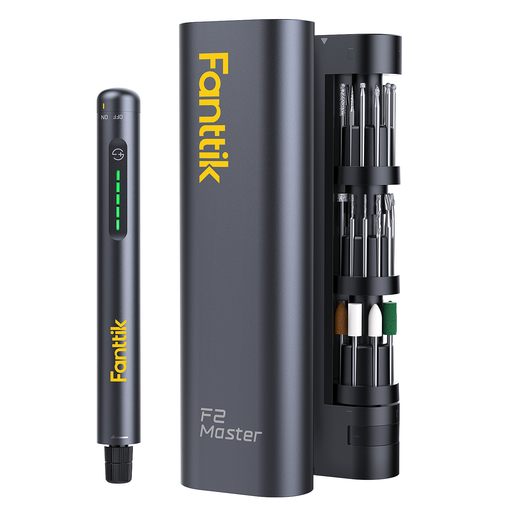
Why this choice suits this profile: This precision rotary tool is suitable for engraving, polishing, light sanding and finishing small parts or 3D prints.
Its five speeds prevent you from using the same rotation for every material. However, the 2.3 mm accessories need to be compatible with the tasks you have in mind.
Stated weight of 100 g, maximum speed of 25,000 rpm, 35 accessories and USB-C charging claimed in 60 minutes.
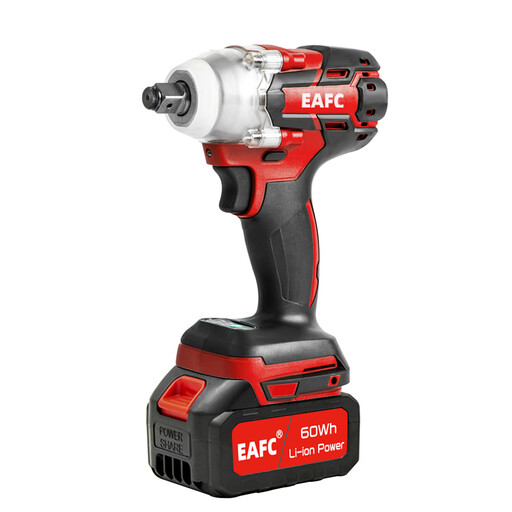
Why this choice suits this profile: This rechargeable electric screwdriver is primarily aimed at mechanical work and wheel removal, rather than delicate furniture assembly.
Its specialist use avoids asking a standard drill to handle excessive loosening force. However, the stated torque should be used with compatible sockets and fixings.
Maximum stated torque of 200 Nm, 60 Wh lithium-ion battery, LED light and forward/reverse rotation.
We've put together a comprehensive, real-time updated list of products that meet these demanding selection criteria and European safety requirements.
For assembling furniture, putting up shelves and doing small repairs, a 12V cordless drill can be perfectly adequate. If you drill into wood or metal more regularly, a 16V drill driver with two speeds and higher torque offers greater versatility.
It all depends on the number of charge cycles, storage conditions, temperature and depth of discharge. Avoid leaving the battery in a very hot or damp place, and use the charger supplied or recommended by the manufacturer. If you plan to use the tool frequently, check before buying that a spare battery is available.
No. It can complement your toolbox for certain drilling jobs in light masonry, but every tool has its limits. For precise screwdriving, general drilling, engraving or automotive mechanics, choose a cordless tool or a specialist machine that exactly matches the task.