
Livraison le jour même ou le lendemain

Qualité garantie

Débloquez vos offres de bienvenue: Livraison GRATUITE | Jusqu'à -80 % | 30 jours d'essai gratuits à JoyPlus
Téléchargez l'application
A cordless drill driver can be just as useful for assembling furniture as it is for fixing a shelf, drilling into wood or carrying out everyday repairs. But from one model to the next, the differences can be considerable. A battery that drains too quickly, a poorly matched torque setting or a case full of unnecessary bits can quickly turn a practical purchase into a regrettable expense.
Before choosing a cordless drill driver, focus on the features that really matter for how you’ll use it, rather than the big promises plastered on the packaging.
A rating like “21 V” might sound reassuring, but it’s not enough to judge an tool’s capabilities. The torque in newton-metres (N·m), no-load speed, motor type and battery capacity all play a decisive role too.
A 21 V impact driver can handle stubborn fixings, while a less powerful drill driver will often be more pleasant to use for assembling furniture. So voltage should always be considered alongside the job you have in mind.
Expressed in Ah or mAh, capacity tells you how much energy is stored. However, it can’t predict runtime on its own. That varies depending on the material being worked, the diameter of the screws, the speed used and the overall condition of the battery.
A model with a removable battery generally lets you keep working with a second charged battery. For occasional use, a compact USB-rechargeable device can be more convenient to store, even if it offers less endurance.
A narrow or awkward chuck can make every bit change a chore. For a versatile drill driver, check its clamping range — for example 2 to 10 mm — as well as the presence of a torque adjustment.
A screwdriver kit with bits is only worthwhile if its contents match the screws you actually use. Check for cross-head, flat, Torx and hex bits, plus drill bits suitable for wood or metal if you need them.
Torque is the force applied to the screw. The different adjustment positions help you avoid driving a screw too deep into soft wood or damaging its head. For drilling, a dedicated mode usually disables this limitation.
Hammer-action models add a useful function for some light masonry work. However, a cordless hammer drill won’t necessarily replace a rotary hammer for dense concrete or long drilling sessions.
Two speed ranges let you prioritise precision when screwdriving and faster rotation for drilling. A variable-speed trigger is far more versatile than a simple on-off switch.
Forward/reverse rotation, a safety lock and an LED light are particularly handy in dark corners or tight spaces.
A rechargeable cordless screwdriver should come with a compatible charger and clear enough instructions. Before placing an order, check the charger’s input voltage, the condition of the connector and the information about the lithium-ion battery.
For a product sold in France, consult the safety instructions, the applicable regulatory markings, the manual in French where provided, and the arrangements for collecting used batteries. Never recharge a damaged, swollen or abnormally hot battery.
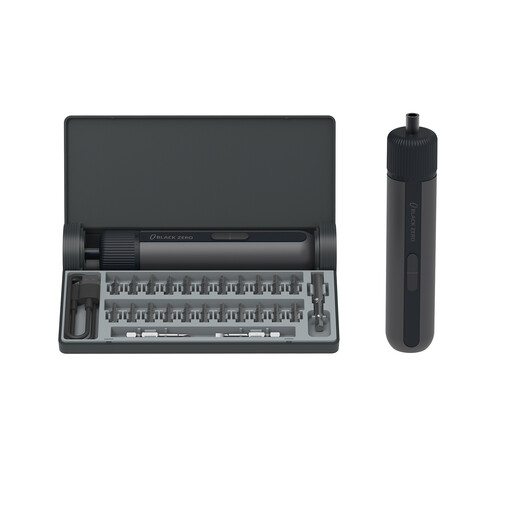
Why this choice suits this profile: At 185 mm long and around 298 g, this model is well suited to small household tasks, furniture assembly and quick repairs. Its USB-C charging fits easily into everyday home use.
The product page details the weight, stated charging time — 3 to 5 hours —, speeds and bit types, rather than just highlighting the battery voltage.
24 accessories, battery indicator, five speed settings, forward/reverse rotation and a stated maximum torque of 8 N·m.
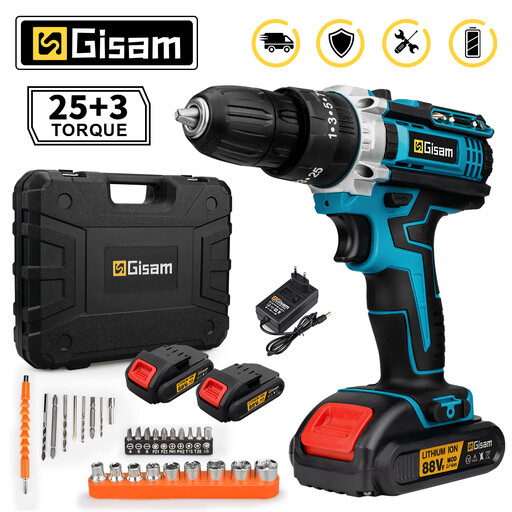
Why this choice suits this profile: This drill driver has two speeds, a keyless chuck from 2 to 10 mm and two batteries stated at 1.3 Ah. It suits users who want to switch between screwdriving and drilling in different materials.
Its 25 torque positions and three stated modes let you adapt the tool to the job at hand, rather than applying the same power to every screw.
Stated maximum torque of 25 N·m, speed up to 1,350 rpm, LED light, plastic case and a set of 29 drill bits and screwdriver bits.
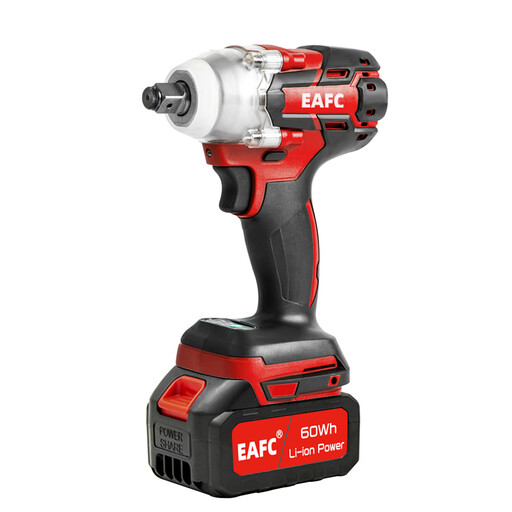
Why this choice suits this profile: This cordless impact wrench is designed for automotive dismantling and fixings from M10 to M24 as stated on the product page. It targets users who prioritise torque and battery life for very specific tasks.
Its use is clearly aimed at dismantling, not delicate screwdriving. This distinction stops you choosing a compact drill for a job that demands significantly higher torque.
Stated maximum torque of 200 N·m, 60 Wh lithium-ion battery according to the product page, LED light and USB charging cable. For final tightening on a vehicle, always follow the torque recommended by the manufacturer.
We’ve selected a complete, real-time updated list of products that meet these strict criteria, as well as European safety requirements.
For furniture assembly and everyday repairs, look first at the torque, the available settings and the ergonomics. A stated torque in the region of 20 to 30 N·m will cover most light to medium jobs. A high-torque automotive tool, on the other hand, serves a completely different purpose.
A battery’s lifespan depends on the charge, how often it’s used, the temperature and storage conditions. In particular, avoid leaving it in a car exposed to large temperature swings. For longer jobs, a model supplied with two batteries or fitted with a removable battery helps minimise downtime.
Not always. A compact screwdriver is primarily designed for driving screws and making small drill holes. For working in harder materials, choose a drill driver with a suitable chuck and, if needed, a hammer action mode. The choice of drill bits matters just as much as the choice of tool.