
Livraison le jour même ou le lendemain

Qualité garantie

Débloquez vos offres de bienvenue: Livraison GRATUITE | Jusqu'à -80 % | 30 jours d'essai gratuits à JoyPlus
Téléchargez l'application
Assembling furniture, putting up a shelf, drilling wood or working on a car: a cordless drill driver can handle a wide range of tasks. The problem is that product specifications often mix voltage, power, battery life and accessories, making comparisons more complicated than they need to be.
Before buying a rechargeable cordless drill, it is worth keeping three common pitfalls in mind:
Measured in newton metres, torque is the available rotational force. Moderate torque is generally enough for assembling furniture, using small screws or working with softwood. For dense wood, metal or long screws, a higher value provides greater headroom.
Torque adjustment prevents a screw from being driven too deeply or damaging a delicate material. Models with 25 to 30 settings allow for fine adjustment, provided you select an appropriate speed. A variable-speed trigger also enables smoother starts, particularly when approaching the screw head.
For drilling, also check the no-load speed and whether the drill has two mechanical gears. The slower gear prioritises control and torque, while the faster gear is better suited to small drill bits.
A lithium-ion battery can be recharged without any significant memory effect and offers good energy density. However, its voltage alone is not enough to estimate battery life: you should also check its capacity, expressed in ampere-hours (Ah) or milliampere-hours (mAh).
For occasional use, a 1.3 to 2.0 Ah battery may be sufficient. Two 2.0 Ah batteries allow you to alternate between working and charging. Always check:
The stated number of screws per charge is only indicative. It varies depending on the material, screw diameter, selected torque and battery condition.
A keyless chuck allows you to change a drill bit or screwdriver bit quickly, without having to find a chuck key. Its capacity should match the accessories you plan to use: 10 mm is a common size on models intended for DIY around the home.
A brushless drill, or brushless motor drill, eliminates the wear-related parts associated with carbon brushes and can reduce mechanical losses. This does not remove the need to check the warranty period, spare-parts availability and operating conditions.
A cordless hammer drill can be useful for small masonry jobs. However, it will not replace a rotary hammer for thick concrete or intensive building work. LED lighting, a non-slip handle and a reasonable weight improve manoeuvrability, whether you are working inside a cabinet, beneath a shelf or in a poorly lit corner.
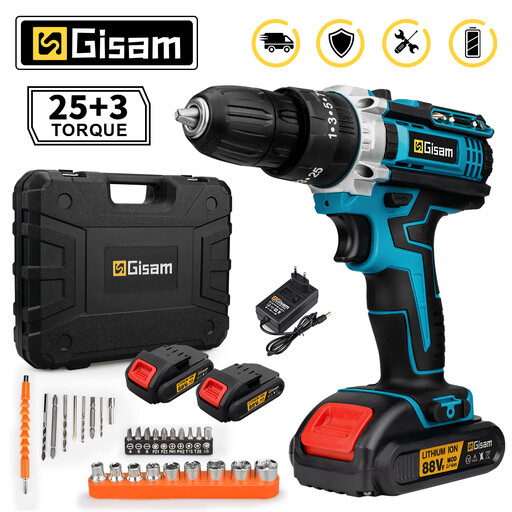
Why this choice suits this profile: This kit includes a cordless electric screwdriver, two batteries, a charger, a case and 29 accessories to help you get started with a range of jobs around the home.
The 25 torque settings and two speeds let you adapt the tool to the job, rather than always operating at full power.
Stated torque of 25 Nm, speed of up to 1,350 rpm, 2–10 mm chuck and LED lighting.
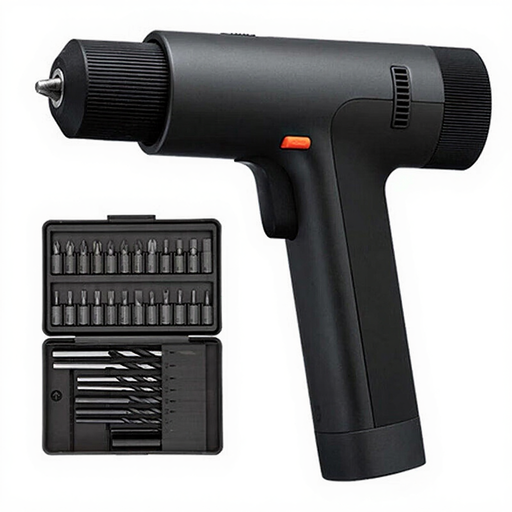
Why this choice suits this profile: Its brushless motor, control display and various modes are designed for users looking for precise control and a high-quality finish.
The display shows the mode and speed, while the 30-level adjustment makes gradual, more controlled screwdriving easier.
Integrated 2,000 mAh lithium-ion battery, brushless motor, safe pulse mode and stated maximum speed of 1,400 rpm.
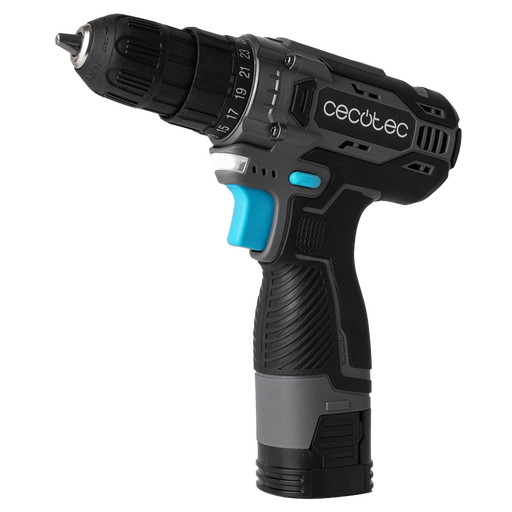
Why this choice suits this profile: The case includes two batteries, drill bits, screwdriver bits, sockets and a carry case for routine maintenance projects.
The detailed kit contents reduce the need for additional purchases that are easily overlooked when choosing a rechargeable cordless drill.
Stated torque of 38 Nm, two speeds, 10 mm keyless chuck and LED lighting.
We have put together a comprehensive, real-time updated selection of products that meet these demanding criteria, as well as European safety requirements.
Even a well-chosen tool deserves a few precautions. Fully charge the battery before first use, then store it in a dry place away from extreme temperatures. Clean the ventilation openings and remove dust from the chuck after every job.
When driving screws, start with low torque and increase it gradually. Keep the tool aligned with the screw to reduce slipping and bit wear. When drilling metal, use a suitable drill bit and a controlled speed. For masonry, check that the model has a hammer mode specifically designed for this type of work.
A cordless impact wrench should not be used for the final tightening of wheel nuts without checking the torque. After fitting, finish with a torque wrench set according to the manufacturer’s recommendations. Wear safety goggles and keep your fingers away from the chuck or drive square during use.
A 12 V drill is suitable for assembling furniture, small fixings and light-duty tasks. A 16 V drill generally offers more reserve for working with wood and metal. A 21 V drill may be useful for tasks requiring more torque, but also compare the battery capacity, speed and stated torque. Voltage alone is not enough to distinguish between tools.
Its service life depends on the number of cycles, charging conditions, temperature and workload. To preserve it, avoid leaving it completely discharged for long periods and use only the compatible charger recommended by the manufacturer. A second battery can also help minimise interruptions during longer jobs.
No, these two tools have different purposes. A drill driver is used for drilling and everyday screwdriving, while a cordless impact wrench is designed to deliver impulses and high torque to suitable fixings. For wheels, always check the final tightening with the appropriate tool and follow the vehicle manufacturer’s recommendations.