
Livraison le jour même ou le lendemain

Qualité garantie

Débloquez vos offres de bienvenue: Livraison GRATUITE | Jusqu'à -80 % | 30 jours d'essai gratuits à JoyPlus
Téléchargez l'application
A cordless drill driver can be used to assemble furniture, put up a shelf, drill into wood or carry out small maintenance tasks. However, some purchases prove disappointing after just a few uses: limited battery life, unsuitable torque or a case full of accessories that you never use.
Before comparing prices, it is therefore worth looking at a few practical specifications. Here are the most common pitfalls, the criteria to examine and a selection of models suited to different needs.
A 16 V drill is not necessarily more powerful than a 12 V drill driver. Voltage tells you about the electrical system, but it is not enough to determine the actual power available.
The torque, measured in Nm, battery capacity, transmission and chuck quality also play a part. For light screwdriving tasks, a 12 V model will often be easier to handle. For regularly drilling wood or carrying out more demanding assembly work, a 16 V model may offer useful additional power.
A 2.0 Ah battery will generally have more capacity than a 1.5 Ah model. Battery life nevertheless varies depending on the material, drill bit diameter, speed used and pressure applied. A claim such as “number of screws per charge” should therefore be treated as an estimate obtained under specific conditions, not as a guarantee that applies to every job.
Also check whether the case contains one or two batteries, as well as the type of charger supplied. With two batteries, you can carry on working while the first one recharges.
A multifunction kit may seem appealing, but the number of items says nothing about their quality or usefulness. Make sure it includes drill bits suitable for wood and metal, commonly used bits, any necessary adaptors and storage that is genuinely practical.
For car maintenance, a standard drill driver is not always the right tool for loosening bolts. A cordless impact wrench uses a different mechanism. It should be chosen according to the stated torque, drive size and the size of the nuts you need to handle.
Torque, measured in newton metres (Nm), refers to the rotational force available. A graduated adjustment ring helps prevent you from driving a screw too deeply or damaging a soft material.
Two mechanical speeds are particularly useful:
A setting such as 25 + 1 positions generally distinguishes the torque levels intended for screwdriving from the drilling mode. It does not remove the need to choose a bit or drill bit suitable for the material.
For regular household use, consider the capacity in Ah, charging time and availability of replacement batteries. A cordless drill driver should also remain comfortable to use, particularly for overhead work or in awkward, hard-to-reach areas.
Weight, handle shape, the presence of an LED light and trigger accessibility directly affect comfort. An integrated battery keeps the tool compact, but can make replacement more difficult when it reaches the end of its service life.
A keyless chuck allows you to change drill bits or screwdriver bits quickly, without an additional tool. Its maximum capacity should match the accessories you plan to use. A 10 mm chuck is sufficient for most DIY tasks at home, while some professional applications require a larger size.
Check the stated drilling capacities for wood and metal. They do not mean that the tool is suitable for every material. For concrete or masonry, a hammer drill, or even a rotary hammer, will generally be required.
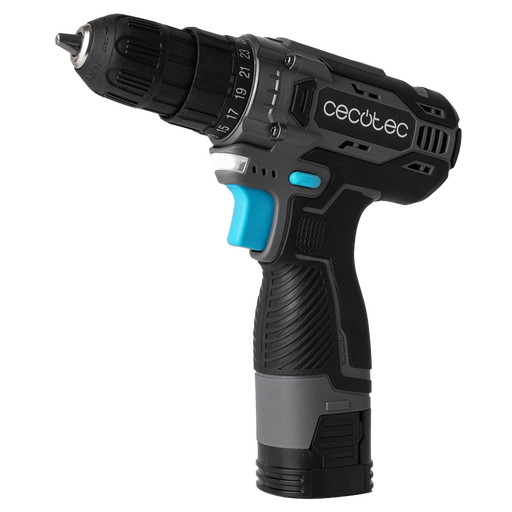
Why this choice suits this user profile : this kit includes a 16 V drill driver, two stated 2.0 Ah batteries and an accessories case for everyday household tasks.
Having two batteries reduces downtime. Nevertheless, check the exact voltage of the batteries and charger in the product listing before ordering, as some presentation details may vary.
Stated torque of up to 38 Nm, two speeds, 10 mm keyless chuck, LED light and accessories for wood, metal and screwdriving.
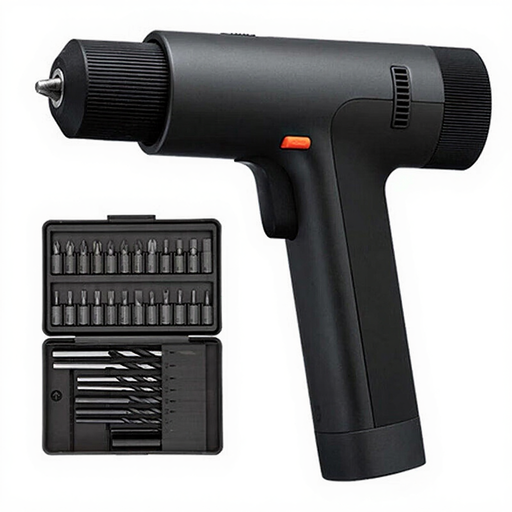
Why this choice suits this user profile : its 12 V format, brushless motor and digital settings are aimed at users looking for a compact, precise tool.
The screwdriving, drilling and gentle pulse modes provide finer control than a simple trigger. As the battery is integrated, check the charging conditions and replacement options.
Brushless motor, stated speed of up to 1,400 rpm, 30-level adjustment and handle with soft-touch coating.
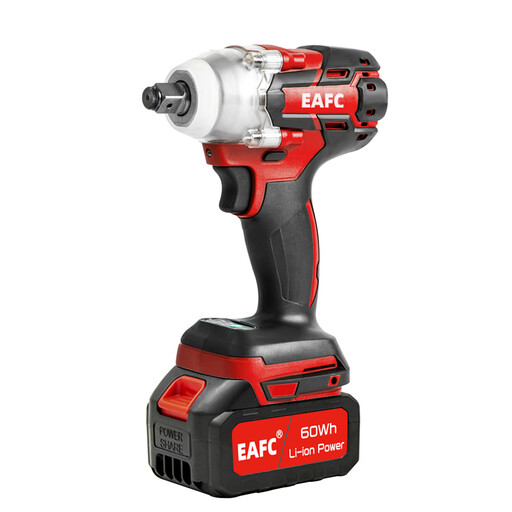
Why this choice suits this user profile : this cordless impact wrench is primarily intended for vehicle dismantling and tasks requiring more torque than a DIY drill driver.
Its use is clearly geared towards nuts and bolts. There is no need to expect a small cordless screwdriver to carry out a task it was not designed for.
Stated maximum torque of 200 Nm, 60 Wh rechargeable battery, LED light and forward/reverse rotation.
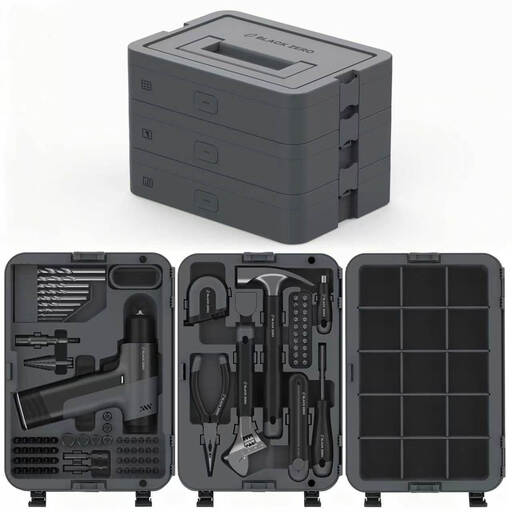
Why this choice suits this user profile : with its three-tier case, this kit is aimed at households, workshops and maintenance users who want to keep a drill and hand tools together in one storage solution.
The compartment reserved for the drill and the dedicated dividers reduce the risk of losing bits or mixing up accessories.
Stated nominal voltage of 16 V, no-load speed of up to 1,000 rpm, battery rated at 1,600 mAh and dedicated case.
A 12 V drill driver is suitable for screwdriving tasks, small drilling jobs and assembling furniture. A 16 V drill driver will be better suited to regular work in wood or light metal. In every case, compare torque, weight, chuck and battery rather than focusing solely on the stated voltage.
It depends on how often it is used, storage conditions, charging and maintenance. Avoid leaving the tool in a damp place, remove dust from its ventilation openings and use the supplied or recommended charger. If the battery is integrated, find out how it can be replaced before buying.
No. A drill driver is designed for precise drilling and screwdriving. A cordless impact wrench is better suited to tightening and loosening bolts, particularly for vehicle maintenance. When working on wheels, follow the torque recommended by the manufacturer and always finish tightening with a suitable tool.