
Livraison le jour même ou le lendemain

Qualité garantie

Débloquez vos offres de bienvenue: Livraison GRATUITE | Jusqu'à -80 % | 30 jours d'essai gratuits à JoyPlus
Téléchargez l'application
Assembling flat-pack furniture, putting up a shelf, or tightening a stubborn screw: these everyday DIY hassles become a breeze with the right tool. The cordless drill driver has established itself as the must-have for any toolbox, whether you're a weekend DIYer or a seasoned pro. Say goodbye to tangled cables and the frantic search for a power outlet.
The only problem? Navigating the overwhelming array of models, power ratings, and features can be tough. This guide is here to help you see things more clearly, reviewing the essential criteria and presenting a selection of products for every type of use. Our goal? To help you find that hidden gem that will never let you down.
Before diving into our selection, let's review the features that separate a good cordless screwdriver from a mere gadget.
Voltage, expressed in Volts (V), gives you an idea of the tool's raw power.
Meanwhile, the battery's capacity, in Ampere-hours (Ah), determines its runtime. The higher the number (e.g., 2.0?Ah, 4.0?Ah), the longer you can work before needing to recharge your battery-powered drill.
Torque, measured in Newton-metres (N·m), is the 'muscle' of your driver: its rotational force. High torque is essential for driving long screws into hard materials without straining. Most models include a torque adjustment collar, which is crucial for matching the force to the material and avoiding damage to screw heads or your workpiece.
A good drill driver kit should let you get started right away. Check for one or two batteries, a charger, and an assortment of driver bits and drill bits. The chuck (the 'jaw' that clamps the bit or drill) is a key component. A 10?mm or 13?mm keyless chuck allows you to swap accessories quickly and without a tool.
We have selected three tools with very different profiles, from precision screwdriving to heavy-duty tasks.
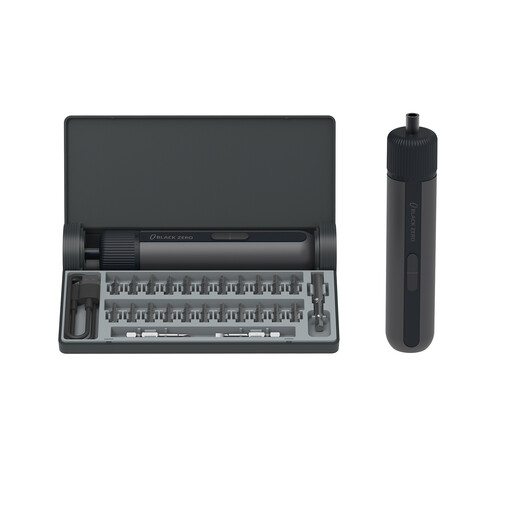
Why it stands out This model focuses on a single task: efficient, effortless screwdriving. With its pen-style design and feather-light weight of 298?g, the BLACKZERO screwdriver is built for manoeuvrability. It is particularly well-suited for repetitive tasks where a traditional drill would be too heavy and cumbersome.
Advantages
Who is it for? For those who regularly assemble flat-pack furniture, repair electronics, or perform small maintenance jobs. It's the ultimate drill for furniture assembly.
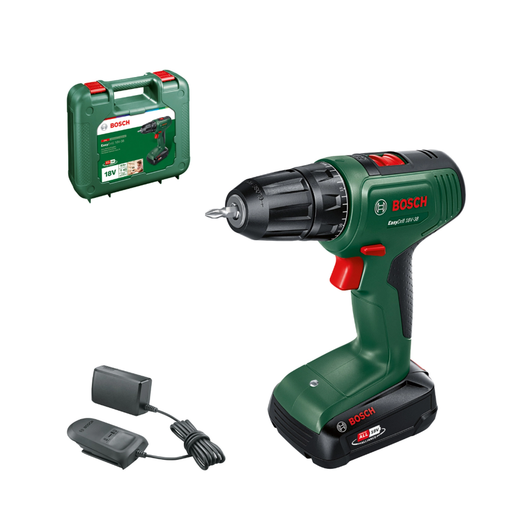
Why it stands out The Bosch EasyDrill 18V-38 is the modern DIYer's Swiss Army knife. It's a perfectly balanced choice that combines the brand's reputation with solid technical specs. Its 18V power makes it capable of drilling into wood, metal, and plastic, while also being an incredibly effective screwdriver.
Advantages
Who is it for? The homeowner or renter looking for a single, reliable tool for the majority of jobs around the house: hanging pictures, putting up shelves, assembling furniture, or tackling small renovation projects.
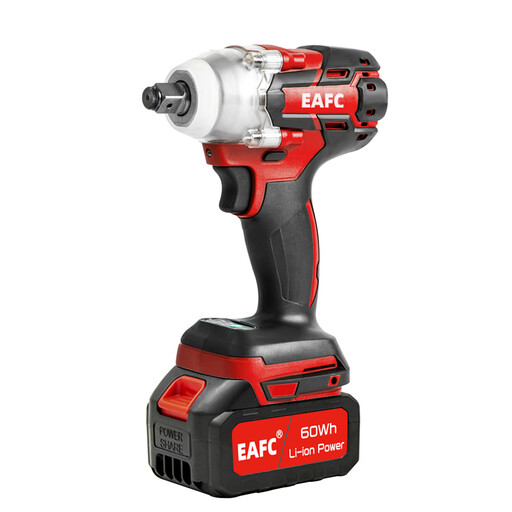
Why it stands out Heads up, we're moving into a different league: this is all about brute force. With a stated maximum torque of 200?N·m, the EAFC is not just a drill driver, but an impact wrench. Its mission: to tighten and loosen bolts and nuts with considerable force.
Advantages
Who is it for? For car mechanics enthusiasts and DIYers working on timber frames or heavy construction projects. While clearly overkill for assembling flat-pack furniture, it is a powerful ally for high-force applications.
Your project is unique and may require a different tool—with or without a hammer function, more compact, or even more powerful. To explore a wider range and find the perfect tool, feel free to browse our complete category of power tools.
For versatile household use (drilling in wood, plasterboard, thin metal, and general screwdriving), an 18V drill driver is the gold standard. It offers the best balance of performance, handling, and runtime. For lighter tasks, such as exclusively assembling furniture, a 12V model or less may be sufficient.
It all depends on the power of the tool and, most importantly, the drill bit you use. A standard drill driver can drill through wood, plastic, and soft metals. To drill into hard materials like brick, cinder block, or concrete, it is essential to choose a model with a hammer function and use the appropriate bits (masonry bits).