
Livraison le jour même ou le lendemain

Qualité garantie

Débloquez vos offres de bienvenue: Livraison GRATUITE | Jusqu'à -80 % | 30 jours d'essai gratuits à JoyPlus
Téléchargez l'application
Whether you're a weekend DIYer or a seasoned renovator, the cordless drill driver is a must-have for any toolbox. But with an overwhelming number of options, it's hard to know where to start. The risk? A disappointing, or even useless, purchase. Our mission: to help you decipher the spec sheets to make a truly informed choice, tailored to your projects, not the marketing hype.
To begin, let's review the most common pitfalls that can turn your investment into a source of frustration.
The 'All-in-One' Budget Kit Mirage: Those oversized cases overflowing with accessories are often tempting. The problem? The quality of the included drill bits and drivers is usually mediocre. They wear out in no time, bend, or break, forcing you to quickly buy quality replacements. The true value of a drill lies in its motor and battery, not in the amount of plastic surrounding it.
Confusing Voltage (V) with Torque (Nm): Relying solely on voltage is a classic mistake. While voltage (e.g., 18V battery) gives an idea of the machine's potential, it's the torque (in Newton-metres, Nm) that represents its raw rotational force. A drill with high voltage but weak torque will struggle to drive screws into dense wood or drill through metal. Simply put, torque determines if your tool has enough "muscle" to overcome resistance.
The Captive Battery Ecosystem Trap: Buying a cordless drill driver often means committing to a brand-specific battery ecosystem. If that battery isn't compatible with other tools (sander, jigsaw, etc.) or is hard to find as a replacement, you're trapped: forced to multiply chargers and expenses. A word of advice: always check the breadth of the ecosystem and the availability of batteries before you check out.
To avoid making a mistake, focus on the features that truly matter for your machine's performance and longevity.
Torque is the measure of screwdriving force. For assembling flat-pack furniture, a torque of 15 to 30 Nm is more than enough. For general DIY tasks (drilling into wood, plasterboard), a model between 30 and 55 Nm will be an excellent partner. Beyond that, you're entering the realm of heavy-duty tools. Most models offer two mechanical speeds: a slow one with maximum torque for powerful screwdriving, and a fast one for clean drilling.
Brushless Motor?This is THE technical spec that changes everything.
The 18V battery has established itself as the de facto standard for versatile power tools. It offers the best power-to-weight compromise. Pay close attention to its capacity, expressed in Amp-hours (Ah). A 1.5 to 2.0 Ah battery is suitable for small jobs. For more substantial projects, aim for at least 3.0 Ah. The ultimate setup? Having two batteries to work without interruption.
Rather than a generic list, here are targeted options for distinct user profiles, keeping in mind the pitfalls to avoid.
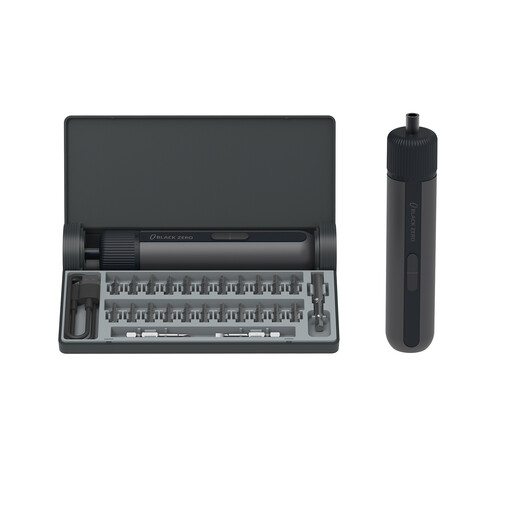
Why we love it: For assembling IKEA furniture, tightening a hinge, or building a PC, a drill driver is often overkill—too heavy and too powerful. This electric screwdriver is the tool you need: lightweight, easy to handle, and precise.
It doesn't pretend to be something it's not. It's a specialist in precision screwdriving, which allows it to avoid the trap of the falsely versatile and ill-suited "kit" for fine tasks.
Its adjustable torque (up to 8 Nm) and convenient USB-C charging make it the ideal companion for small, everyday jobs.
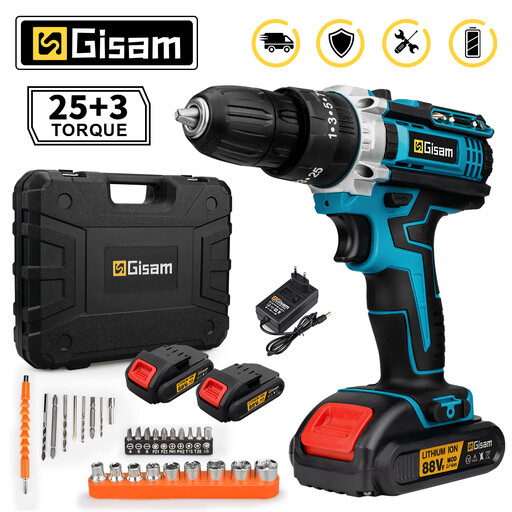
Why we love it: This is the quintessential all-rounder drill driver. It drives screws with precision, drills through wood and metal, and its hammer function even lets you occasionally tackle soft masonry like brick.
This model offers an excellent price-to-performance ratio. With its 25 Nm of torque and numerous settings, it avoids the trap of uncontrollable raw power. The driver kit including two batteries is a real bonus to ensure you never run out of power.
Its 3-in-1 versatility (driving, drilling, hammer drilling) and two included batteries make it a complete and economical solution to get seriously equipped without breaking the bank.
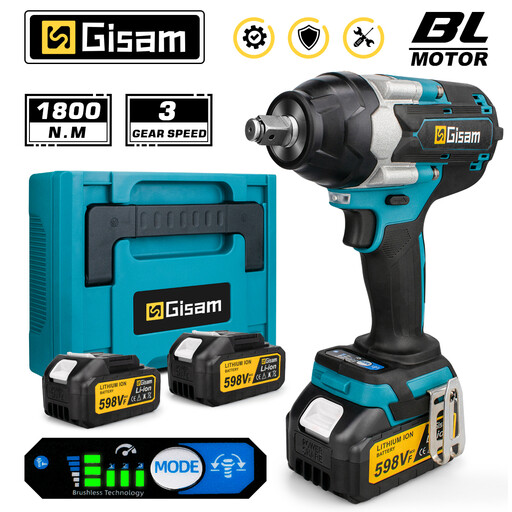
Why we love it: For auto mechanics (changing tires) or assembling a timber frame, a standard drill driver doesn't stand a chance. You need to bring out the heavy artillery: a cordless impact wrench capable of delivering monstrous torque.
This ultra-specialized tool doesn't fall into the trap of false versatility. Its sole mission: to deliver truck-like torque (up to 1800 Nm). The icing on the cake, its compatibility with Makita 18V batteries is a major selling point for avoiding a captive ecosystem.
Its brushless motor provides the power and endurance needed to tackle the most stubborn bolts without flinching, where a conventional drill would throw in the towel.
Discover our complete selection of tools, all chosen for their performance and reliability, whatever your project.
A drill driver applies continuous rotational force. This is ideal for drilling clean holes and for controlled screwdriving. An impact driver (or impact wrench) combines rotation with very rapid tangential strikes. This mechanism generates much higher torque, perfect for driving long screws into hard wood or for loosening seized nuts (in auto mechanics, for example). On the downside, it is less precise for delicate finishing work.
For very occasional use (assembling one piece of furniture a year), a classic brushed motor remains an economical and perfectly valid option. However, if you're starting a renovation, work with wood regularly, or frequently use your machine, a brushless motor becomes a very wise investment. It will offer you more power, better battery life, and a significantly longer lifespan.
The runtime of an 18V battery depends on two factors: its capacity (in Ah) and the intensity of the work. A 1.5 Ah battery may be sufficient for a light screwdriving session, while a 4.0 Ah or larger model will provide several hours of intermittent work. For large-scale projects, having a second battery on hand isn't a luxury: it's the guarantee of being able to work continuously while the first one recharges.