
Livraison le jour même ou le lendemain

Qualité garantie

Débloquez vos offres de bienvenue: Livraison GRATUITE | Jusqu'à -80 % | 30 jours d'essai gratuits à JoyPlus
Téléchargez l'application
Choosing a cordless drill driver can quickly become a headache. Faced with an avalanche of models, spec sheets, and marketing claims, it's easy to feel lost or make a purchase you'll regret. The wrong tool means wasted time and squandered money.
Before you dive in, it's best to know the two most common pitfalls that await buyers:
Our goal with this guide is to help you see clearly, decode the technical jargon, and identify the tool that will truly meet your needs.
To make an informed choice, let's focus on the key features that determine the performance and versatility of your future drill driver.
The power of a drill driver revolves around two key values:
The vast majority of current models use a lithium-ion battery. It offers excellent energy density, no memory effect, and low self-discharge. However, two points require close attention:
Be careful not to get them confused: not all cordless rotary tools are created equal. It's crucial to distinguish between:
To help you visualise which tool might be right for you, here are a few recommended options, each suited to a specific user profile.
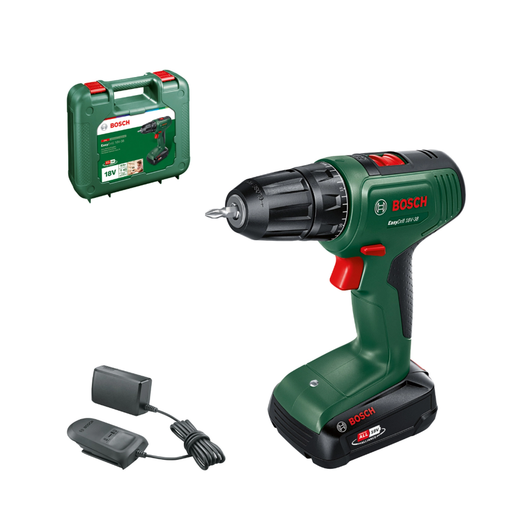
Why it's perfect for this user: Ideal for common tasks like assembling furniture, hanging pictures, or drilling into wood and plastic. Its light weight and compact design make it highly manoeuvrable, even for extended or overhead use.
It doesn't fall into the overkill trap. It offers perfectly adequate torque and 20 settings for precision screw-driving. Its battery is part of the Bosch Power for All 18V ecosystem, a guarantee of compatibility and longevity.
Its light weight and integration into a vast ecosystem of tools, making it a smart and sustainable investment.
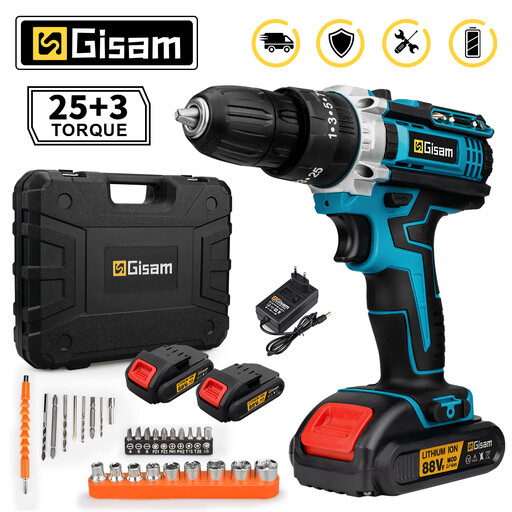
Why it's perfect for this user: For those who like to be prepared for any situation. This all-inclusive kit not only includes a drill with a hammer function but also two batteries and a wide range of accessories (drill bits, driver bits), all in a carrying case.
It tackles the hidden cost pitfall head-on. By providing an all-in-one solution, it ensures you're ready for a multitude of tasks right out of the box, without needing to make another purchase.
Unbeatable value for money, with the versatility of the hammer drill function as a bonus.
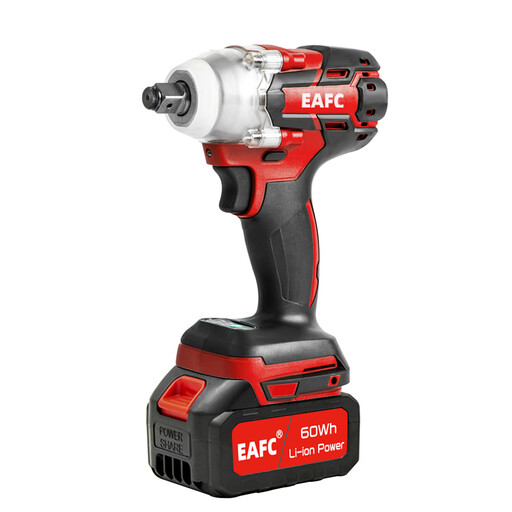
Why it's perfect for this user: This is a specialist's tool. With its monstrous 200 Nm of torque, this impact wrench is built for tasks requiring colossal loosening force, like changing car tyres or working on seized bolts.
It doesn't pretend to be a do-it-all tool. By focusing on a single mission—delivering extreme torque—it meets a specific need that standard drill drivers simply cannot handle.
Its 200 Nm of torque, which makes loosening wheel nuts a trivial task.
Explore our full selection of products that meet our quality criteria and current safety standards.
The lifespan of a lithium-ion battery is measured in charge cycles (typically between 500 and 1,000). In practice, for a regular DIYer, a well-maintained battery (by avoiding deep discharges and extreme temperatures) can easily last several years. Its capacity loss is slow and gradual.
No, far from it. For drywall partitions (like plasterboard), a standard drill driver is more than sufficient. The hammer drill function becomes essential when tackling solid brick or concrete block walls. For reinforced concrete, an SDS rotary hammer remains the ultimate weapon.
Absolutely not. For everyday DIY (assembling furniture, drilling in wood), 200 Nm of torque is not only overkill but downright dangerous for your materials. Such force will undoubtedly split wood, snap screw heads, or damage your workpieces. This kind of power is reserved for very specific uses like auto mechanics or structural framing.