
Livraison le jour même ou le lendemain

Qualité garantie

Débloquez vos offres de bienvenue: Livraison GRATUITE | Jusqu'à -80 % | 30 jours d'essai gratuits à JoyPlus
Téléchargez l'application
Choosing a cordless drill driver can quickly become a headache. Faced with hundreds of models, marketing promises, and obscure technical sheets, it's easy to make a mistake. As a product expert at Joybuy, my role is to help you see things more clearly. Let's forget the technical jargon and focus on the essentials for making a smart purchase that's perfectly suited to your needs.
Before we get to our selection, let's break down the traps that cost you money and often end up collecting dust in the garage.
To sidestep these traps, you just need to master a few simple concepts. They will give you the keys to decipher any product sheet and choose your cordless drill driver with confidence.
Voltage (V) gives a general indication of the machine's power. An 18V drill is now the most versatile standard, offering an excellent balance for the majority of common jobs.
But the real driving force for screwing is torque, measured in Newton-metres (Nm).
A good drill should offer a torque setting for precise screwing, without damaging screw heads or fragile materials.
You will often come across the term brushless motor. Unlike traditional brushed motors, they operate via a system of magnets. The advantages are very real:
The initial investment is sometimes a bit higher, but it's quickly paid off by the tool's longevity and efficiency.
The runtime of a battery-powered drill driver depends on its capacity, expressed in amp-hours (Ah). A 2.0 Ah battery is a good baseline for home use. But the crucial point is to check if the battery is part of a shared platform. Alliances like the "POWER FOR ALL ALLIANCE" (initiated by Bosch) allow you to use the same battery on dozens of DIY and gardening tools from different brands. This is a substantial saving and a real space-saver in the long run.
Rather than looking for a "one-size-fits-all" tool that doesn't exist, it's better to choose one that precisely matches your use case. Here are three models that each meet well-defined needs.
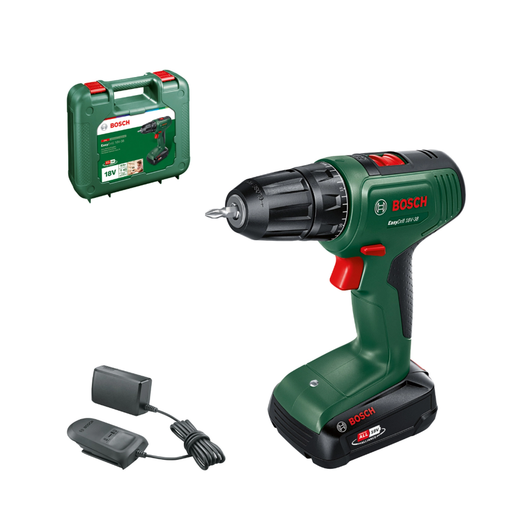
Why this model? Perfect for assembling furniture, putting up shelves, or occasionally drilling into wood and thin metal. Its feather-light weight (900g) and compact size make it a highly manoeuvrable ally, even for overhead work.
This set gets straight to the point: the drill, one battery, and a charger. Most importantly, its 18V battery is part of the POWER FOR ALL alliance, freeing you from the proprietary battery trap.
20 torque settings for controlled screw driving and a 2-speed gearbox to adapt the speed for drilling or driving.
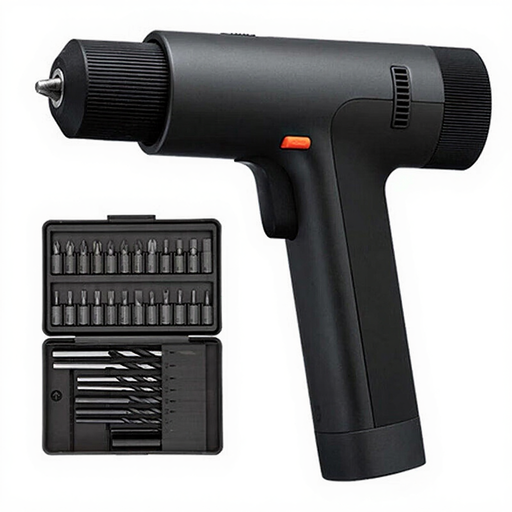
Why this model? For those who love technology and pinpoint control. Its modern design includes a screen that displays the mode, torque, and speed, offering a highly intuitive user experience for various jobs.
It solves the torque vs. power dilemma with its smart chip that automatically adjusts settings to the task. Its brushless motor is a guarantee of reliability and longevity.
30 torque levels selectable via a 360° dial and a safe "pulse" mode for delicate materials. Ideal for beginners who are afraid of over-tightening.
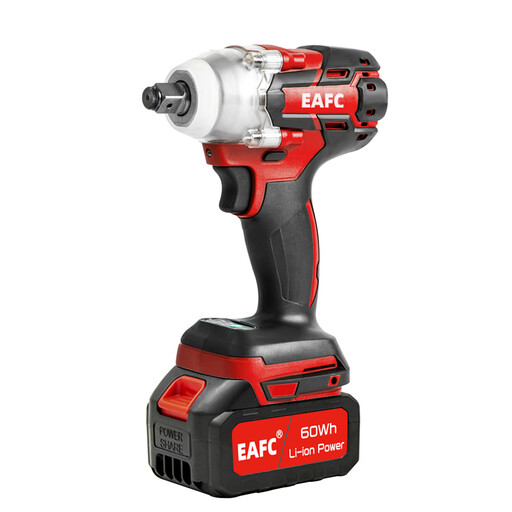
Why this model? Be aware, this is not a drill, but an impact wrench designed for tasks that require colossal tightening torque: changing tyres, assembling frames, or tightening bolts on metal structures.
It avoids the most fundamental trap: using the wrong tool for the job. A standard drill driver is incapable of loosening a wheel nut. This specialised tool is built precisely for that brute force requirement.
A maximum torque of 200 Nm and a brushless motor for blistering loosening power. Its aluminium head and tungsten steel driveshaft are built to withstand impacts.
Explore our full selection of drills and drivers that meet our quality criteria and European safety standards.
A well-maintained lithium-ion battery (by avoiding full discharges and high heat) can endure several hundred charge cycles, which translates to a lifespan of 3 to 5 years for home use. Choosing a brand that is part of a battery alliance makes future replacement much simpler and more economical.
The hammer function adds rapid, short strikes to the bit's rotation. This is essential for drilling into hard masonry materials like brick, cinder block, or light concrete. If you only work with wood, plasterboard, or metal, a standard drill driver is sufficient. For reinforced concrete (load-bearing walls), only a dedicated rotary hammer will be truly effective.
For very occasional use, a brushed motor can do the job. But if you are a regular DIYer or tackle more intense tasks, the investment in a brushless motor is largely justified. You'll gain in runtime, power, and especially longevity, all without ever having to worry about maintenance. It's the choice for peace of mind and durability.