
Livraison le jour même ou le lendemain

Qualité garantie

Débloquez vos offres de bienvenue: Livraison GRATUITE | Jusqu'à -80 % | 30 jours d'essai gratuits à JoyPlus
Téléchargez l'application
Building or upgrading a PC with Cooler Master PC components involves more than comparing performance, fan counts or ARGB lighting effects. A well-balanced build depends first and foremost on compatibility between the power supply, case, processor, graphics card and cooling system.
Three mistakes are particularly common among buyers in France:
For a gaming or creative-work build, start by estimating the combined power consumption of the processor and graphics card, then allow some headroom to absorb load spikes. A 750W 80 Plus Gold PC power supply will offer more reserve than a 650W model, but the wattage must still be appropriate for the components installed.
The 80 PLUS Gold certification indicates electrical efficiency of over 90% under the typical load conditions defined by the certification programme. However, it does not guarantee quiet operation, longevity or compatibility with every build.
The ATX 3.1 standard deserves particular attention with recent graphics cards. It governs, among other things, the management of power fluctuations and may include a native 12V-2x6 connector on certain models. Always check which connector your graphics card requires before placing your order.
A Mini Tower case may accommodate a Mini-ITX or Micro-ATX motherboard, depending on the model. This compact format takes up less space, but requires several measurements to be checked:
The Cooler Master Elite 302 Lite states that it supports graphics cards of up to 365 mm without fans or a radiator at the front, as well as CPU coolers of up to 163.5 mm. Its stated volume reaches 34.13 litres. These figures must be compared with the exact dimensions of your components.
An Intel AMD CPU cooler must be compatible with the motherboard socket. Intel LGA1851, LGA1700 and AMD AM5 sockets, for example, do not use the same mounting systems. Check the manufacturer’s compatibility list before installation.
A 360 mm AIO liquid cooler requires three 120 mm fan positions, as well as a case designed to accommodate it. You should also check the tube length, RAM height and access to the motherboard connectors.
Finally, a VRM fan can help cool the processor power-delivery area, particularly in a compact or heavily loaded system. It is nevertheless an additional aid and does not replace properly organised airflow.
The product cards below match each component to a specific use. The listed specifications come from the available product information and should be considered alongside your complete configuration.
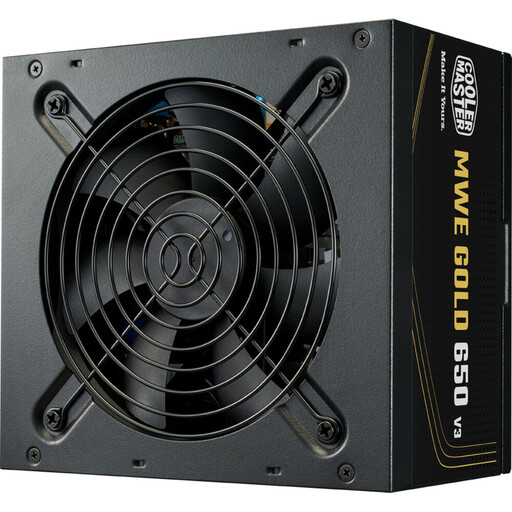
Why this is a good match for this profile : This ATX power supply is suitable for a build with moderate power consumption. It uses the standard ATX format, measuring 140 × 150 × 86 mm, and delivers 650 W.
The ATX 3.1 standard and UVP, OVP, OPP, OTP, SCP and OCP protections help prevent you from choosing a power supply based solely on its wattage. This model is non-modular, so make sure you have enough room to store the unused cables.
80 PLUS Gold certification, 120 mm HDB fan, two 4+4 EPS connectors and a stated 5-year warranty.
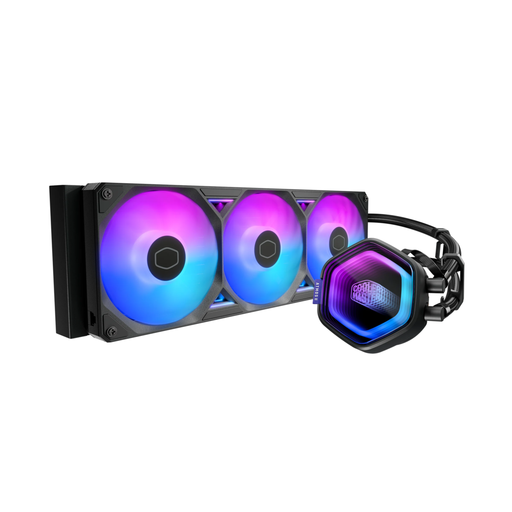
Why this is a good match for this profile : This kit is designed for users looking for 360 mm liquid cooling compatible with Intel LGA1851 and AMD AM5 sockets, together with ARGB customisation.
The product information specifies the radiator dimensions, compatible sockets and the inclusion of a VRM fan. You must nevertheless confirm that your case can accommodate a 394 mm radiator.
Three SickleFlow Edge ARGB fans, a pump rated at 3 400 ± 300 rpm, an aluminium radiator and a stated 6-year warranty.
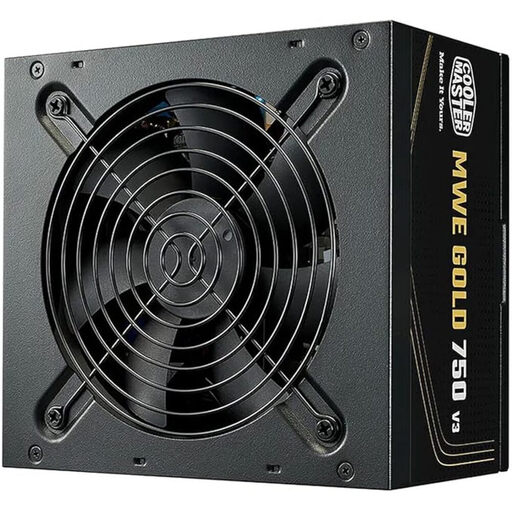
Why this is a good match for this profile : The 750 W reserve may suit a build with a more power-hungry graphics card, provided you check the total power consumption and the GPU manufacturer’s recommendations.
The product information states that the native 12V-2x6 cable can supply up to 450 W. However, check that your graphics card actually uses this standard before installation.
750 W, 80 PLUS Gold certification, ATX 3.1 standard, native 12V-2x6 connector, multiple electrical protections and a stated 5-year warranty.
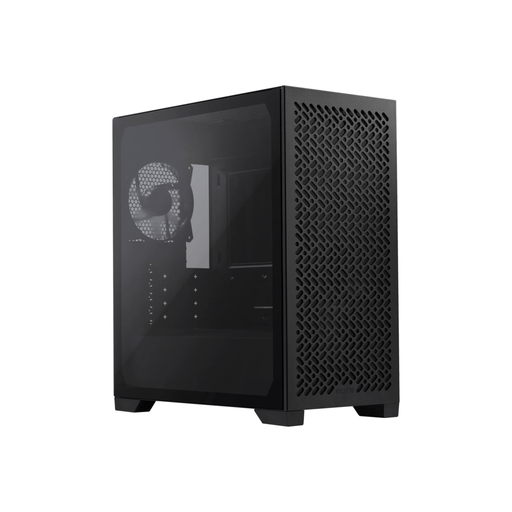
Why this is a good match for this profile : This Mini Tower case is designed for builders who want to fit a Micro-ATX or Mini-ITX build into a compact space, while benefiting from a front USB Type-C port.
The case supports graphics cards of up to 365 mm and CPU coolers of up to 163.5 mm. Compatibility with a 360 mm front radiator must nevertheless be checked based on your graphics card’s dimensions.
It can accommodate up to six fans, includes dust filters and features a magnetic mesh front panel for easier maintenance.
We have put together a complete, real-time updated selection of products that meet these demanding criteria, as well as European safety requirements.
Before installing the components, prepare a clean surface and discharge any static electricity. With a non-modular power supply, connect only the cables you need, then store the remaining cable bundles without obstructing the fans.
In a compact case, install the motherboard first and make sure the EPS connectors remain accessible. With an AIO, secure the radiator without putting strain on the tubes. Never dismantle a sealed liquid-cooling circuit. In the event of a leak, switch off the system immediately and stop using it.
You should also regularly remove dust from the filters and radiators. Accumulated dust can raise temperatures and noise levels, even when the components appear highly capable on paper.
It may be suitable for a build with a processor and graphics card that have moderate power requirements. Check the graphics card manufacturer’s recommendations and add up the requirements of the other components. For a more demanding GPU, a 750W 80 Plus Gold PC power supply will provide additional headroom.
No. It depends on the intended mounting position, radiator length, fan thickness and the space remaining around the graphics card. Compare the case and radiator dimensions before buying.
ATX 3.1 refers to a revision of the standard for power supplies that takes into account, among other things, power fluctuations in modern components. The possible inclusion of a 12V-2x6 cable may simplify connection for certain graphics cards, but you must still check the exact compatibility of the model.