
Livraison le jour même ou le lendemain

Qualité garantie

Débloquez vos offres de bienvenue: Livraison GRATUITE | Jusqu'à -80 % | 30 jours d'essai gratuits à JoyPlus
Téléchargez l'application
Equipping your kitchen with a new cookware set can quickly become a headache. Between marketing promises of "scratch-proof" coatings and picture-perfect sets, it's easy to make a purchase you'll bitterly regret. As a Product Expert at Joybuy, my role is to help you decipher the labels and avoid common pitfalls, ensuring your investment is long-lasting and perfectly suited to your cooking style.
Before you dive in, let's review three common issues that turn a great deal into a guaranteed disappointment.
To avoid these setbacks, let's focus on two fundamental aspects: material and versatility.
The material is the crux of the matter. It determines everything: cooking quality, the lifespan of your utensil, and its ease of maintenance.
Good cookware should simplify your life in the kitchen, not complicate it.
Rather than an endless list, here are a few products that cater to specific user profiles, keeping our criteria of durability and practicality in mind.
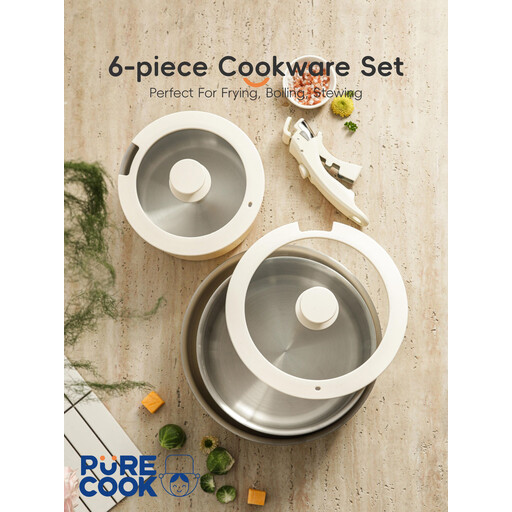
Why we chose it: This set is designed for intensive, family-style cooking. It combines the durability of 304 stainless steel on the inside with an easy-to-clean ceramic coating on the outside. The removable handle is the real bonus for ultra-compact storage.
It directly tackles the storage problem with its single handle and stackable design. The robust stainless steel interior prevents the rapid degradation seen in low-end non-stick coatings.
Versatility and space-saving: One handle for multiple utensils, compatible with all hobs and the oven. Cleaning becomes a breeze.
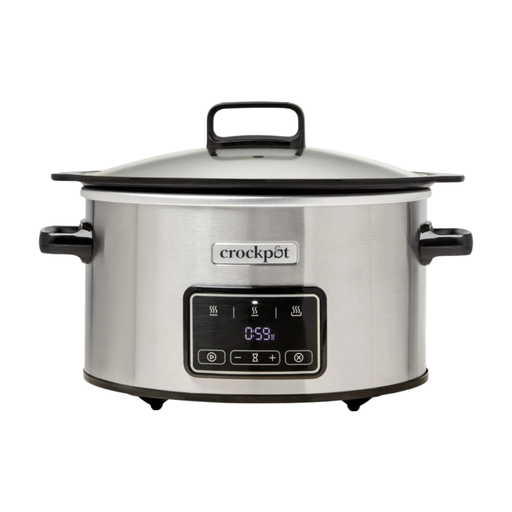
Why we chose it: This is the ultimate tool for simmering and braising. Its removable ceramic pot is perfect for long, low-temperature cooking that enhances flavours. Its 3.5L capacity is ideal for 3 to 4 people.
It doesn't pretend to do everything. It's a specialised appliance that focuses on one mission and executes it perfectly. The ceramic pot ensures slow, even heat distribution—the key to successful slow cooking.
Gentle, autonomous cooking: Ideal for preparing flavourful, tender dishes without supervision. The removable pot can be taken to the table for serving and is easy to clean.
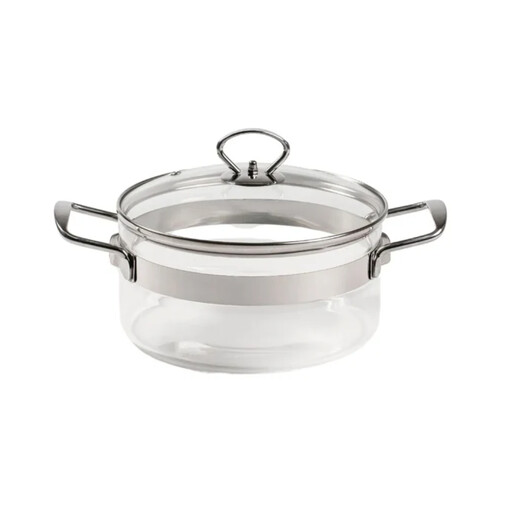
Why we chose it: For those who want PFOA-free, PFAS-free cookware with no coating whatsoever. This borosilicate glass Dutch oven is completely inert, ensuring no unwanted components migrate into your food. Its transparency is a real plus for monitoring cooking.
It bypasses the debate over coatings because it simply doesn't have one. It's the ultimate solution for total peace of mind regarding the materials in contact with your food.
Purity and visibility: The non-porous glass doesn't absorb odours or stains. Cooking remains visible at all times. Compatible with all hobs (with an adapter disc for induction) and oven-safe up to 180 °C.
We have compiled a complete, up-to-date list of products that meet these strict selection criteria and current regulations.
The longevity of a coated pan, even a high-quality one, primarily depends on how you use and care for it. On average, with meticulous maintenance (no metal utensils, no overheating when empty, hand washing), a good pan can retain its properties for 2 to 5 years. The first signs of wear (food sticking, scratches) are a signal that it's time for a replacement.
The easiest way is to look for the induction symbol (a horizontal coil shape) engraved on the bottom of the utensil. You can also do a simple test: if a magnet sticks firmly to the outer base of your pot or pan, it's compatible.
Both are excellent options for healthy cooking, but they serve different needs. Stainless steel is nearly indestructible, stable, and hygienic, but it's not naturally non-stick. It therefore requires a bit of technique or the use of fats. A ceramic coating, on the other hand, offers a PFOA/PTFE-free non-stick surface, perfect for cooking with little fat, but it is more fragile against scratches and thermal shock. The choice depends on your priorities: the bulletproof durability of stainless steel or the ease of use of ceramic.