
Livraison le jour même ou le lendemain

Qualité garantie

Débloquez vos offres de bienvenue: Livraison GRATUITE | Jusqu'à -80 % | 30 jours d'essai gratuits à JoyPlus
Téléchargez l'application
Choosing the right cookware is about more than comparing a price or a design. A frying pan may prove too heavy for everyday use, a non-stick baking tray may require a little extra care, and an electrical appliance may take up far more space on your worktop than expected.
To avoid disappointing purchases, focus on three points: the material, compatibility with your heat sources and the maintenance requirements. Here are the criteria to consider before choosing a griddle pan, electric griddle, baking tin or oven tray.
A non-stick baking tray makes releasing food easier and helps reduce the amount of fat needed. However, its coating remains vulnerable to scratches. Metal utensils, abrasive sponges and certain dishwasher programmes can damage it prematurely.
Before placing your order, check:
Enameled cast iron retains heat for a long time, but it is heavier than an aluminium tray or a carbon-steel tin. A square frying pan measuring 26 cm offers useful space for cooking several portions, but it may require both hands to move it safely.
In a standard-sized French kitchen, also remember to measure:
Not all cookware is compatible with every cooking setup. A frying pan may work on induction, while a baking tin may be designed for oven use only. An electric griddle must be connected to a suitable socket and placed on a stable surface. Its main unit must never be immersed if it contains electrical components.
The term ‘all hobs’ does not replace a detailed check: induction, gas, ceramic, oven or grill. Always consult the product information before buying.
The enameled cast-iron griddle pan is suitable for cooking that requires stable heat and good heat retention. Its deep grooves create attractive grill marks and allow juices, along with some of the fat, to run towards the pouring spouts. The trade-off is that it heats up gradually, stays extremely hot for a long time and must have cooled sufficiently before being washed.
Carbon steel is lighter and heats up quickly. It is often used for baking tins and oven trays. A non-stick coating makes releasing food easier, but it needs to be handled with care.
A stainless-steel baking tray generally has no non-stick coating. It stands up well to many uses, but cooking requires greater precision: suitable preheating, enough fat and carefully controlled temperature.
A 26 cm surface is suitable for individual portions or smaller households. When cooking for several people, a wider tray can reduce the number of batches needed. The KitchenCook K-PAN100 electric griddle, for example, offers a 100 × 23 cm cooking surface and a stated capacity of up to 10 people.
For baking, the number and depth of the moulds matter just as much as the external dimensions. A madeleine tin measuring 28 × 28 cm may allow you to prepare several cakes in a single batch, provided its size is compatible with the oven rack.
Temperature limits vary between manufacturers. The Mastrad tin featured here is stated to withstand temperatures of up to 230 °C, while the PURECOOK set can be used in the oven up to 450 °F, or approximately 232 °C.
In all cases:
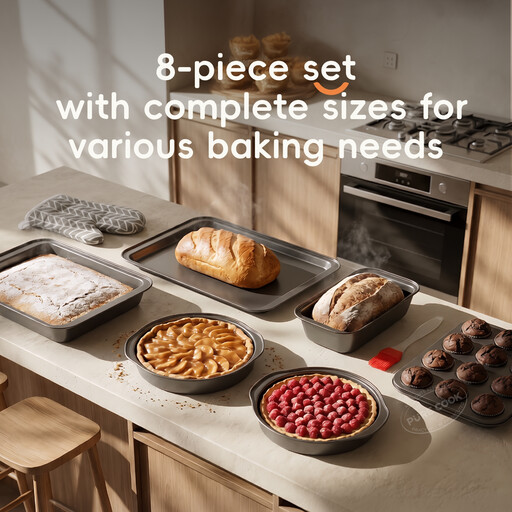
Why this choice suits this profile : This set brings together several sizes, allowing you to try sweet and savoury recipes without having to buy each tin separately. Carbon steel is easier to handle than cast iron.
The range of sizes reduces the risk of ending up with a tin that rarely gets used. The non-stick coating makes releasing food easier, provided you opt for gentle washing.
8-piece carbon-steel set, stackable and suitable for use in the oven and certain air-cooking appliances.
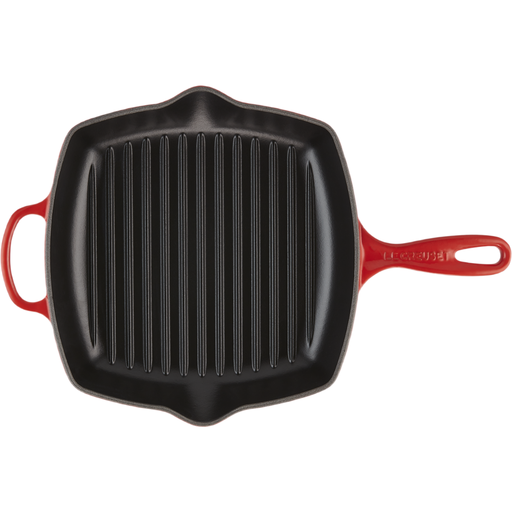
Why this choice suits this profile : Its enamelled cast iron, along with compatibility with induction, ovens and grills, makes it a versatile piece designed to last.
The product information confirms compatibility with all hobs and ovens. The main and auxiliary handles make it easier to handle, although its weight should still be taken into account.
Deep grooves, side pouring spouts and a 26 cm square surface for meat, fish and vegetables.
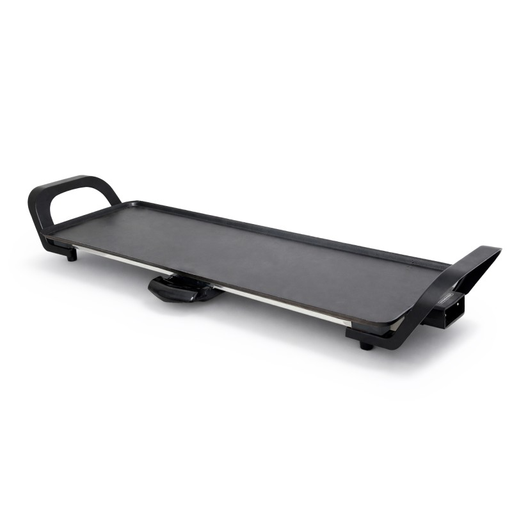
Why this choice suits this profile : With its 100 × 23 cm surface, it is ideal for larger gatherings and lets you cook vegetables, fish and meat at the same time.
The five temperature settings mean you do not have to cook at a single heat level. The removable drip tray helps prevent spills on the worktop.
1 800 W power, removable thermostat, insulated handles and non-slip feet.
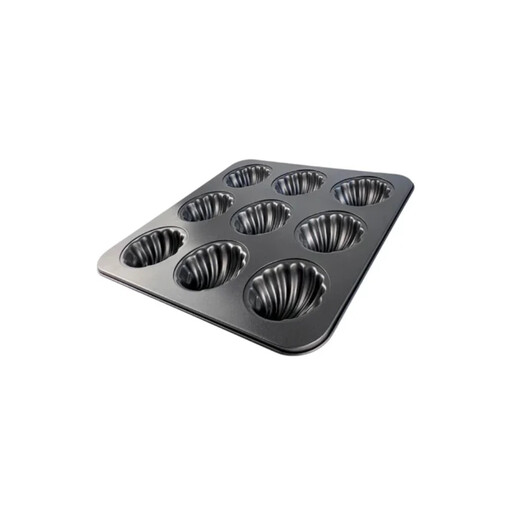
Why this choice suits this profile : Its shell-shaped moulds create evenly shaped madeleines for teatime, dessert or special family occasions.
The maximum temperature of 230 °C is clearly stated, helping you select the right oven programme. A light coating of grease may still be useful despite the non-stick coating.
28 shell-shaped moulds, Duramax non-stick coating and dishwasher compatibility, as stated in the product information.
We have put together a comprehensive, real-time selection of products that meet these strict criteria, as well as European safety regulations.
Enameled cast iron is suitable for slow cooking and grilling that require stable heat. Lighter carbon steel is practical for baking tins. Stainless steel offers an uncoated surface, but requires more precise cooking technique. The right choice therefore depends on the weight you are happy to handle, the level of maintenance you prefer and the recipes you prepare.
It depends on its power rating, how long it is used and the setting selected. An 1 800 W griddle used for one hour theoretically consumes 1.8 kWh at full power. In practice, the thermostat alternates between heating and maintaining the temperature, which can reduce actual consumption.
Allow the cookware to cool before cleaning it, use a soft sponge and avoid metal objects. Also follow the maximum temperature and the manufacturer’s recommendations. For oven cookware, regularly check that it is neither warped nor chipped before use.