
Livraison le jour même ou le lendemain

Qualité garantie

Débloquez vos offres de bienvenue: Livraison GRATUITE | Jusqu'à -80 % | 30 jours d'essai gratuits à JoyPlus
Téléchargez l'application
Buying cookware is about more than simply choosing a shape or colour. From oven dishes, baking moulds and stainless-steel pans to multifunction appliances, certain features are often highlighted without clearly explaining their limitations. To make the right choice, consider your recipes, household size, available space and safety requirements.
A product described as versatile is not necessarily compatible with every heat source. A glass dish may be suitable for the oven, refrigerator and dishwasher, but it should not be placed on a hob or directly over a flame. Likewise, some ceramic dishes can be used in the oven and microwave without being designed for cooking under the grill.
Before placing your order, always check the symbols and product specifications for:
A mould or dish may look spacious in a photograph, while its usable capacity does not suit your recipes. For a family, a 2.9-litre dish will be better suited to gratins, lasagne and generous portions than a small individual mould. Conversely, a large container may take up too much space in a compact oven and be difficult to store.
Measure the available width, depth and height in your built-in oven or countertop oven. Also allow enough room to grip the dish safely with oven mitts.
A non-stick coating generally makes food release easier, but it does require a few precautions: avoid metal utensils, abrasive sponges and high temperatures when the container is empty. Glass and ceramic are often easy to clean, but remain vulnerable to impacts and sudden temperature changes.
An appliance such as an air fryer may offer several programmes, but its baskets and accessories need to be cleaned regularly to prevent grease build-up and unpleasant odours.
For everyday use, match capacity to the number of portions:
Shape also matters. A rectangular dish makes efficient use of the oven’s surface area, while a round mould is better suited to pies and cakes. For dishes intended to be shared, check the depth to help prevent spills and overflow.
For an electrical appliance, check the power rating, internal capacity, maximum temperature and required clearance. The BLACK+DECKER BXAF01200E has a stated capacity of 12 litres, an advertised power rating of 1,500 to 1,700 W and a maximum temperature of 200°C. Its manufacturer recommends leaving 15 cm of space behind the air outlet, 30 cm above the appliance and 10 cm on either side.
A larger model may be better suited to a family, but it will also take up more space and may require a suitable wall socket. For high-powered appliances, avoid extension leads and power strips that are not designed for this type of use.
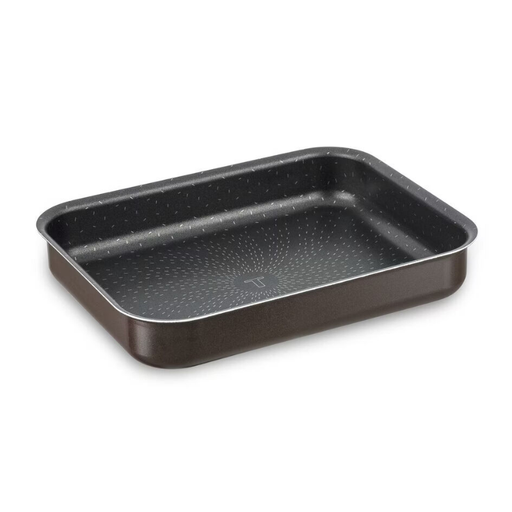
Why this choice suits this profile: its compact format is ideal for smaller kitchens, gratins, roasted vegetables and cakes prepared in a standard oven.
The specifications clearly outline use in the oven, refrigerator, freezer and dishwasher, along with the precautions relating to the coating.
20 × 26 cm dimensions, recycled aluminium and a coating advertised as free from PFOA, lead and cadmium.
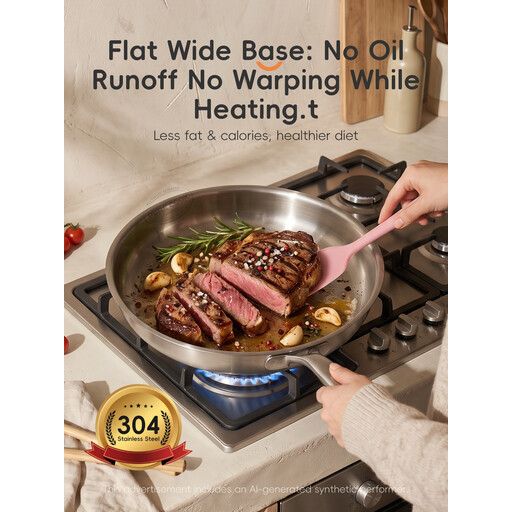
Why this choice suits this profile: with its 28 cm diameter, this pan is well suited to family meals, sauces and dishes that require a generous cooking surface.
Compatibility with several types of hob is stated explicitly, rather than implying universal compatibility.
304 multi-layer construction with an aluminium core, pouring rim and care instructions stating dishwasher compatibility.
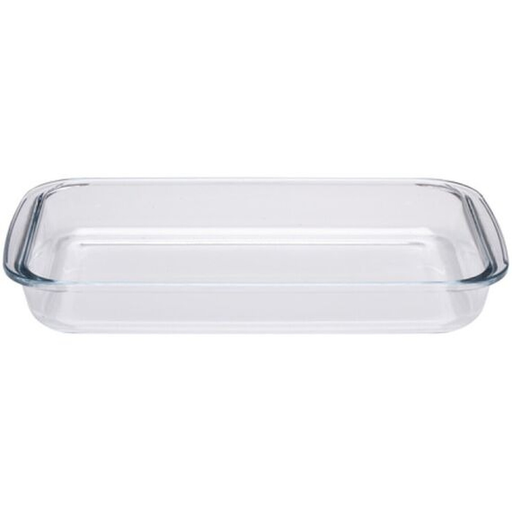
Why this choice suits this profile: its capacity is ideal for gratins, lasagne, roasts and desserts to share at family meals.
The specifications identify it as a borosilicate-glass dish compatible with the oven and microwave, but not with a hob or direct flame.
2.9-litre capacity, dimensions of 39 × 23.5 × 5 cm and stated dishwasher-safe cleaning.
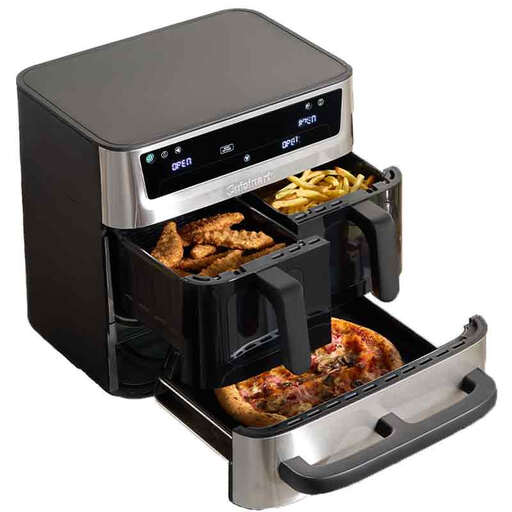
Why this choice suits this profile: its three cooking zones let you prepare several foods at once, making it practical for large gatherings or meals that need to be organised quickly.
The capacity is divided between two 4.3-litre baskets and a 5-litre oven drawer, so the specifications make the usable space clear.
Advertised power of 2,400 W, nine functions and synchronisation modes for finishing cooking at the same time.
The lifespan of cookware depends as much on its material as on how you use it. Allow glass or ceramic dishes to cool before washing them. Never place a hot container on a cold surface or expose it to cold water. For non-stick moulds, use a soft sponge and wooden or silicone utensils.
Regularly check for chips, cracks, warping and areas where the coating is beginning to peel. Damaged cookware should no longer be used, particularly when exposed to high temperatures.
For cooking appliances, follow the required ventilation clearances, remove grease in accordance with the instructions and unplug the appliance before cleaning it. Built-in ovens must be installed in a correctly sized housing and connected in compliance with the applicable electrical regulations.
Borosilicate glass is suitable for gratins, roasts and desserts, while allowing you to monitor cooking directly. Ceramic offers an elegant presentation at the table and is particularly well suited to dishes that cook gradually. In both cases, check the dish’s thermal resistance and avoid sudden temperature changes.
Yes, provided the product specifications state this explicitly. The PURECOOK Tri-Ply 304 pan is advertised as induction-compatible, but you still need to choose a diameter suited to the cooking zone and follow the manufacturer’s recommendations.
Energy consumption depends on the power rating, cooking time, quantity prepared and preheating time. A compact appliance may reduce heating time for a small portion, while a built-in oven will often be more practical for cooking several dishes. Compare the available power and capacity rather than relying solely on the product’s commercial name.