
Livraison le jour même ou le lendemain

Qualité garantie

Débloquez vos offres de bienvenue: Livraison GRATUITE | Jusqu'à -80 % | 30 jours d'essai gratuits à JoyPlus
Téléchargez l'application
Outfitting your kitchen can be a daunting task. Between marketing promises and a jungle of materials, it's easy to make a purchasing mistake. As a product expert at Joybuy, I'm here to help you see things more clearly. Let's move past the advertising hype and focus on the criteria that truly matter to find the right cookware for your needs and budget.
Before you start, watch out for these common pitfalls that can turn a good investment into a regret:
non-stick pan losing its properties after just a few months of use is a classic problem. Overheating or using metal utensils is often the cause, but the intrinsic quality of the coating remains the deciding factor.To avoid these disappointments, simply focus on a few objective technical features.
The choice of material should be dictated by your cooking habits.
For use on an induction hob, the coil-shaped pictogram is essential. But that's not enough. A quality all-hob stockpot must have a flat, thick base to ensure perfect contact with the hob and uniform heat distribution. This is the key to avoiding hot spots and mastering your cooking with precision.
In modern kitchens, every inch counts. A stackable cookware set with removable handles can revolutionise your organisation. It's a practical solution for small apartments, student studios, or for anyone who hates cluttered cupboards.
Here are a few options that meet specific needs, taking into account the quality and practicality criteria we've just discussed.
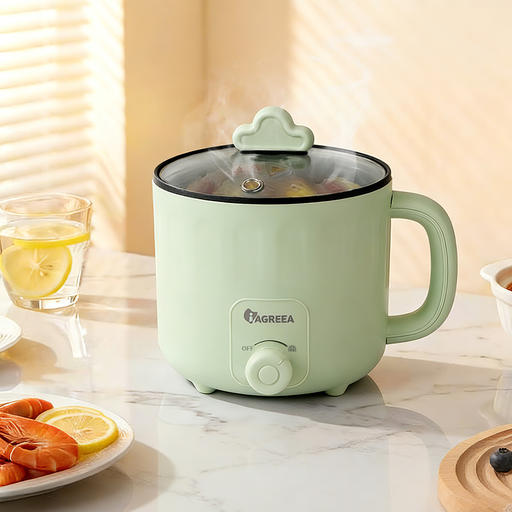
Editor's Verdict: This mini electric cooker is an all-in-one solution for students, people living alone, or as a handy backup at the office. Its 1.6L capacity is ideal for one or two people, and its compact size makes it hassle-free to store or transport.
As a standalone appliance, it bypasses any hob compatibility issues. Its non-stick coating is designed for simple cooking (noodles, soups, eggs) and express cleaning.
It includes boil-dry protection and an automatic shut-off: reassuring safety features for a student dorm or studio apartment.
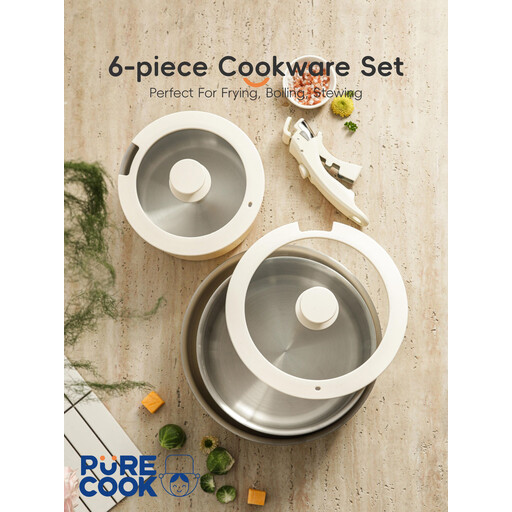
Editor's Verdict: This stackable cookware set is the ideal starter kit for outfitting a kitchen. It includes a saucepan, a stockpot, and a frying pan, covering most daily needs. The removable handle is a real game-changer for storage.
The food-grade 304 stainless steel interior is a guarantee of durability that won't degrade over time. The base is designed for compatibility with all heat sources, including for efficient use as an induction pot.
The combination of the stainless steel interior, the easy-to-clean ceramic exterior, and the removable handle makes it a system that is as practical as it is durable.
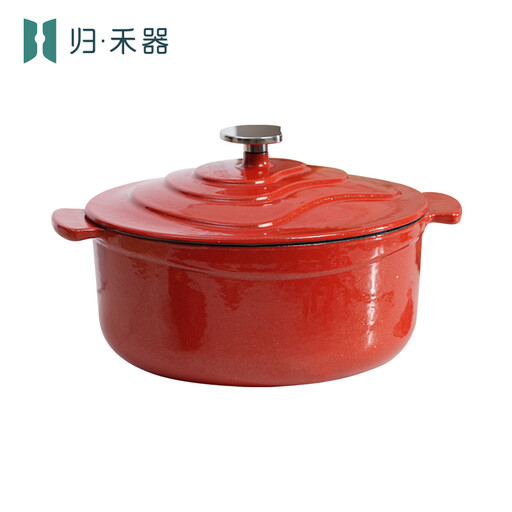
Editor's Verdict: For lovers of long-simmering dishes, this enameled cast iron Dutch oven is a must-have. Its 3.3L capacity is perfect for treating a family (4-5 people) to meals that require slow, even cooking.
It relies on the king of simmering materials: cast iron. This guarantees a cooking performance unattainable with lighter materials. The interior enamel protects the cast iron from rust and significantly simplifies cleaning.
Its exceptional thermal inertia helps produce tender meat and flavourful dishes. All with perfect compatibility on all hobs, induction included.
Discover our full selection of products that meet our quality criteria and European safety standards.
The easiest way: look for the coil-shaped pictogram (like a spring) on the bottom of your cookware. If in doubt, try the magnet test: if a magnet sticks firmly to the outer base, you're good to go! Your cookware is compatible.
Four golden rules:
Absolutely. Grade 304 (also known as 18/10) stainless steel is one of the safest and most reliable materials for cooking. It is stable, non-porous, and highly resistant to rust and corrosion. Most importantly, it is completely inert and does not react with food, even acidic ones like tomatoes or lemon.