
Livraison le jour même ou le lendemain

Qualité garantie

Débloquez vos offres de bienvenue: Livraison GRATUITE | Jusqu'à -80 % | 30 jours d'essai gratuits à JoyPlus
Téléchargez l'application
Choosing a new cooktop can quickly become a daunting task. With evolving technologies, marketing jargon, and a jungle of available models, it's easy to feel lost... and risk making a purchase you'll immediately regret. As a Product Expert at Joybuy, my role is to help you see things more clearly. Together, let's navigate the common pitfalls to find the cooktop that will perfectly fit your kitchen and your lifestyle.
Before we go any further, let's review the 3 most common mistakes that can be costly:
To avoid these traps, let's focus on the criteria that truly make a difference. Once you've mastered these few technical points, you'll be able to make an informed decision.
The choice of technology is arguably the most critical. It determines performance, safety, ease of maintenance, and, of course, your budget.
Your choice will depend on the size of your household, your cooking habits, and the space available in your kitchen.
The golden rule for any built-in model: before you confirm your purchase, measure your existing niche to the millimeter and compare it to the cutout dimensions (width and depth) provided by the manufacturer.
These details, which are far from minor, make all the difference in daily use:
Rather than an endless list, here is a selection of models that meet clear needs, based on the criteria we've just discussed.
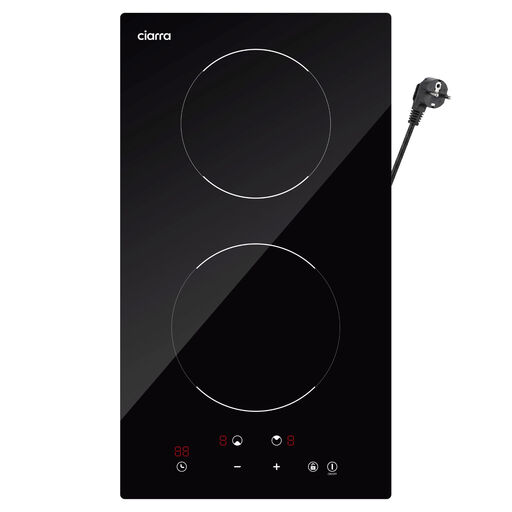
Why we chose it: With its 29 cm width, this cooktop fits perfectly into kitchenettes or small countertops, while offering the speed and efficiency of induction. An ultra-high-performance solution to optimize space.
This model gets straight to the point: two efficient cooking zones with 9 power levels. No superfluous features that drive up the price, just what you need for simple, everyday use.
The touch controls and individual timers offer a level of cooking precision rarely found on compact models, all with essential safety features (lock, residual heat).
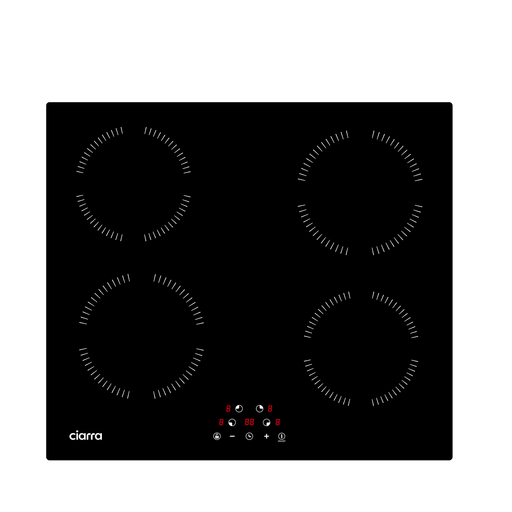
Why we chose it: With its standard size (60 cm), it perfectly meets a family's needs. Its four independent zones allow you to juggle multiple preparations, all with the essential safety features for peace of mind.
With its well-distributed 6,000 W, it doesn't fall into the "overpowered" marketing trap. It focuses on reliability and safety—solid values that are far more useful in daily life than complex gadgets.
Each cooking zone has its own timer (up to 99 minutes), which greatly simplifies managing meals with multiple dishes that have different cooking times.
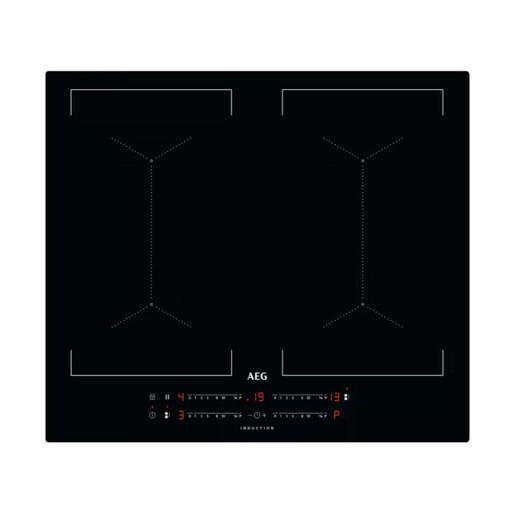
Why we chose it: For those who like to think big (fish kettles, griddles, large casserole dishes), the "Bridge" function that merges two zones into one is a game-changer. The touch interface offers remarkably fine control.
Here, the advanced features aren't gimmicks. The flexible zone and frying sensor meet real needs for creative cooking. The investment is justified for enthusiasts.
The combination of the flexible zone and ultra-responsive touch controls provides a level of flexibility and mastery worthy of semi-professional equipment.
For camping, a student flat, or just as an extra cooking spot, discover our selection of portable cooktops that combine reliability and safety.
An induction cooktop consumes on average 20% less energy than a ceramic cooktop. The reason is simple: energy is transferred directly to the cookware with very little heat loss. In contrast, a ceramic cooktop first heats its glass surface, which then transfers the heat to the pan, resulting in greater energy loss.
Yes, it's essential. To work, an induction cooktop requires pots and pans with a ferromagnetic base. The trick to check? Take a magnet and place it on the bottom of your cookware. If it sticks firmly, it's compatible! Most modern cookware displays a coil-shaped symbol to confirm compatibility.
For daily cleaning, wait until the cooktop is completely cool (the "H" residual heat indicator must be off). A soft sponge or microfiber cloth with soapy water (or a dedicated cleaner) is sufficient. For stubborn or burnt-on stains, use a special glass scraper, holding it at a sharp angle to avoid scratching the surface. Above all, never use scouring powders, abrasive sponges, or oven cleaners: they will permanently damage the surface.