No oven, but love oven-cooked dishes
You want to cook gratins, pizzas or bakes, and need to choose between a mini oven’s cavity and a microwave with genuine convection. Severin and Panasonic describe the functions available on their featured models.


Choose according to the meals you make most: a mini oven for dishes cooked in a cavity, a microwave for reheating, a multi-cooker for meals prepared in a pot, or a portable hob for cooking with your own pans. If you need several functions, two complementary appliances may suit you better than one all-rounder. Check the cooking modes, the space needed when in use and the total power drawn when appliances run at the same time.
You want to cook gratins, pizzas or bakes, and need to choose between a mini oven’s cavity and a microwave with genuine convection. Severin and Panasonic describe the functions available on their featured models.
You mainly make slow-cooked dishes, rice or pan-fried food. Your choice comes down to the flexibility of a portable hob or the programmes on a multi-cooker. Tefal lists the modes available on the models featured.
You often reheat leftovers and would sometimes like to roast a portion, too. Check whether a combination appliance offers the functions you need, or whether two separate appliances would be a better fit. Panasonic and Philips describe these uses.
Start with the cooking method you’ll use most, then check that your dishes will fit and that the appliance can be set up suitably in your kitchen.
| What matters | What to check before buying | Who is this most relevant to? |
|---|---|---|
| Cooking proper oven dishes | Clearly stated cooking modes, compatible dish dimensions, external dimensions and installation instructions. | If I want to make gratins, pizzas or bakes, I check that the appliance genuinely offers oven cooking and that my dish fits inside the cavity. Around 27% of consumers prioritise oven cooking. |
| Preparing meals in a pan or pot | Available modes, fill limits, number of cooking zones and pan compatibility. | For soups, rice or slow-cooked dishes, I choose between a programmed cooking pot and a hob that lets me use my own pans. Around 20% of consumers prioritise meals cooked in a pan or pot. |
| Reheating and finishing off a dish | Microwave function, whether grill and convection are listed separately, dish diameter and instructions for combination modes. | If I often reheat leftovers, I check that the appliance really has a microwave mode and that my dishes are suitable. Around 20% of consumers prioritise reheating. |
| Roasting small portions | Usable basket dimensions and a suitable amount of food to allow air to circulate. | When I’m mainly cooking a small portion, the shape of the basket and airflow matter just as much as its stated capacity. Around 13% of consumers prioritise air-frying small portions. |
| Setting up and powering appliances | Available space, door and drawer clearance, the gaps specified in the manual, sockets and the total power drawn at the same time. | In a small kitchen, I check where appliances can be used and which ones will run simultaneously before choosing a combination. Around 20% of consumers prioritise space and electrical supply. |
An appliance may have separate grill and convection modes. These modes aren’t interchangeable for every recipe.
For dishes that need oven-style cooking, check that the relevant mode is explicitly listed for the model you’re considering.
If the appliance can’t cook the dishes you have in mind, you may need a second appliance for them.
How much fits in a basket or cooking pot depends on the shape of the food and the model’s instructions. Overfilling a basket can also restrict airflow.
Compare the dimensions of your dishes or portions with the cavity, basket or pot, and check the fill limits in the manual.
Depending on what you’re cooking, you may need to cook in batches or use suitably sized containers.
Enedis reminds consumers that the power drawn by appliances running at the same time is cumulative. If the available power is exceeded, the supply may be interrupted.
Before planning to run appliances simultaneously, compare their stated electrical power, sockets and circuits. Don’t confuse a microwave’s cooking power with the electrical power it draws.
The TO 2068 is an example of a countertop mini oven.
The NN-CD58RS is an example of a microwave combining reheating, grilling and convection.
The models featured represent two distinct uses: cooking meals in the CY505EF0 pot, and using the IH210801 portable hob.
The NA231/00 air fryer is an option for portions that fit its basket.
This selection includes countertop appliances for oven cooking or air-frying, reheating and preparing meals in a pot. Microwaves with a grill or reheating functions aren’t necessarily a substitute for an oven.
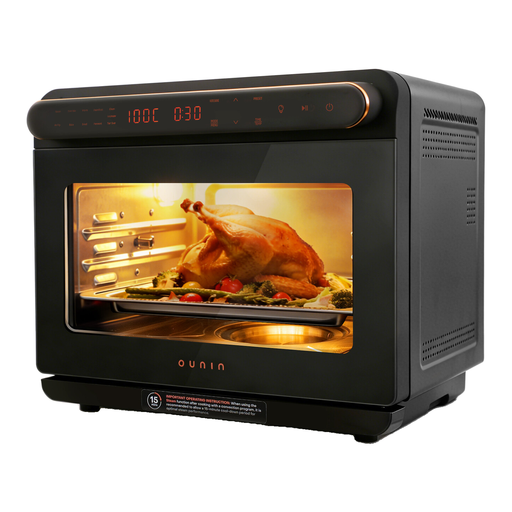 Image unavailable
Worth considering if you want several cooking modes in one countertop appliance.
The title lists a 24 L capacity, a 1 L water tank and a 304 stainless steel interior. The functions described include steam, oven cooking, roasting and air frying.
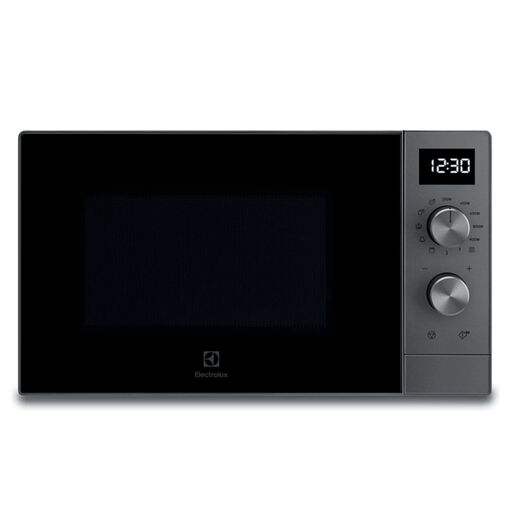 Image unavailable
Worth considering if reheating is your priority and the grill suits the dishes you want to finish off.
The product information lists a 25 L capacity, a 28.8 cm turntable, microwave mode, a grill and a defrost function. The instructions specify at least 10 cm of clearance at the sides and 20 cm above for ventilation.
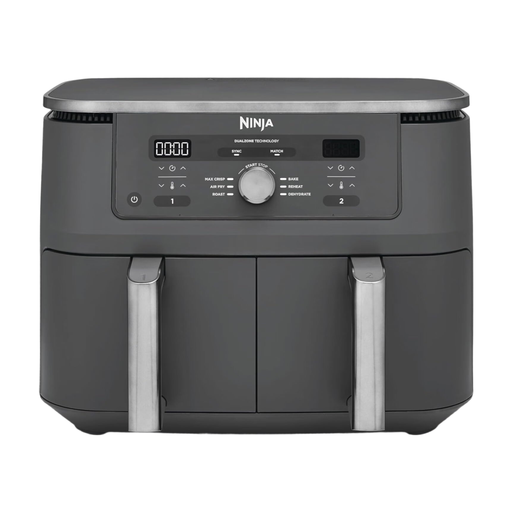 Image unavailable
Worth considering if you want to air-fry portions and use two independent drawers.
The title lists two drawers and a 9.5 L capacity. The functions described include air frying, roasting, baking and reheating. The manual requires a stable, heat-resistant surface and sufficient ventilation.
 Image unavailable
Worth considering for meals cooked in a pot, especially if pressure cooking, steaming or slow cooking suits the way you cook.
The title lists a 3.8 L capacity and a size designed for up to four portions. The functions described include pressure cooking, slow cooking, sautéing and steaming. Follow the stated fill limits and don’t open the lid until the pressure has dropped.
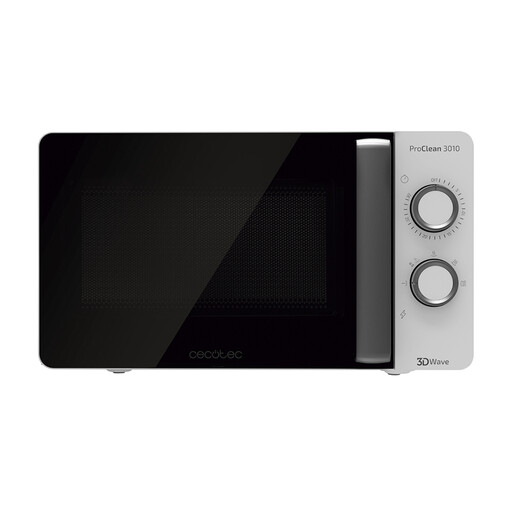 Image unavailable
Worth considering if you mainly want to reheat or defrost food. The listed functions don’t include convection oven cooking.
The title lists a 20 L capacity and 700 W power. The instructions specify 10 cm of clearance at the back, 5 cm at the sides and 20 cm above.
Not necessarily. For the furnished rentals covered by it, Decree No. 2015-981 includes a hob and an oven or microwave among the minimum items required; it doesn’t require a built-in oven. Check the status of the property and what equipment it includes before buying an appliance to make up for something that’s missing.
Having two sockets doesn’t confirm that the electrical installation and available power are suitable. Enedis states that the power drawn by appliances running at the same time is cumulative. Compare their electrical input power and the specifications of the circuits before using them together.
The right quantity depends on the food and the model. For the appliances covered by its guidance, Philips recommends leaving room for air to circulate and checking the manual for the model’s capacity and care instructions.
Contact the retailer under the statutory guarantee of conformity, subject to the conditions that apply. The DGCCRF states that you have two years from delivery of the item, whether new or second-hand, to take action. This statutory guarantee is separate from an optional commercial warranty.