People bothered by the smell of deep-frying
If the smell of deep-frying puts you off preparing certain foods, start by comparing cooking methods that don’t involve a bath of oil. No appliance can promise a completely smell-free kitchen.


If smells from deep-frying are your main concern, start by comparing hot-air appliances. Que Choisir reports that they can reduce cooking smells and are easier to clean, but also notes that they can be bulky and a little noisy. If you want to keep deep-frying in oil, an electric deep fryer is better suited to regular use. For occasional frying, a traditional pan-style fryer may be enough, provided its bowl is compatible with your hob. An oven or frying pan means you won’t need to buy a dedicated appliance, but won’t necessarily produce fewer smells for every dish.
If the smell of deep-frying puts you off preparing certain foods, start by comparing cooking methods that don’t involve a bath of oil. No appliance can promise a completely smell-free kitchen.
If you want to keep using this cooking method, consider how the oil is filtered and stored, and which parts need cleaning after each use.
A traditional fryer is heated on the hob. Before choosing one for occasional use, check that its bowl is compatible with induction.
Start with the cooking method you want to keep, then weigh up each option in terms of smells, cleaning and the space you have available.
| Factor | What to check | What suits my needs |
|---|---|---|
| Smells and splashes | Que Choisir reports that hot-air appliances can reduce cooking smells, but not eliminate them completely. With an oil fryer, a filter won’t necessarily trap smells when the basket is lowered into or lifted out of the oil. Also check that your kitchen is well ventilated. | The smell of deep-frying bothers me, so I could consider hot-air cooking while making sure the kitchen is properly ventilated. If I want to fry in oil, I also need to be prepared for possible splashes. |
| Cleaning and oil | For deep-frying, find out how to filter and store the oil, and which parts can be removed. For an air fryer, check which parts are dishwasher-safe and follow the instructions for that model. | I want to clean the appliance without having to deal with lots of separate parts. If I choose a deep fryer, I’ll need to allow for filtering the oil and disposing of it when it’s used. |
| How often you’ll cook | For occasional use, compare your existing oven or frying pan with a traditional hob-top fryer. If you regularly deep-fry in oil, consider an electric fryer that frees up the hob. If you want to cook other foods with hot air, check the model’s functions. | I rarely cook these foods, so I may not need a dedicated appliance. If I fry often, I’ll choose the cooking method I’m most likely to use. |
| Space and capacity | Compare the dimensions, the capacity you need for your portions and the space required around the appliance. Que Choisir notes that air fryers can be bulky and a little noisy. | I have limited worktop and cupboard space, so I need to be able to set the appliance up or put it away—not just have a large capacity on paper. |
| Induction compatibility | If you’re choosing a traditional fryer for an induction hob, check the bowl’s material and induction marking. Que Choisir warns that an aluminium cast bowl won’t work for this purpose, and recommends steel in this case. | I have an induction hob, so checking the bowl’s compatibility comes before other features when choosing a traditional fryer. |
According to Que Choisir, smells can escape from an oil fryer when the basket is lowered into or lifted out of the oil, even when there’s a filter.
Think of the filter as a helping hand, make sure your kitchen is well ventilated, and compare hot-air cooking if smells are your main concern.
A traditional fryer is heated on the hob. If its bowl isn’t compatible with induction, you won’t be able to use it on an induction hob.
Check the material, induction marking and manufacturer’s instructions before choosing the size or capacity.
Deep-frying means removing food residue and dealing with the oil once it’s used. ADEME says used oil must not be poured down the sink or toilet, or into the environment.
If this puts you off, compare a hot-air appliance or a fryer that makes filtering easier. For used oil, use a sealed container and find out about local collection options.
Filtering and disposing of the oil takes time and may mean making a special trip.
Que Choisir describes these appliances as bulky and a little noisy. The stated capacity alone won’t tell you whether one will fit in your kitchen.
Measure the space you have in mind, check the clearance requirements in the manual and make sure the capacity suits the portions you prepare.
The OleoClean Pro FR804110 is designed for people who want to keep deep-frying in oil while making it easier to filter and store the oil.
The Filtra One FF162100 is an electric oil fryer with a removable filter basket.
For a Philips Airfryer, check the care instructions for your model and its accessories rather than assuming they can all be cleaned in the same way.
These hot-air models let you compare capacities and cooking configurations without choosing a deep fryer. For each one, check how many portions it can handle, how much space it needs and what’s involved in cleaning it. No model can guarantee a smell-free kitchen.
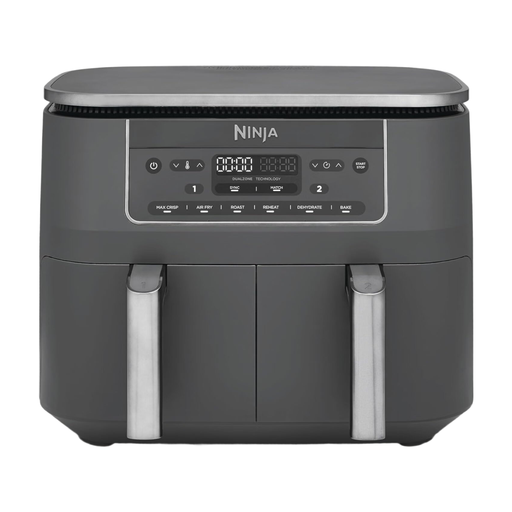 Image unavailable
A two-drawer design to consider if you’re preparing several parts of a meal. The model name indicates 6 functions and a 7,6 L capacity. Check its size and care instructions before buying.
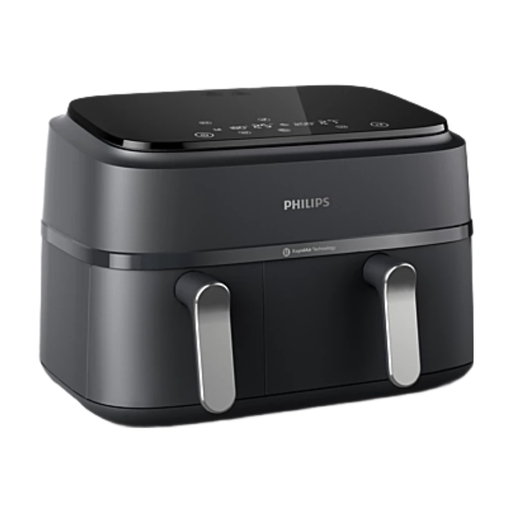 Image unavailable
The two baskets may suit a household that wants to prepare several parts of a meal using hot air. The stated capacity is 9 L. Check the dimensions and the space needed around the appliance.
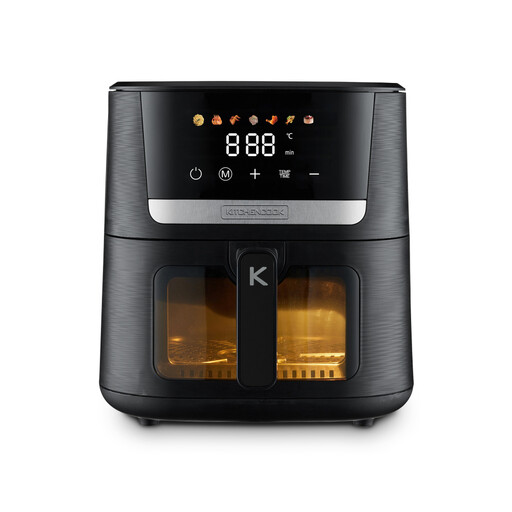 Image unavailable
The cooking window is useful if you want to check on your food without opening the appliance every time. This model has a stated capacity of 7 L and a digital display. Check that its size suits your kitchen.
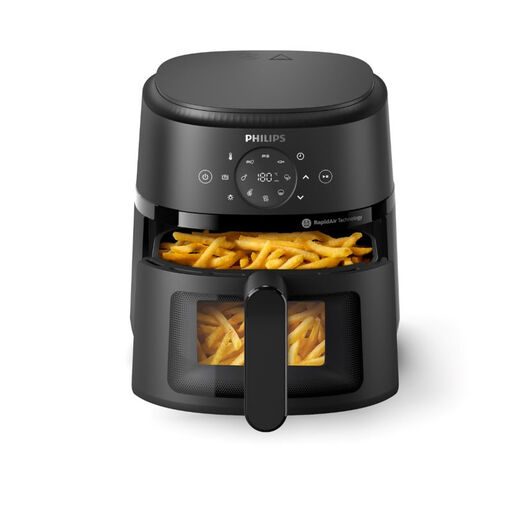 Image unavailable
With a stated capacity of 3,2 L, this model is worth comparing with the portions you usually prepare. Also check how much space you’ll need to set it up and handle the basket.
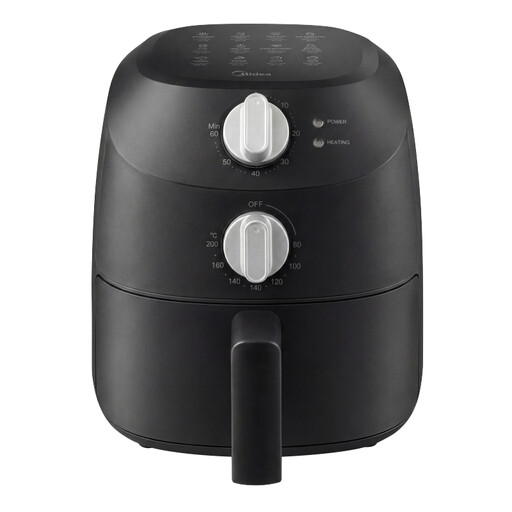 Image unavailable
Before choosing this size, compare its stated 2 L capacity with your usual portion sizes. The product name indicates a 60-minute timer and a removable non-stick basket. Check the care instructions for each part.
No. Que Choisir reports that air fryers reduce smells compared with traditional deep-frying, but don’t eliminate them. Good ventilation and cleaning away food residue are still helpful.
Only if its bowl is compatible. Que Choisir warns that an aluminium cast bowl won’t work on induction, and recommends steel in this case. Check the induction marking and the manufacturer’s instructions.
Que Choisir recommends filtering the oil after each use to remove crumbs that speed up its deterioration. A filtration system can make this easier, but you’ll still need to dispose of the oil when it’s used.
ADEME says not to pour it down the sink or toilet, or into the environment. Let it cool, put it in a sealed container, then check what local disposal options are available, including at your household waste and recycling centre.
First, let the appliance cool and follow the instructions for your model. For the Airfryers covered by its guidance, Philips recommends letting the appliance cool for around 30 minutes, using a non-abrasive sponge and avoiding metal utensils on the surfaces you’re cleaning.