Anyone bothered by cooking smells and oil
You cook fried food, but lingering smells, splashes and the need to filter or dispose of oil make frying less convenient. Que Choisir lists cooking smells among the reasons people consider an alternative.


If handling oil and lingering smells are why you’re considering a change, an air fryer is worth looking at for regular, varied small batches. Keep an oil fryer if the results of deep-frying matter most to you. If your oven already covers your occasional needs, a new appliance may simply take up space. An electric oil fryer still comes with the same demands of a vat of oil.
You cook fried food, but lingering smells, splashes and the need to filter or dispose of oil make frying less convenient. Que Choisir lists cooking smells among the reasons people consider an alternative.
You regularly make chips or breaded food, and the taste and crispness of deep-frying matter most to you. Que Choisir notes that a conventional fryer is still hard to beat on these fronts, despite being more demanding to clean.
You want to avoid storing another appliance if your oven already meets your needs. An air fryer’s size and noise matter just as much as its cooking functions.
First consider whether you want to keep deep-frying, then ask whether your cooking habits justify an appliance separate from your oven. Que Choisir highlights different trade-offs depending on cooking smells, the results you want and the space you have available.
Worth considering: for occasional frying if you have a suitable hob; Que Choisir says this may be enough in that situation.
Bear in mind: it takes up a hob ring, oil may splatter and you’ll need to filter the oil after use.
Worth considering: if you want to keep deep-frying without using a hob ring.
Bear in mind: you’ll still need to maintain the oil, and according to Que Choisir, a filter won’t trap all the smells when you handle the basket.
Worth considering: if you want to avoid a vat of oil and regularly cook a variety of small batches.
Bear in mind: the results don’t always match deep-frying. Que Choisir also notes that an air fryer can be bulky and noisy.
Best if: you rarely cook small batches and your oven already handles the dishes you usually make.
Bear in mind: you won’t have a separate, smaller cooking space when the oven is in use.
| What matters to you | What to check before buying | Who this may suit |
|---|---|---|
| Cooking smells and oil | Compare deep-frying with hot-air cooking. For an oil fryer, check the filter and how it needs to be maintained, too. | If smells linger in my kitchen, I mainly want to handle a vat of oil less often. Around 31% of consumers would put this need first. |
| Frying results | Start with the food you cook most often and compare the results for those recipes, especially chips. Que Choisir distinguishes between the crispness of deep-fried food and that of food cooked in an air fryer. | If I make chips often, I’d rather keep the results of cooking in oil, even if it takes longer to clean up. This would be the main priority for around 25% of consumers. |
| How you use your oven | Check how often you cook small batches, the size of your dishes and which functions your oven already covers. | If my oven is enough for the food I usually make, I don’t want to add an appliance I’ll rarely use. Avoiding duplication would come first for around 25% of consumers. |
| Cleaning and space | Check which parts can actually be removed, their washing instructions, the appliance’s dimensions and the space needed to open the drawer. | In an already busy kitchen, I want something easy to clean that doesn’t get in the way of storage or leave me with an overly loud fan. Around 19% of consumers would prioritise these considerations. |
According to Que Choisir, an oil fryer’s filter can trap some steam and grease, but smells can escape when the basket is lowered into or lifted out of the oil.
Check the type of filter and how it needs to be maintained, and follow the ventilation advice in the instructions.
Depending on the model, an activated carbon filter may need replacing.
An air fryer can also bake, roast or grill. If you rarely cook small batches, these functions may overlap with what your oven can already do.
Compare your recipes, portions, dish sizes and available space before deciding whether a second cooking compartment would be useful.
A large capacity doesn’t tell you by itself how much food will cook well in one go. Que Choisir’s tests distinguish, in particular, between optimum and maximum quantities.
Check the loading recommendations and measure the space you’ll need on the worktop with the drawer open.
Deep-frying involves removing food residue, filtering the oil and cleaning the bowl. These tasks still apply to an electric fryer.
If they’re why you’re considering a change, compare the cleaning instructions for the models you’re looking at and check which air fryer parts can actually be removed and washed.
Moulinex offers electric oil fryers as well as Easy Fry air fryers: two ranges to consider if you’re unsure about giving up deep-frying.
Philips offers air fryers with two baskets, among other options, for cooking different parts of a meal.
Ninja is one of the air fryer brands mentioned by Que Choisir and is worth including when comparing hot-air cooking formats.
These appliances are hot-air cooking options that can reduce the need to manage a vat of oil. Compare their size with your portions and the space available. They won’t necessarily match the results of deep-frying or replace the usefulness of your oven.
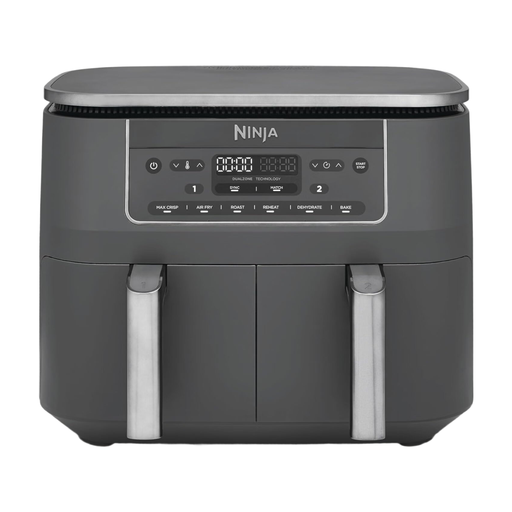 Image unavailable
Worth considering if you want to cook two foods in separate drawers without using a vat of oil.
Two drawers, stated capacity of 7,6 L and six functions. Check how much space you’ll need in front of the appliance to open the drawers, and follow the instructions for cleaning them.
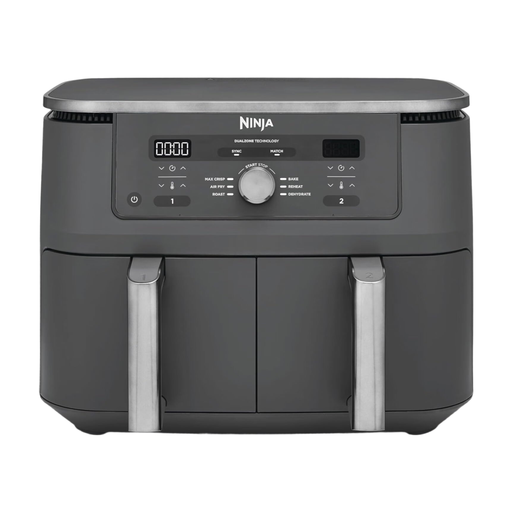 Image unavailable
Consider this if cooking two things at once and having a larger stated capacity suit the meals you usually make.
Two drawers, stated capacity of 9,5 L and six functions. The baskets are listed as dishwasher-safe; check the instructions and make sure you have enough room for the appliance.
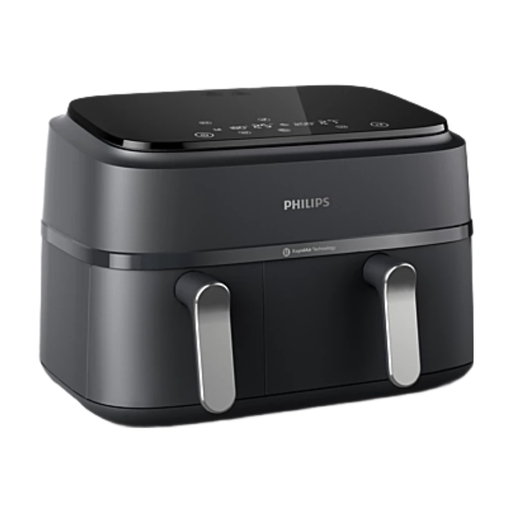 Image unavailable
Worth considering if you want to split hot-air cooking between two baskets.
Stated total capacity of 9 L. Before choosing this style, compare the basket dimensions with your dishes and allow enough room to open them.
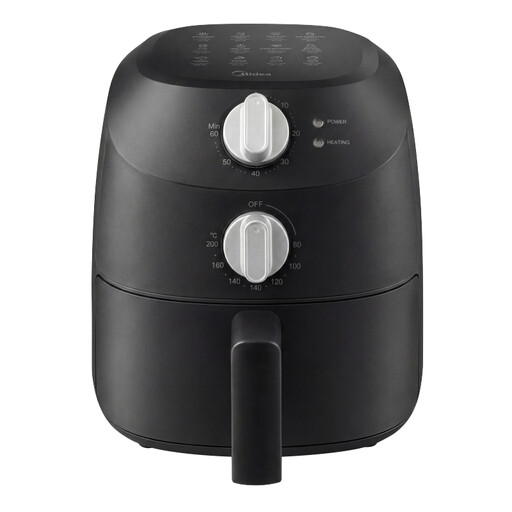 Image unavailable
If you mainly cook small batches, compare the 2 L basket with the portions you usually make.
Stated power of 1 150 W, 60-minute timer and a non-stick basket listed as dishwasher-safe. Measure the space you have before buying.
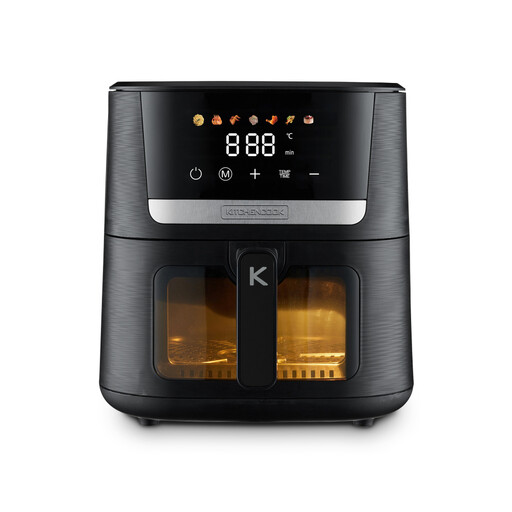 Image unavailable
Compare it with your recipes if you’d like to cook with hot air using a basket with a higher stated capacity.
Stated capacity of 7 L, digital display and cooking window. Check the appliance’s dimensions and the basket’s washing instructions.
No. Using a vat of oil less often doesn’t guarantee an odour-free kitchen, whatever you’re cooking or how well ventilated the room is. Que Choisir lists reducing smells as a possible benefit of an air fryer; follow the ventilation instructions for the model you choose.
Keep one if the results of deep-frying matter more to you than handling the oil. Que Choisir says a traditional fryer may be enough for occasional use and highlights the taste and crispness of chips cooked in a conventional fryer. You’ll still need to filter the oil, clean the fryer and dispose of the oil.
Compare your usual recipes and portions with what your oven can do. If it already covers your cooking needs and you rarely make small batches, an air fryer may simply give you another appliance to store. Check, too, whether your dishes will fit in the basket you’re considering.
Follow the instructions for your chosen model on where to place it, ventilation, electrical connection, hot surfaces and cleaning. Also check that there’s enough space to handle the basket or open the drawers comfortably.
Don’t pour it down the sink or flush it down the toilet. Que Choisir suggests taking it to a household waste recycling centre or, depending on local arrangements, putting it in a sealed bottle with household waste. Check your local council’s guidance before disposing of it.