
Livraison le jour même ou le lendemain

Qualité garantie

Débloquez vos offres de bienvenue: Livraison GRATUITE | Jusqu'à -80 % | 30 jours d'essai gratuits à JoyPlus
Téléchargez l'application
A cooking pot needs to suit your hob, the quantities you prepare and your cleaning habits. However, some product listings highlight a large capacity or a particular coating without specifying the limitations of use. To avoid an impractical purchase, check these three points before comparing models.
The phrase "suitable for all hobs" doesn't necessarily mean the pot can be used directly on an induction hob. A glass or ceramic container may require a magnetic adapter. This is particularly the case with certain borosilicate glass pots: they work on gas and electric hobs, but need a specific disc to function on induction.
A 5 or 6.5-litre pot is ideal for making a family soup, pasta or several portions at once. However, once full, its weight increases quickly. Check for insulated handles, the stability of the base and the space available under your kitchen cabinets.
A stainless steel pot generally withstands repeated use well, but it can show white marks, rainbow reflections or polishing residues from the manufacturing process. These marks can usually be removed with household vinegar, lemon or a suitable cleaning product. Conversely, a non-stick pan requires non-metallic utensils and needs close monitoring if its coating starts to deteriorate.
For one or two people, a 1.5 to 2.5-litre pot is sufficient for sauces, small soups, pasta or cereals. A family can opt for a stockpot with lid of 4 to 6 litres. Beyond that, check the diameter of your cooking zone: a base that is too wide may heat unevenly on a small hob.
A transparent lid allows you to monitor the boil without constantly opening it. A pouring rim is also handy for serving soup or sauce while minimising splashes.
Mentions such as PFAS-free, PTFE-free or uncoated should be taken in context: they describe the stated composition of the product, but do not constitute a medical guarantee.
For a pot intended for induction, look for a magnetic base that is explicitly stated. Stainless steel models with a composite base are often designed for gas, electric, ceramic and induction hobs, but the manufacturer's listing remains the reference. A glass pot may require an adapter; this becomes very hot and must be handled with suitable protection.
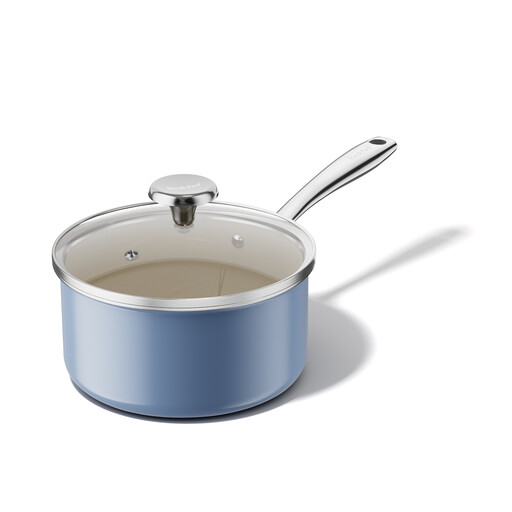
Why this choice suits this profile: Its 2.5-quart size is ideal for small portions, sauces and soups, even in a compact kitchen.
The stated capacity prevents choosing an oversized model. The listing also specifies the coating's limitations and recommends against using metal utensils.
Aluminium core, glass lid with steam vent, ceramic coating stated as PFAS and PFOA-free, and compatibility indicated with all hob types.
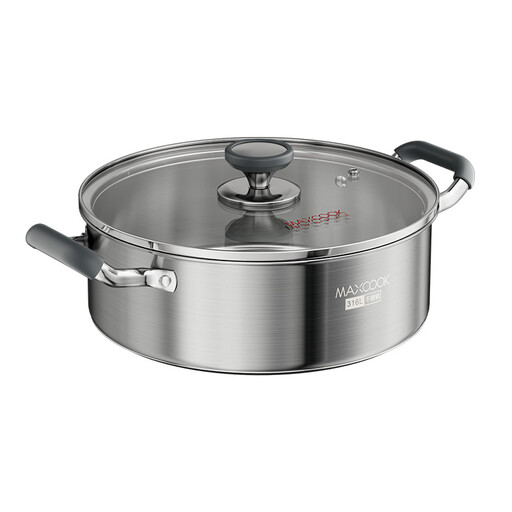
Why this choice suits this profile: Its volume is ideal for family meals, large soups and batch cooking for several servings.
The listing details the composite base, silicone handles and care instructions. It recommends cooking on a low or medium heat and hand washing.
Stated 316L stainless steel, glass lid, insulated handles and compatibility indicated with gas, induction, electric, ceramic and halogen hobs.
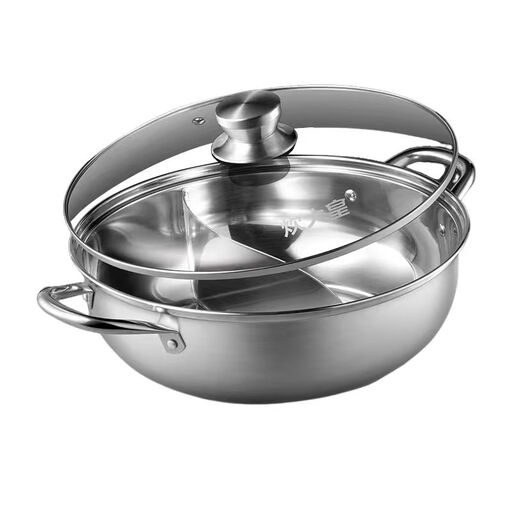
Why this choice suits this profile: The divider lets you prepare two broths or two flavours in a single pot, an ideal solution for meals with several people.
The listing clearly states compatibility with gas, electric and induction hobs, without requiring the purchase of an additional accessory.
304 stainless steel, 30 cm diameter, two compartments and compatibility stated with the main hob types.
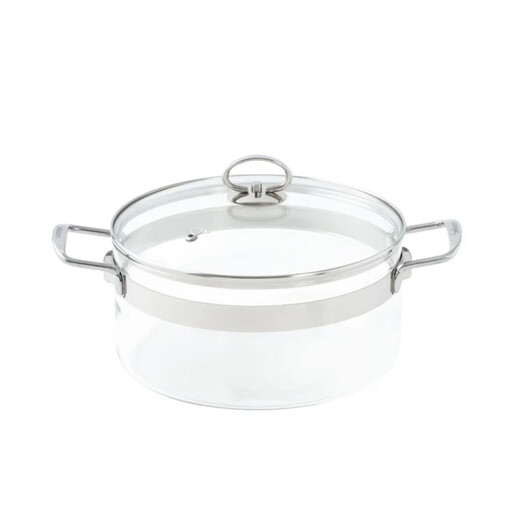
Why this choice suits this profile: Its transparency allows you to monitor soup, vegetables or a stew without removing the lid.
The listing specifies its limitations: direct use on gas and electric hobs, induction with a compatible disc, oven-safe up to 180 °C and a warning against thermal shock.
Non-porous borosilicate glass, PTFE and PFAS-free according to the listing, 4.2 L capacity and integrated pouring rim.
We have put together a comprehensive, real-time updated selection of products that meet these strict criteria as well as European safety regulations.
To preserve your cooking utensils:
A casserole dish intended for stewed dishes can stay hot for a long time: use oven gloves and check its stability before moving it when full.
A capacity of 4 to 6 litres is generally suitable for soups, pasta and family meals. For one or two people, a 1.5 to 2.5-litre model takes up less space and is easier to handle.
Not necessarily. Glass is not magnetic. Some models use an induction adapter disc, which is placed between the hob and the pot. Always check the model's compatibility and the manufacturer's instructions.
It all depends on how often you use it, the cooking temperature and how you care for it. Uncoated stainless steel generally withstands everyday utensils better. A non-stick pan should be replaced if its coating has deep scratches, is peeling or shows signs of wear.