
Livraison le jour même ou le lendemain

Qualité garantie

Débloquez vos offres de bienvenue: Livraison GRATUITE | Jusqu'à -80 % | 30 jours d'essai gratuits à JoyPlus
Téléchargez l'application
A poorly designed oil bottle can quickly become a nuisance: a leaking cap, a spout that leaves drips on the worktop, an opening too narrow to clean, or a capacity too small for a family. Before buying a kitchen oil dispenser, a few checks are all it takes to avoid impractical accessories and constant replacements.
An olive oil bottle may look elegant, but that doesn't guarantee a clean pour. A spout that's too short or poorly angled encourages drips around the neck. For everyday use, focus on the shape of the spout, whether it has a cap, and if you can grip the bottle with one hand.
A leak-proof oil dispenser must keep its cap securely in place when the bottle is moved or tilted. A lid that simply sits on top can let dust in and leave greasy marks inside your cupboard. The closure needs to be sufficiently airtight, without making refilling a hassle.
An oil dispensing bottle with a narrow opening can be difficult to rinse out. Residues of oil, vinegar or soy sauce then build up in the spout and seals. A wide opening and removable parts make washing much easier. If the model includes wood, also check the care instructions – some handles shouldn't be left in water for long.
A stainless steel oil bottle generally withstands knocks better than a glass container and protects its contents from light. 304 stainless steel is commonly used for kitchen accessories, particularly for its resistance to corrosion under normal use. However, it's still essential to follow the manufacturer's washing and drying instructions.
Glass lets you see the remaining level at a glance. Borosilicate glass is valued for its resistance to temperature changes, but it can break if dropped. The choice therefore depends on where you'll keep it: glass for easily monitoring the contents, stainless steel for frequent handling and safer storage.
An oil dispenser with a spout should produce a steady stream, without liquid running back towards the neck. For olive oil, vinegar or soy sauce, a fine spout works well for seasoning at the table. For filling a frying pan or saucepan, a more generous flow will be more practical.
Models with an ergonomic handle are easy to use with one hand. This is particularly useful when your other hand is holding a pan, spoon or mixing bowl. This feature doesn't replace the need for a stable grip – a full bottle must remain easy to control, especially with a 500 ml or 1 litre capacity.
A 500 ml oil measuring bottle suits a compact kitchen or for using several oils in rotation. A 1 litre bottle reduces how often you need to refill for a family, but it becomes heavier when full. For soy sauce or a condiment used occasionally, a small 150 ml model may be more suitable.
Before ordering, also check the washing instructions: hand wash only, dry immediately, no soaking, or whether there are silicone parts. These details have a direct impact on the product's lifespan.
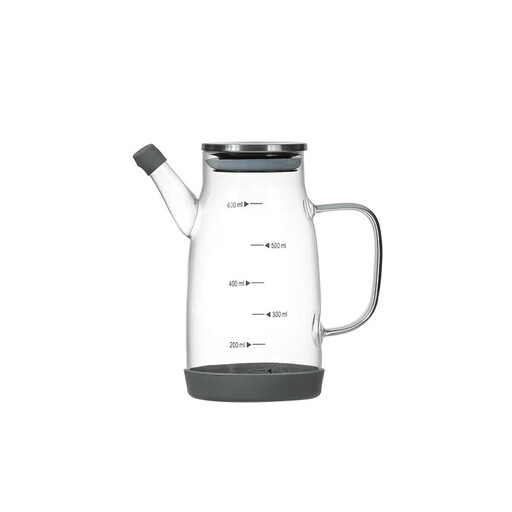
Why this choice suits this profile: its 600 ml size is ideal as a first oil bottle for everyday cooking. The transparent container lets you easily keep an eye on the remaining level.
The transparency allows you to check the contents and quickly spot when a refill or clean is needed.
600 ml capacity and borosilicate glass, as stated in the product name.
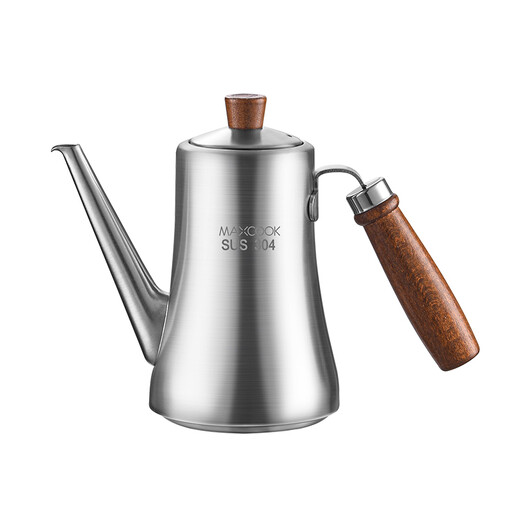
Why this choice suits this profile: this kitchen oil dispenser combines a 1 litre capacity, a 304 stainless steel body and a beechwood handle for regular use.
Its eagle-beak shaped spout is designed to minimise backflow and drips, while the cap protects the opening.
304 stainless steel, 1,000 ml capacity, non-slip handle and a wide opening designed to make refilling easy.
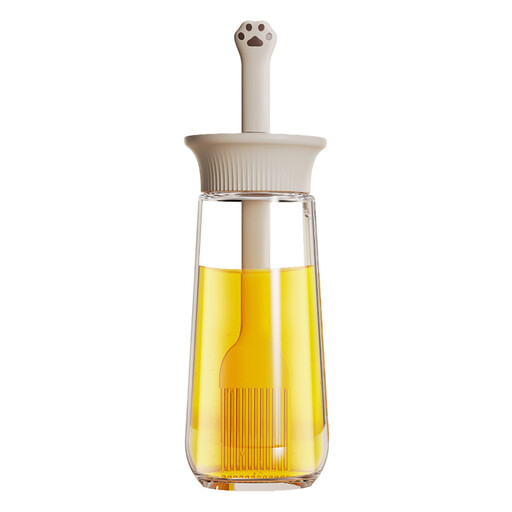
Why this choice suits this profile: its integrated brush is ideal for basting vegetables, pastries, marinades, honey or jam, without needing extra utensils.
The removable parts make cleaning easy, while the wide neck minimises spills when refilling.
280 ml capacity, silicone brush, soda-lime glass bottle and a detachable design.
We've put together a comprehensive, real-time updated selection of products that meet these demanding criteria as well as European safety standards.
A 500 ml size is suitable for everyday use with several oils or condiments. A 1 litre bottle reduces how often you need to refill for a family, but it becomes heavier to handle. For use at the table, a smaller model will often be more pleasant day to day.
Wipe the spout after each use and make sure the cap is properly closed. Choose a model with an anti-drip spout, a seal or a well-fitting lid. Regularly cleaning any residue around the opening also helps keep the pour clean.
Refer to the product instructions. Unless explicitly stated, avoid pouring very hot oil into a glass bottle or a model with silicone or plastic parts. Let the liquid cool down first, then carefully fill the container.