
Livraison le jour même ou le lendemain

Qualité garantie

Débloquez vos offres de bienvenue: Livraison GRATUITE | Jusqu'à -80 % | 30 jours d'essai gratuits à JoyPlus
Téléchargez l'application
Choosing a cooking oil can quickly become overwhelming. Between oils for frying, those for dressing, "rich in Omega-3" labels, and options for Asian cuisine, the oil aisle is enough to make your head spin. Yet, the wrong choice can not only ruin a dish but also prove to be a very bad idea in practice. Before you fill your shopping cart, let's break down the most common pitfalls together.
The first and most frequent mistake is ignoring the smoke point: the critical temperature at which an oil begins to break down and smoke. Using a virgin olive oil to sear meat is a rookie mistake that guarantees an acrid taste and can even release harmful substances. Another trap is blindly trusting marketing claims, like the famous "rich in Omega-3" label, without understanding that not all these oils are suitable for the same uses. Finally, underestimating the flavour profile means missing the point entirely: a toasted sesame oil can transform a simple bowl of noodles, while a neutral oil is essential for letting more delicate flavours shine.
To navigate this jungle, three parameters should guide your choice. Once you've mastered these basics, you'll be able to select the perfect oil for every recipe with complete confidence.
The smoke point is the maximum temperature an oil can withstand before it starts to burn. Exceeding this limit guarantees a burnt taste and a denatured oil.
The taste of the oil is as crucial as its heat resistance. There are two main families:
Certain oils, like rapeseed oil (canola oil), are an excellent natural source of omega-3 fatty acids (ALA type), which are called essential because our bodies cannot produce them. However, their sensitivity to heat can vary. An omega-3 oil like rapeseed is perfect for gentle cooking and vinaigrettes. On the other hand, for deep-frying, it's better to turn to a more stable oil like peanut oil, even if its nutritional profile is different.
To guide you, here is our curated selection, with an oil for every use.

Why we chose it: Perfect for daily use, this rapeseed oil is a true kitchen workhorse. Its neutral taste is as suitable for vinaigrettes as it is for gentle cooking, all while providing a healthy dose of Omega-3s.
It checks the boxes for a "healthy" and versatile oil, while clearly indicating its ideal use: dressings and low-heat cooking. It's impossible to misuse it for deep-frying.
100% French rapeseed in a 100% recycled and recyclable bottle. A choice that is both practical and responsible for everyday use.

Why we chose it: Its powerful toasted sesame aroma is the unmistakable signature of many Asian dishes. A few drops are enough to transform soups, noodles, stir-fries, and marinades. An essential for achieving that authentic taste.
Its role is clear: it's a finishing oil. This helps avoid the classic mistake of using it for cooking, which would destroy its aromas and waste its full potential.
Made from 100% toasted sesame seeds, it delivers an incomparable aromatic depth that untoasted oils lack. A true benchmark product.
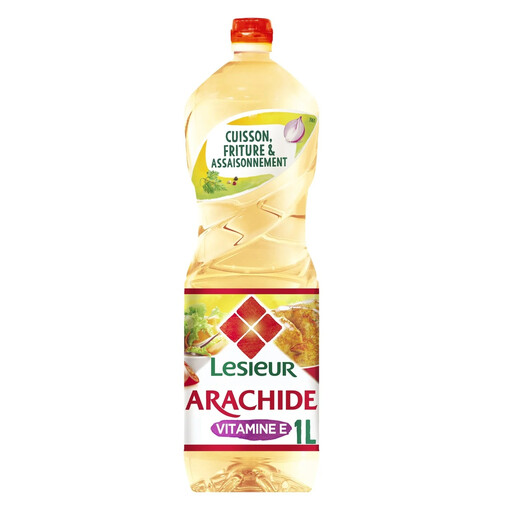
Why we chose it: For golden fries, perfect doughnuts, or any cooking that requires intense heat, peanut oil is the undisputed standard. Its high stability at high temperatures ensures even cooking and a perfect crisp.
It directly tackles the smoke point problem. By choosing an oil specifically designed for high-heat cooking, you eliminate the risk of burning an unsuitable oil.
100% peanut oil, it is renowned for its heat resistance (up to a recommended 175 °C). Its neutral taste respects the original flavour of the food.
Discover our full selection of products that meet our selection criteria and current standards.
As a general rule, this is a bad idea. Finishing oils (walnut, toasted sesame, etc.) have a low smoke point and fragile aromas that cannot withstand heat. Conversely, frying oils, which are heat-stable and have a neutral taste, add little flavour to a vinaigrette. The ideal solution is to have at least two bottles in your pantry: one for cooking and one for finishing.
To preserve all their qualities, oils should be stored away from light, heat, and air. The best place is a cool, dark cupboard—and definitely not next to the hob. Tightly close the cap after each use. For the most fragile oils (flax, sesame, etc.), storing them in the refrigerator after opening is even recommended to slow down oxidation.
Not necessarily. Oils rich in polyunsaturated fatty acids, including the famous Omega-3s, are often more sensitive to heat. Rapeseed (canola) oil, for example, is an excellent compromise for moderate-heat cooking. However, for deep-frying or very high-heat cooking, it's better to choose a more stable oil, even if its nutritional profile is different. The key is to remember a simple rule: the right oil for the right job.