
Livraison le jour même ou le lendemain

Qualité garantie

Débloquez vos offres de bienvenue: Livraison GRATUITE | Jusqu'à -80 % | 30 jours d'essai gratuits à JoyPlus
Téléchargez l'application
Faced with the endless aisle of oils at the supermarket, making a choice can often feel like a puzzle. Sunflower, olive, rapeseed, special blends for frying or for salads… How do you navigate it all? Every bottle promises the world, but they aren't all created equal and, more importantly, they don't all serve the same purpose. An excellent oil for a vinaigrette can become harmful when heated, while a frying oil offers no flavour benefit to a simple tomato salad.
To help you see things more clearly, our editorial team has broken down the subject. This guide gives you all the keys to choosing the perfect cooking oil for every dish, based on simple criteria: cooking method, nutritional benefits, and everyday practicality.
Before diving into our selection, here are the key points to keep in mind to ensure you always make the right choice.
The smoke point is the temperature at which an oil begins to break down, smoke, and release potentially toxic compounds. It's a fundamental criterion for your safety, as well as for the taste of your dishes.
A true one-size-fits-all oil doesn't really exist. Therefore, you should ask yourself what its primary use will be.
Without becoming a nutrition expert, glancing at the composition is a good habit. Oils are lipids, made up of saturated, monounsaturated (omega-9), and polyunsaturated (omega-3 and 6) fatty acids. The ideal is to vary your sources for a good balance. This is precisely the principle behind combined oils like Isio 4 oil by Lesieur, which blends several seeds to offer a complete nutritional profile.
Here is our selection of four oils that cover the main daily needs, chosen for their effectiveness and practicality.

Why it stands out: Designed specifically for deep-frying, this oil is a blend of sunflower and rapeseed sourced from France. Its formula was developed to produce golden, crispy fries while controlling odours.
The pros:
Who is it for?: For die-hard fans of homemade fries, doughnuts, and all fried foods that require a stable and discreet oil bath.
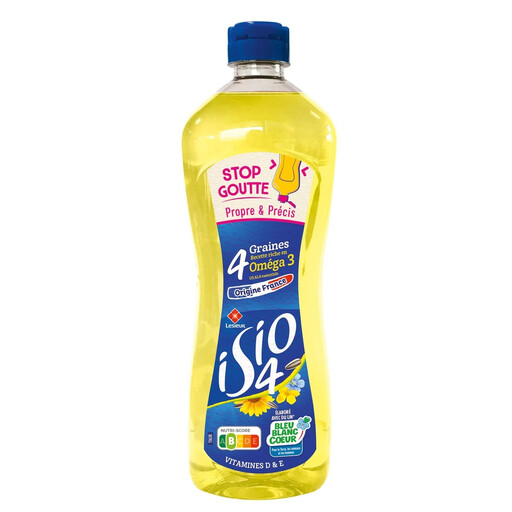
Why it stands out: This is the ultimate versatile oil. Isio 4 oil is a cocktail of four seed oils (rapeseed, sunflower, oleic sunflower, linseed) designed to cover all uses, from vinaigrettes to pan-frying.
The pros:
Who is it for?: For families and anyone who wants to simplify their cooking with a single, practical, and effective everyday bottle.
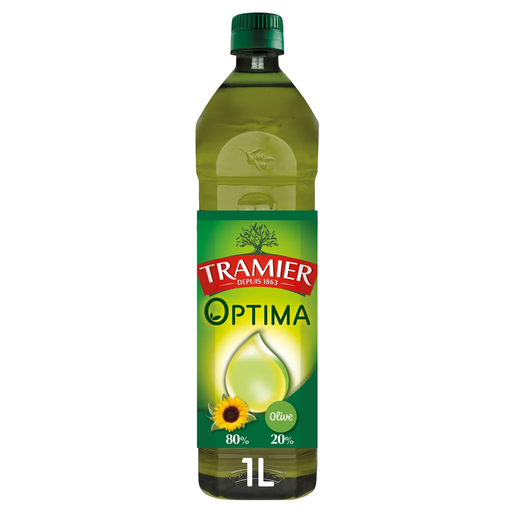
Why it stands out: This clever blend combines the neutrality and stability of sunflower oil (80%) with the fruity flavour of extra virgin olive oil (20%).
The pros:
Who is it for?: For those who love the taste of olive oil in their hot dishes but are looking for a more budget-friendly and cooking-stable alternative to pure extra virgin.
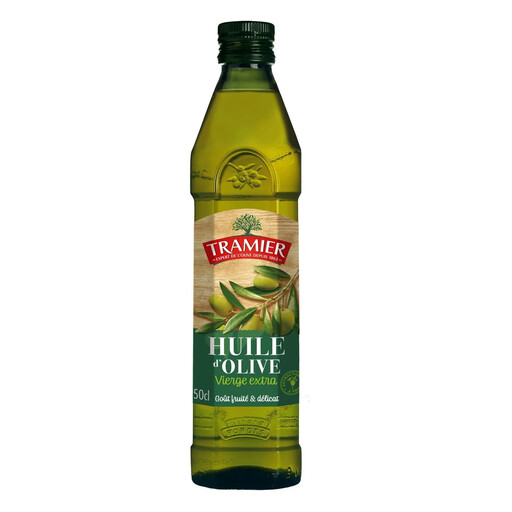
Why it stands out: Simply a great classic. This superior-grade olive oil is cold-extracted, using only mechanical processes, to preserve all of its aromas.
The pros:
Who is it for?: For purists and lovers of Mediterranean cuisine who are looking for a characterful oil to elevate their cold or warm dishes.
Our selection focuses on everyday essentials, but the world of oils is much vaster. Grapeseed, sesame, avocado, or coconut oil… Feel free to explore our full range to find your perfect match.
Discover our entire range of oils and vinegars
Absolutely, but you must follow a few golden rules. After each use, let the oil cool down completely. Filter it (using a coffee filter or a very fine-mesh sieve) to remove all food residues, then store it in an airtight container, away from light. Never overheat it (no more than 180°C) and change it after 8 to 10 uses, or as soon as it darkens, thickens, or gives off a strange smell.
The difference comes down to two main points: the acidity level and the taste qualities. Extra virgin olive oil is the pinnacle of quality: its acidity level is minuscule (less than 0.8%) and its taste must be flawless. "Virgin" olive oil, on the other hand, has a slightly higher acidity level (up to 2%) and may have minor taste defects. In both cases, they are obtained through purely mechanical means, without any chemical treatment.
Oil has three sworn enemies: light, heat, and air. To preserve its flavours and benefits, the rule is simple: always keep your bottle tightly sealed, in a cupboard, away from heat and direct light. The classic mistake to avoid: storing it right next to the hob.