
Livraison le jour même ou le lendemain

Qualité garantie

Débloquez vos offres de bienvenue: Livraison GRATUITE | Jusqu'à -80 % | 30 jours d'essai gratuits à JoyPlus
Téléchargez l'application
Choosing a new cooking appliance can quickly become a headache. Between marketing promises and a plethora of options, it's easy to get lost and end up with buyer's remorse. As a product expert at Joybuy, I'm here to guide you. Let's review the pitfalls to avoid and the criteria that really matter to make the right choice—one that will fit your kitchen and your daily life.
The market is flooded with products boasting tempting spec sheets. But behind the marketing gloss, you'll sometimes find flaws that only reveal themselves with use. Here are the main things to watch out for.
To avoid these disappointments, it's best to focus on objective criteria that guarantee performance and safety.
Raw power isn't everything. What's important is how it's delivered and controlled.
The longevity of your appliance and food safety depend on these.
There's a right solution for every need. Here is our selection of products that caught our eye, each tailored to a specific user profile.
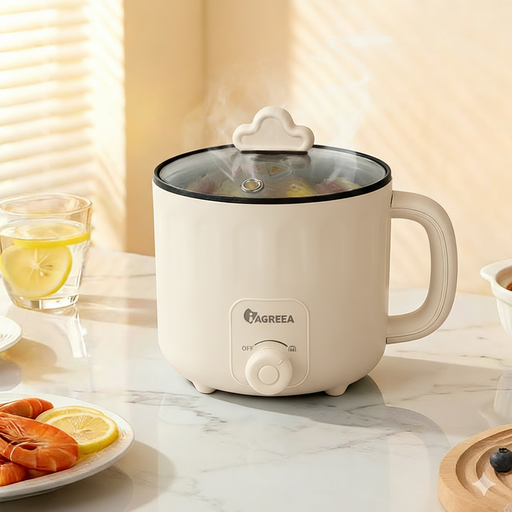
Why this model? Its compact size and 1.6L capacity are perfect for a single person or a couple in an apartment. Ideal for preparing simple meals (pasta, soups, small stews) without taking up the entire countertop. The safety bonus: the automatic shut-off is reassuring for use in student housing.
This model doesn't try to do everything. It focuses on the essentials (boiling, simmering) and does them well. Its food-grade non-stick coating checks the boxes for durability and safety.
Heats up quickly thanks to its 600W power, which is well-calibrated for its small volume. Its minimalist design and light weight make it easy to store and transport.
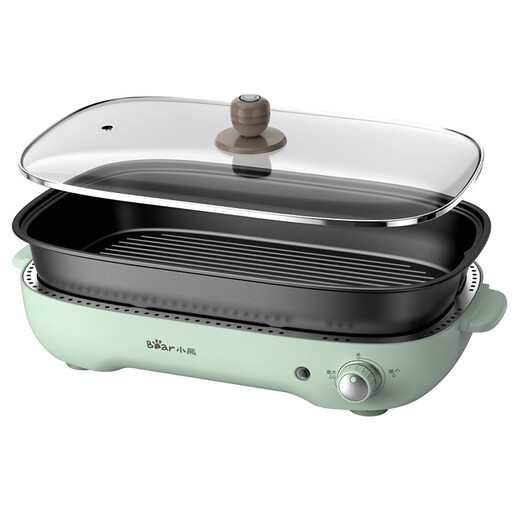
Why this model? Perfect for dinners with family or friends. It turns a meal into a shared experience, whether it's for a Chinese hot pot, a Korean barbecue, or a pancake party. It sits right in the centre of the dining table, like a next-generation fondue set or raclette grill.
It avoids the "fake multi-function" trap thanks to its 3 interchangeable cooking plates. Each plate is dedicated to a specific use, which guarantees optimal performance. Its 1200-1400W power and variable thermostat ensure efficient and controlled heating.
True versatility thanks to its dedicated plates (grill, hot pot, griddle). Cleaning is a breeze thanks to the removable, non-stick plates.
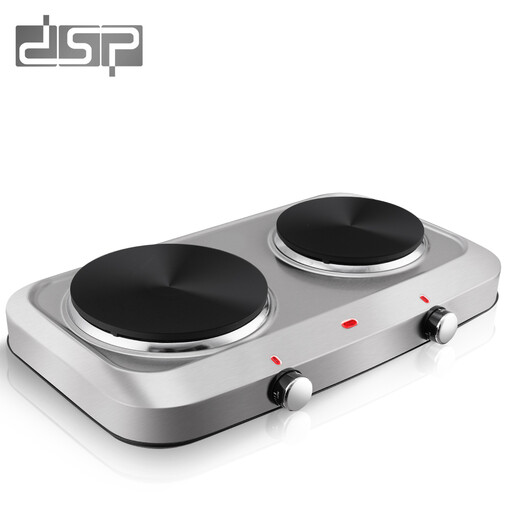
Why this model? Essential for those who run out of burners during large gatherings, or for equipping a summer kitchen or even a camper van. Its portable design and stainless steel frame make it a robust and versatile ally.
This model avoids the shared-power trap by clearly stating the dedicated power for each burner (1500W + 1000W). The two independent thermostats allow you to manage two different cooking tasks simultaneously with precision.
Two truly independent burners for maximum versatility. Stainless steel chassis guarantees durability and easy maintenance.
We have put together a complete selection of products that meet our quality criteria and current safety standards.
An induction hob is significantly more energy-efficient. Its efficiency is around 90% because heat is generated directly in the base of the pan via a magnetic field. In contrast, an electric hob (ceramic) has much lower efficiency (around 60-70%) because it must first heat its own surface before transferring heat to the pot, which leads to energy loss. The result: with induction, cooking is faster and the electricity bill is lower.
To preserve the coating, always use wooden, silicone, or plastic utensils. Avoid abrasive sponges and metal cutlery, which will definitely scratch it. Washing by hand with a soft sponge is preferable to the dishwasher. Finally, avoid thermal shock: never run a hot pan or plate under cold water.
For everyday needs and in a limited space, a quality electric multi-cooker can indeed replace a saucepan, a small pot, and sometimes a skillet. It is very practical for simmering, boiling, or steaming. However, it will never replace the power of a dedicated electric grill for searing meat, nor the capacity of a full-sized oven. It is therefore an excellent compromise for saving space, but not a miracle solution that will satisfy the most demanding cooks.