What should you check before choosing?
External extraction
Consider this: if a suitable duct, an air supply and any necessary permissions for the work have been confirmed.
What to bear in mind: the duct route or drilling through a wall may make this installation impossible in your home.
Recirculation
Consider this: when external extraction isn’t possible and the model accepts the required recirculation kit.
What to bear in mind: filtered air is returned to the room, and the compatible filter needs maintenance in line with its specifications.
Extractor hob
Consider this: if you’re replacing your hob and want to free up space above the cooking area.
What to bear in mind: the hob, base unit and airflow route must all work together as a compatible installation.
Once you’ve chosen an installation method, check the measurements and requirements for the exact model rather than comparing different configurations.
| Priority |
What to check |
What I need |
| Installation |
Methods permitted in the instructions; duct route and air supply if external extraction is planned; any permissions needed for the work. |
I want to be sure I can install the chosen setup in my home, without finding out after purchase that a duct or wall opening is a problem. |
| Home ventilation |
How the air inlets and outlets work; whether a boost setting for the kitchen is available. The ADEME distinguishes this continuous ventilation from extraction while cooking. |
Keeping cooking vapours out of the living area shouldn’t mean switching off or replacing the home’s general ventilation. |
| Noise and extraction rate |
Extraction rate in m³/h and noise in dB at the speeds you’ll use, for the installation method you plan to use; duct routing must follow the instructions when using external extraction. |
In an open-plan living area, I want to compare the stated noise level for my actual setup, not just the maximum extraction rate shown. |
| Dimensions and fitting |
Width of the cooking area, fitting distances and electrical requirements in the instructions; cut-out and space in the unit for an extractor hob. |
The hood needs to fit above my hob, or the extractor hob needs to fit in the unit if I’m replacing my existing hob. |
| Filters |
Compatible filter model, grease filter maintenance, and replacement or regeneration of the recirculation filter as specified in its instructions. |
If I choose recirculation, I want to be able to maintain the filters designed for the model I buy. |
Cooker hoods and extractor hobs on Joybuy
This selection includes wall-mounted and under-cabinet cooker hoods, plus an induction hob with an integrated extractor. First choose a setup that’s compatible with your home, then check the specifications for each model.
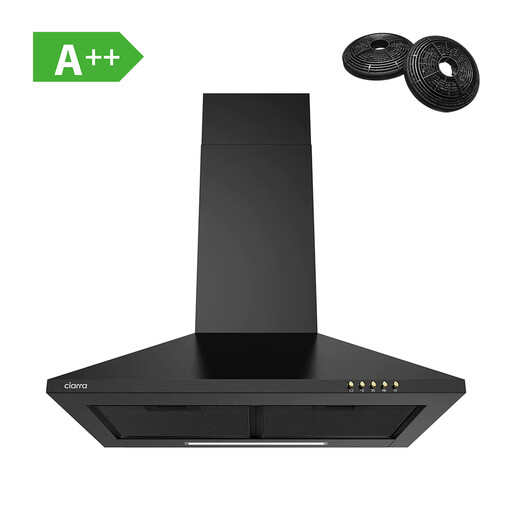 Image unavailable
Ciarra CBCB6201-B, 60 cm black wall-mounted cooker hood
This 60 cm wall-mounted cooker hood is worth considering if it suits your open-plan kitchen. The product title states an extraction rate of 370 m³/h. Before choosing external extraction or recirculation, check the specifications for your intended setup and the filters you’ll need.
View on Joybuy
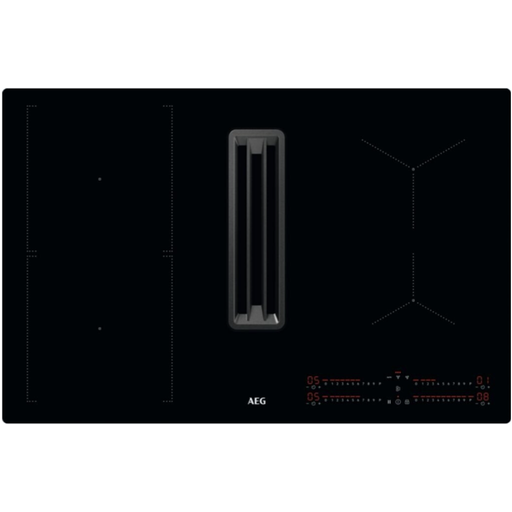 Image unavailable
AEG CCE84543CB, 80 cm induction hob with integrated extractor
This hob with an integrated extractor is designed for a project where you can also replace your existing hob. Before altering your worktop, check the cut-out, electrical supply, space in the unit and intended extraction method.
View on Joybuy
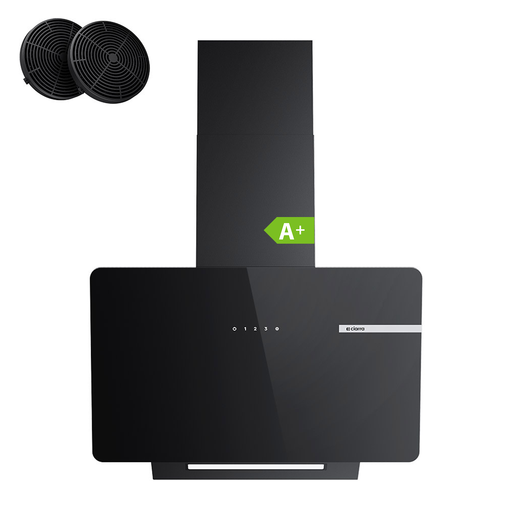 Image unavailable
Ciarra, 60 cm black glass wall-mounted cooker hood with LED lighting
The black glass front and LED lighting set this hood apart from the other Ciarra model featured here. If noise in your living area is a key concern, check the figures for the installation method and speed you’ll use. Also check which filters you’ll need for recirculation.
View on Joybuy
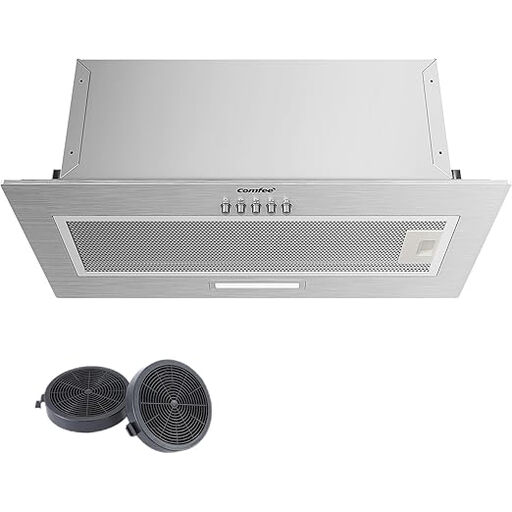 Image unavailable
Comfee' CH60A17EM400SS‑EU, 60 cm cooker hood
The product title states an extraction rate of 400 m³/h, three speeds, ducted and recirculation modes, and an included charcoal filter. For an open-plan kitchen, check the extraction rate and noise level for your chosen mode, then check the fitting requirements for this model.
View on Joybuy
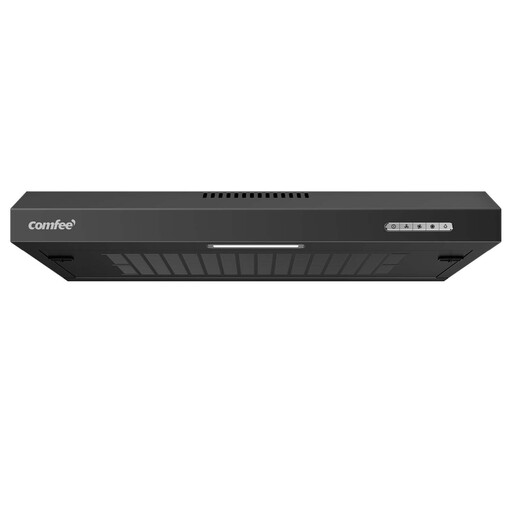 Image unavailable
Comfee' KWH-SLIF17B-60, 60 cm under-cabinet cooker hood
This 60 cm cooker hood is an option if you’re looking for an under-cabinet model rather than a wall-mounted chimney hood. Check the fitting height, chosen extraction method and required filter model in the manual if you plan to use recirculation.
View on Joybuy
Frequently asked questions
Does a cooker hood replace your home’s ventilation?
No. A cooker hood extracts cooking fumes locally, while your home’s ventilation provides a continuous flow of air. The ADEME stresses the importance of this ventilation and notes that a higher extraction rate may be needed in the kitchen while cooking.
Can I connect a cooker hood to my existing kitchen extraction system?
Don’t assume that the existing duct is suitable. Before connecting anything, ask a professional to check the extraction system’s design and the cooker hood’s instructions. The reference in the order of 24 March 1982 to a hood connected to the extraction system “if fitted as part of the original construction” does not mean that any model can be connected to a mechanical ventilation system (VMC) later on.
What should I check before installing external extraction in a leasehold property?
Before starting work, check the duct route, which parts of the building may be affected and the leasehold rules. According to the ANIL, approval from the general meeting is needed if the project affects the structure or communal areas. Discuss the plans with your property manager before choosing a cooker hood.
How high should a cooker hood be installed above the hob?
Follow the fitting distances specified in the instructions for your chosen cooker hood and hob. As guidance for its own hoods, Bosch recommends 650 mm above a gas hob and 550 mm above an electric hob. These figures don’t replace the instructions for your specific model.
When should I replace the charcoal filter in recirculation mode?
How often you need to replace it depends on the filter model and how you use it. Electrolux recommends every 4 to 6 months for its OdourClean Standard ECFB01ST, while Bosch recommends replacing its standard charcoal filters every six months. Check which filter is compatible with your cooker hood and follow its maintenance instructions.


