First, choose a format that will fit your kitchen. A freestanding cooker combines an oven and hob in one appliance, while separate appliances need a suitable housing unit, worktop cut-out and connection for each model. For the hob, induction requires cookware with a magnetic base; ceramic and traditional electric hobs do not. Whatever you choose, check the appliance’s dimensions and power requirements against your existing installation before ordering.
Who is this choice for?
You’re moving into a fitted kitchen
An oven housing unit, a cut-out in the worktop or a space for a cooker will determine which formats are suitable. Measure the space, then compare it with the installation dimensions and connection instructions for the appliances you’re considering.
You cook regularly and aren’t sure which hob to choose
When comparing induction and ceramic hobs, check whether your pans are compatible, compare energy consumption figures based on similar conditions, and find out what power supply the hob needs. None of these figures replaces checking the exact model.
You’re fitting out a small kitchen or rented home
A freestanding cooker may suit a space designed for one; a compact hob depends on how it’s installed and the available circuit. Don’t plan to alter the worktop or electrics without first checking what’s involved.
What should you check before choosing?
First decide between a freestanding cooker and separate built-in appliances, then consider the hob technology and oven features. The stated width alone won’t tell you whether an appliance will fit your kitchen.
Freestanding cooker
Consider this if: you have a floor space designed for a single appliance combining an oven and hob.
The trade-off: you choose the oven and hob together; their energy source and connection requirements vary by model.
Separate oven and hob
Consider this if: you have a suitable oven housing unit and worktop, so you can choose the oven features and hob separately.
The trade-off: each appliance has its own installation dimensions and instructions.
| Priority | What to check | What I need |
|---|
| Connection |
Check the available circuit, the connection specified in the manual and the appliance’s total power. Enedis specifies a 32 A connection with three 6 mm² wires for an electric cooker, or more depending on the voltage drop. This alone does not confirm that an existing installation is suitable. |
I want to use my cooking appliance without assuming the kitchen’s existing connection is suitable for the new appliance. |
| Dimensions |
Compare the available space with the appliance’s dimensions, then check the housing or cut-out measurements and clearance requirements in its manual. For example, Electrolux lists the KIB60420CK hob as 590 × 520 mm, with a cut-out of 560 × 490 mm. |
There’s already an opening in my worktop, so I need to know whether the hob I choose will actually fit. |
| Energy consumption |
Distinguish power in W from energy consumed in kWh. For 409 cycles a year, ADEME gives guide figures of 200 kWh/year for ceramic hobs and 115 kWh/year for induction in the scenarios it describes. Your usage and chosen model may differ. |
If I cook often, I want to compare consumption figures based on the same assumptions, rather than estimate my annual usage from the stated power alone. |
| Cooking zones and cookware |
Check the number and size of the zones against the pans you usually use. For induction, Electrolux recommends checking that a magnet sticks to the base of each pan. |
I need to be able to keep using my current pans, or factor in replacing them before choosing induction. |
| Oven cleaning |
Check the cleaning system included with the exact model and the maintenance instructions in its manual. Bosch lists pyrolytic cleaning and hydrolysis assistance for the HBA171BB3; Beko lists steam cleaning for the FBS63121WD cooker. |
I’d rather choose a cleaning method that suits me than assume all ovens have the same features. |
Mistakes to avoid
-
Confusing watts with annual energy consumption
An appliance’s stated power doesn’t tell you how long it will run. ADEME gives its consumption figures in kWh/year for a defined usage scenario.
Use the power rating to check the connection requirements. To compare energy consumption, look at figures based on similar assumptions and take into account how often you cook.
-
Choosing induction before checking your pans
Cookware without a magnetic base won’t work on an induction zone. This may mean replacing some of the pans you’ve kept after moving house.
Test the base of each pan with a magnet and check its compatibility information before choosing an induction hob.
Replacing any incompatible cookware adds to the cost of fitting out your kitchen.
-
Relying on a stated width of 60 cm alone
A hob’s overall dimensions are not the same as its cut-out dimensions; an oven also has model-specific housing requirements.
Measure the opening, available depth and connection point, then check the installation diagram for the exact model.
-
Replacing a hob with a cooker without checking the connection
A cooker combines a hob and an oven, and their energy sources and power requirements vary by model. For example, Beko lists 9 600 W of electrical power for the FSE68314MBC induction cooker, compared with 3 800 W of electrical power and 5 900 W of gas power for the FBS63121WD dual-fuel cooker.
Check the energy source, total power and connection requirements, and have the installation checked by a qualified professional if you’re unsure it’s suitable.
If the connection needs adapting, factor in this work before ordering the appliance.
Brands and models to consider
These models illustrate features worth comparing. They don’t necessarily reflect other models from the same brands or feature among the products below.
Bosch
A model to consider if you’re looking for a built-in oven with more than one cleaning function.
- Bosch lists dimensions of 595 × 594 × 548 mm, an A+ rating, pyrolytic cleaning and hydrolysis assistance for the HBA171BB3.
- These external dimensions don’t confirm that the oven will fit your housing unit, so check its installation diagram.
Electrolux
Its induction and ceramic hob specifications are useful for comparing power and installation dimensions separately.
- Electrolux lists a maximum power of 6 900 W for the KIB60420CK induction hob and 6 500 W for the CRR6432CK ceramic hob.
- Check the cut-out dimensions for the model you choose and, for induction, make sure your cookware is compatible.
Beko
These two cookers illustrate the difference between an electric induction model and a dual-fuel model.
- Beko lists 9 600 W of electrical power for the FSE68314MBC induction cooker; the FBS63121WD dual-fuel model combines 3 800 W of electrical power and 5 900 W of gas power.
- The energy source, connection and cleaning features of these two appliances won’t necessarily apply to other Beko cookers.
Whirlpool
Whirlpool’s French range includes freestanding cookers with an integrated oven.
- Whirlpool offers 50 or 60 cm models with induction, ceramic or dual-fuel hobs.
- The size and technology aren’t enough on their own: check the dimensions and connection requirements for the model you choose.
Valberg
An example of a traditional electric hob listed by Electro Dépôt.
- The retailer lists four cooking zones and 5 500 W for the Valberg TE 4 X EUT.
- Before choosing this model, check that its installation and connection requirements suit your kitchen.
Hobs available on Joybuy
These models are for anyone choosing a built-in induction or ceramic hob for a kitchen they’re fitting out after moving house. A hob is a separate choice from an oven or cooker.
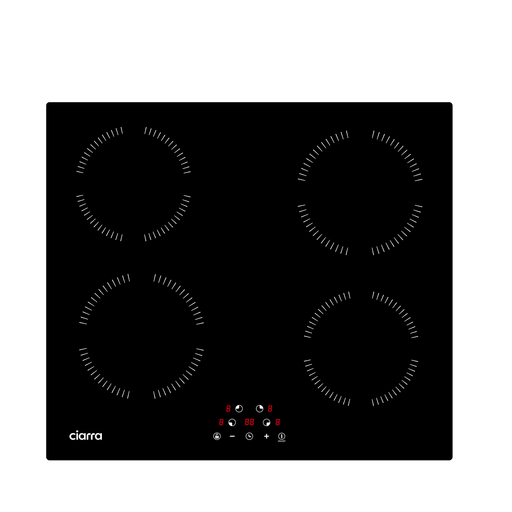 Image unavailable
CIARRA CABBIH4-A, 4-zone induction hob
If you’d like four cooking zones, check that your worktop cut-out and electrical circuit are suitable for this built-in hob. It has nine power levels; induction requires compatible cookware.
View on Joybuy
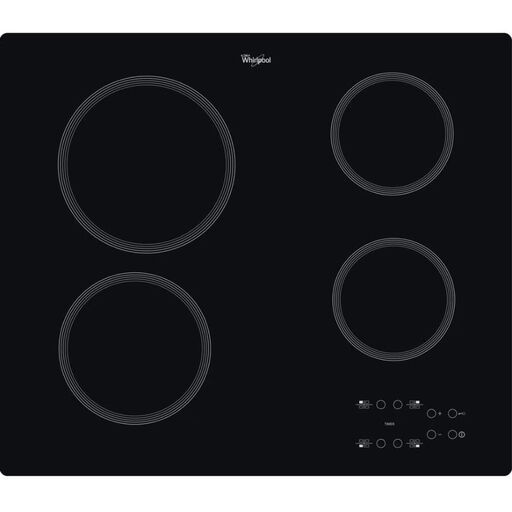 Image unavailable
Whirlpool AKT 801-NE, black 4-zone ceramic hob
This hob gives you four cooking zones without requiring cookware with a magnetic base. Before choosing it, compare the cut-out dimensions with your worktop and have the connection requirements for this model checked.
View on Joybuy
 Image unavailable
TOPWISH, 60 cm built-in 4-zone induction hob
Four cooking zones and a Boost function are among this hob’s features. Check the installation dimensions, cookware compatibility and connection requirements before fitting it in your kitchen.
View on Joybuy
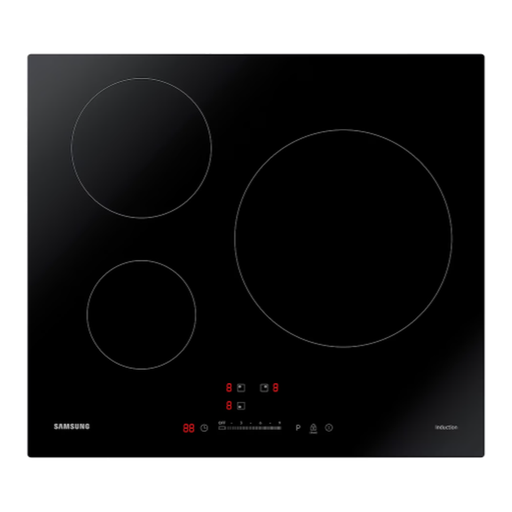 Image unavailable
Samsung NZ63M3707AK, 3-zone induction hob, 7 200 W
The three-zone layout may suit you if it works with the pans you use. The product information specifies a dedicated 32 A circuit: have your installation checked for suitability and follow the fitting instructions. If you have an implanted medical device, check the safety advice for this hob and ask your doctor before using it.
View on Joybuy
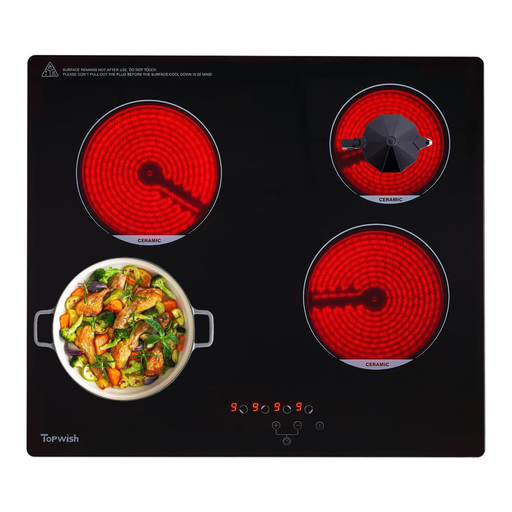 Image unavailable
TOPWISH, 60 cm built-in 4-zone ceramic hob
This four-zone hob is another option for a worktop designed for a built-in hob. Check its rated power before having the circuit assessed: the description and specification table list different figures. Also check the cut-out dimensions and installation instructions.
View on Joybuy
Frequently asked questions
What should I check before connecting a cooker or hob?
Check the existing circuit, the type of connection required and the power rating of the model you choose. Enedis specifies a 32 A connection with three 6 mm² wires for an electric cooker, or more depending on the voltage drop. This guidance doesn’t replace having the actual capacity of your installation checked by a qualified professional.
Will my pans work on an induction hob?
Only if their bases are compatible with induction. Electrolux says a magnet should stick to the base of the pan; test each one you want to keep.
Does induction always use less energy than a ceramic hob?
Not necessarily for every household and every appliance. For its scenarios based on 409 cycles a year, ADEME gives figures of 115 kWh/year for induction and 200 kWh/year for ceramic. Compare these guide figures with the information for the model you’re considering and how often you use it.
Is the external width enough to choose a built-in hob?
No. The worktop cut-out must also match the hob’s installation instructions. For example, Electrolux lists the KIB60420CK as 590 × 520 mm, with a cut-out of 560 × 490 mm. If you’re also choosing a built-in oven, check its housing unit separately.
How do I choose between pyrolytic, hydrolysis and catalytic cleaning?
Start by checking the cleaning features of the exact oven and the maintenance steps in its manual. Bosch lists pyrolytic cleaning and hydrolysis assistance for the HBA171BB3; Beko lists steam cleaning for the FBS63121WD cooker and two catalytic panels for the FSE68314MBC. These features vary from one model to another.


