What should you check before buying?
First, check that the exact model supports recirculation, then look at its filters, installation requirements and performance figures for use without ducting.
| Priority |
What to check |
Depending on your needs |
| Recirculation |
Confirmation that the exact model supports this mode; a compatible carbon filter or kit; and whether the accessories are included with the appliance. |
Without an external vent, I want to be able to use the hood in its intended configuration, without assuming that a model designed for ducted extraction can be converted. |
| Filters |
Type of grease filter; reference number for the odour filter; and model-specific cleaning and replacement instructions. Bosch, for example, distinguishes between the metal filter and the carbon filter used for recirculation. |
I want to be able to maintain the filters and find the right replacements for my cooker hood. |
| Noise |
Noise level in dB(A) at a comparable speed; the mode the measurement applies to; and the intensive-mode figure, shown separately from those for everyday speeds. |
In an open-plan kitchen, the noise level while cooking matters more to me than a single maximum figure. |
| Airflow rate |
Airflow rate stated for recirculation, not just ducted extraction; the speed and test conditions; and extraction performance where comparable test results are available. UFC-Que Choisir measures the two modes separately, using a carbon filter for recirculation. |
I don’t want to infer how a hood will work without ducting from a figure published for an installation with ducted extraction. |
| Built-in installation |
Cut-out dimensions, clearance and access to the filters; and compatibility with the recirculation kit. Bosch’s product information for the DLN56AC50 built-in hood lists both recirculation and ducted extraction modes. |
I have a wall unit and would prefer to fit the hood inside it, provided I can install and maintain the filters. |
| Wall-mounted or island installation |
Hob width and position; suitable fixings; and confirmation that the model supports recirculation. Elica notes that not all its cooker hoods can be converted; the Franke Smart FSMS F42, on the other hand, is listed for island installation with recirculation only. |
If my hob is against a wall, I’m looking for a wall-mounted style that suits the space available. For an island, I need to check that the hood is suitable for that specific installation. |
Wall-mounted cooker hoods available on Joybuy
These wall-mounted models suit kitchens without an external vent. Compare their widths and check the recirculation configuration, filters and performance figures relevant to your installation for each one.
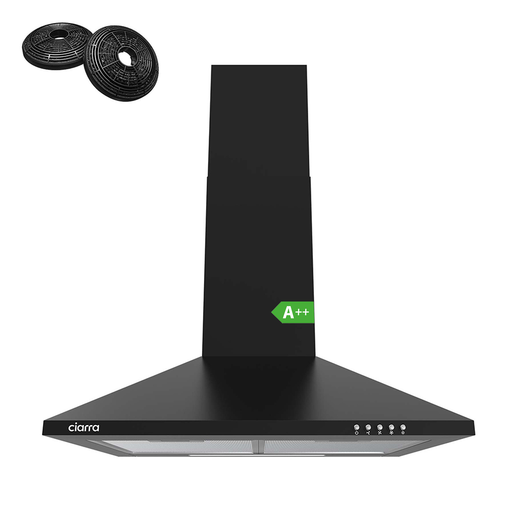 Image unavailable
Ciarra, 60 cm black wall-mounted cooker hood
If you’re installing this on a wall without ducting, check that it supports recirculation and that the right carbon filter is available for this model. The product name lists a width of 60 cm, button controls and two ventilation options. Check the installation dimensions and the noise and airflow figures for the mode you’ll use.
View on Joybuy
 Image unavailable
Ciarra CBCS6765B, 60 cm white glass angled cooker hood
The angled wall-mounted design could suit your kitchen if its dimensions and clearance work with your cooking area. The product name lists recirculation and ducted extraction, three speeds and touch controls. Don’t assume its stated airflow rate of 580 m³/h is for recirculation unless the mode is confirmed. Check which filter is compatible too.
View on Joybuy
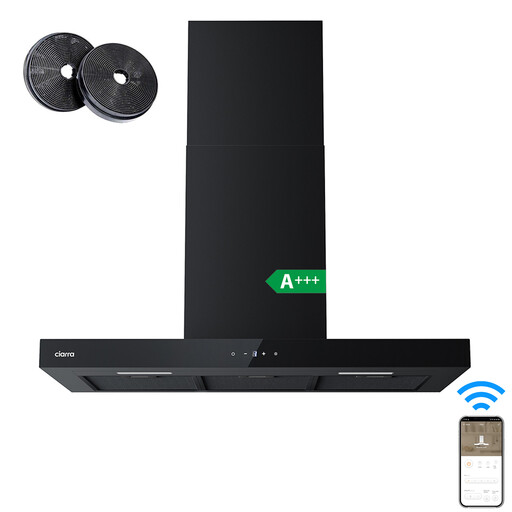 Image unavailable
Ciarra, 90 cm recirculating wall-mounted cooker hood with Wi-Fi
At 90 cm wide, this hood requires enough wall space and the right hob position. The product name lists four speeds, an intensive mode and app controls. Check which filters are compatible, and look for the noise and airflow figures specifically for recirculation rather than relying only on the stated airflow rate of 650 m³/h.
View on Joybuy
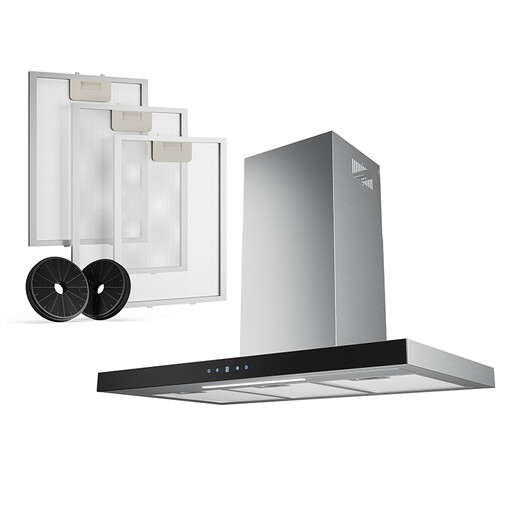 Image unavailable
Heinrich’s HDU 7632 IX, 90 cm wall-mounted cooker hood
Worth considering if your wall space can accommodate a 90 cm cooker hood. The product name lists ducted extraction and recirculation, touch controls and an included carbon filter. Check the filter replacement instructions and the noise and airflow figures for recirculation.
View on Joybuy
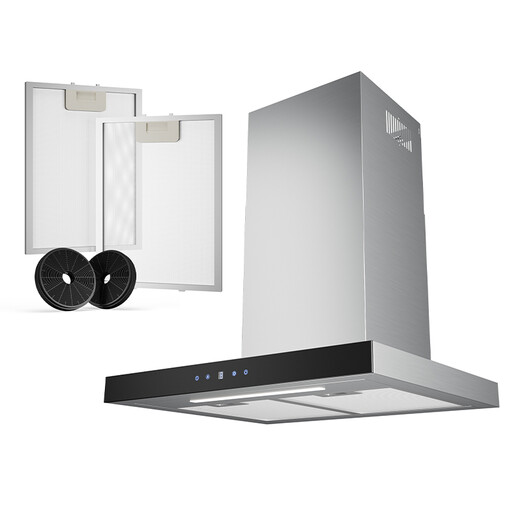 Image unavailable
Heinrich’s HDU 7631 IX, 60 cm wall-mounted cooker hood
Compare this 60 cm model with the dimensions of your hob and installation space. The product name lists ducted extraction and recirculation, touch controls and an included carbon filter. Check the replacement filter reference and the noise and airflow figures for recirculation.
View on Joybuy
Frequently asked questions
Can a cooker hood work without a hole in the wall?
Yes, as long as the exact model is designed for recirculation and has the necessary filters. The filtered air is then returned to the kitchen. Elica notes that not all cooker hoods designed for ducted extraction can be converted, so check the manual and accessories for the model.
Which filters do I need for a recirculating cooker hood?
Check which grease filter and odour filter are compatible with the model you choose. Bosch says that its recirculating cooker hoods use a metal filter and an activated carbon filter. For its standard carbon filters, the brand recommends replacement every six months. Follow the instructions for your appliance and its filter.
How can I compare the noise levels of two cooker hoods without ducting?
Compare the dB(A) levels at equivalent speeds, and check which operating mode each figure applies to. UFC-Que Choisir’s test protocol distinguishes between measurements for ducted extraction and recirculation, which are taken with a carbon filter.
What should I check if I rent my home and might add ducted extraction later?
Treat the installation of an external vent as a separate building project from buying a cooker hood. Before making plans, discuss the specific project with your landlord and check with your local council which rules apply to the property.
What if my kitchen is in a leasehold property?
If you’re considering adding an external vent later, check the leasehold rules and tell the property manager which parts of the building the work might affect. ANIL recommends checking the relevant rules before carrying out work; the steps you need to take will depend on the specific project.


