If you have a dedicated duct to the outside, a sufficient air supply and any necessary permissions, an extraction hood sends the air it captures out of your home. Without a suitable outlet, a recirculating hood filters the air and returns it to the kitchen, and requires compatible filters that need regular maintenance. If you have shared ventilation, check the installation first: Article 14 of the Order of 24 March 1982 prohibits connecting a motorised hood to it. Neither type of hood replaces your home’s general ventilation.
Who are these options for?
People who cook often and have a suitable outlet to the outside
If your cooking regularly produces steam or fumes, check that the outlet is a dedicated cooker hood duct and that there is an air supply to replace the air extracted. Then choose a model based on the duct route, not just its appearance.
People without a suitable outlet to the outside
If your kitchen doesn’t have a usable duct, or building work isn’t an option, a recirculating hood can filter out grease and odours before returning the air to the room. Check which kit you need for the model you choose, and factor in filter maintenance.
People with shared ventilation or an uncertain duct
A kitchen ventilation grille isn’t necessarily an outlet for a cooker hood. Identify the installation before you buy: under Article 14 of the Order of 24 March 1982, a motorised hood must not be connected to a shared air outlet system.
What should you check before choosing?
To manage steam from everyday cooking, start by working out where the captured air will go and what your home’s installation can actually support. Association Qualitel distinguishes between extraction to the outside and recirculation, which returns filtered air to the kitchen.
Extraction to the outside
Consider this: if the captured air can be sent through a dedicated duct and there is a sufficient air supply.
Things to bear in mind: the duct route, installation requirements and any necessary permissions must allow the hood to be fitted.
Recirculation
Consider this: if there’s no suitable outlet to the outside.
Things to bear in mind: the air returns to the kitchen, and compatible filters need regular maintenance.
| What matters to you |
What to check |
Who it’s for |
| Sending steam and fumes outside |
Check for a dedicated outlet to the outside and an air supply; compare the duct route and installation with the model’s instructions. |
When I cook often and produce steam, I want the captured air to leave my home rather than come back into it. Around 44% of consumers prioritise this type of extraction. |
| Fitting a hood without an outlet to the outside |
Check that the model supports recirculation, then find out which kit and compatible charcoal filters it needs. |
Without a usable duct, I’m looking for a solution I can install, while accepting that the air will return to the kitchen and the filters will need maintenance. This would be a priority for around 33% of consumers. |
| Working with the existing ventilation |
Identify the type of grille or duct, and check the condition of the air inlets and ventilation separately. |
If my kitchen has a ventilation grille or a duct whose purpose I don’t know, I want to avoid an unsuitable connection before choosing a hood. For around 23% of consumers, installation compatibility comes before choosing a mode. |
Mistakes to avoid before you buy
-
Mistaking a shared ventilation grille for a cooker hood duct
An existing ventilation grille is not a dedicated outlet. Article 14 of the Order of 24 March 1982 prohibits connecting a motorised hood to a shared air outlet system.
Ask a professional to identify the duct before choosing between a dedicated outlet, if practical, and a model that can be used in recirculation mode.
-
Choosing recirculation without checking the filters
Depending on the model, recirculation may require a specific kit or charcoal filter. These parts must be compatible for the hood to work as intended, and maintaining them is part of everyday use.
Make a note of the exact hood model and check the manufacturer’s guidance on the kit, filters and how often to replace them.
-
Choosing based on maximum extraction rate alone
The stated extraction rate doesn’t tell you on its own how well an installation will work. The duct route and air supply also matter for an extraction hood.
Compare the extraction rate and noise level listed for the exact model, then check its width, installation height and duct requirements in the instructions.
-
Expecting the cooker hood to replace your home’s ventilation
A cooker hood captures air while you’re cooking; your home’s ventilation provides fresh air beyond cooking times. Anses also recommends covering pans or switching on the hood while cooking.
Follow this advice where appropriate, and check that the air inlets and ventilation grilles are working properly as a separate matter.
Brands to consider, model by model
Bosch
Worth considering if you want to compare extraction and recirculation, while checking which accessories are compatible with the hood you choose.
- Bosch describes recirculation options that combine grease filtration, activated charcoal and dedicated kits, depending on the model.
- Check that the kit is compatible with your model and setup; a general range description isn’t enough.
Electrolux
Worth considering if identifying and maintaining a compatible filter is important when choosing recirculation.
- Electrolux states that its OdourClean Standard ECFB01ST filter lasts 4 to 6 months.
- This applies to this specific filter: follow the guidance for the hood and filter you actually choose.
Miele
Worth considering if you’re looking for an integrated hood, with installation options detailed for each model.
- Miele’s product details for the DA 2360 list air extraction and a washable metal filter.
- For this model, the recirculation kit and activated charcoal filter are listed as optional extras; don’t assume the same setup applies to other models.
Whirlpool
Worth considering if you’re looking for a compact model listed as suitable for both installation modes.
- Whirlpool’s product details for the WCT64FLSX list extraction and recirculation modes.
- Check the accessories included with the setup you buy and the installation requirements; this model’s features don’t apply to the whole brand.
Cooker hoods to consider on Joybuy
These wall-mounted cooker hoods let you explore recirculation or extraction options for your kitchen. Before choosing, check which mode is suitable, what accessories you’ll need and what the installation involves for each model.
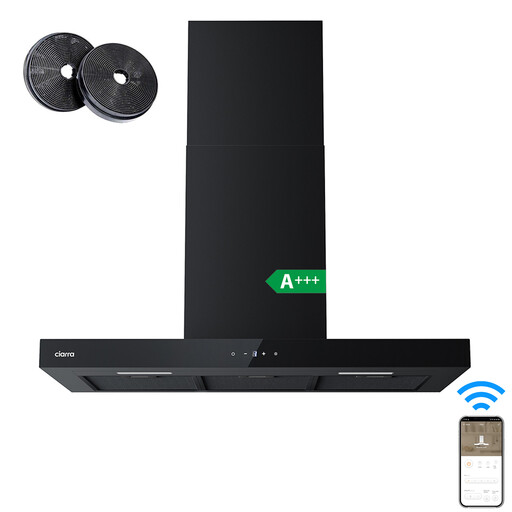 Image unavailable
Ciarra, 90 cm Wi-Fi wall-mounted cooker hood, 650 m³/h
Worth considering if a 90 cm wall-mounted hood suits your hob and you’re thinking about recirculation. The product title lists app control, four speeds with a Booster function and an extraction rate of 650 m³/h. Check the installation requirements and which filters suit your chosen setup.
View on Joybuy
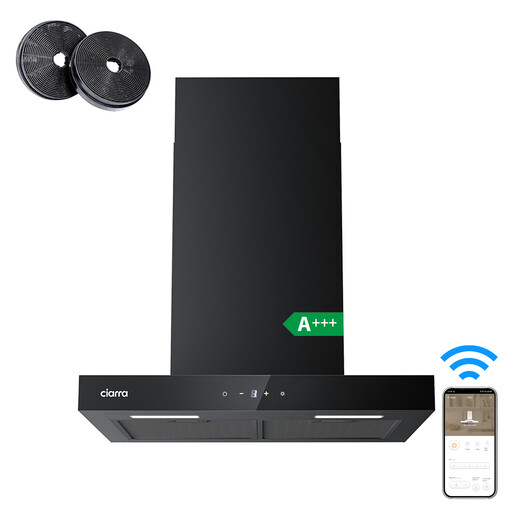 Image unavailable
Ciarra, 60 cm Wi-Fi wall-mounted cooker hood, 650 m³/h
Worth considering if you’re looking for a 60 cm wall-mounted hood that can be used in recirculation mode. The product title lists app control, four speeds with a Booster function and an extraction rate of 650 m³/h. Check the installation dimensions and compatible filters.
View on Joybuy
 Image unavailable
Ciarra CBCS6765B, 60 cm angled cooker hood
Worth considering if you want to compare both modes for a 60 cm angled wall-mounted hood. The product title lists extraction and recirculation, three speeds and an extraction rate of 580 m³/h. Check the installation requirements and which accessories you’ll need for your chosen mode.
View on Joybuy
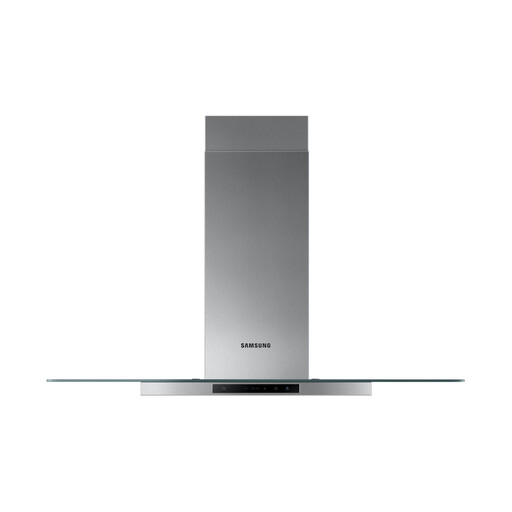 Image unavailable
Samsung NK36M5070FS, 90 cm wall-mounted cooker hood
Worth considering for an extraction setup if you have a compatible, dedicated outlet to the outside. The product title lists an extraction rate of 670 m³/h. If you’re thinking about recirculation instead, check which charcoal filter is compatible and what accessories are included with your chosen setup.
View on Joybuy
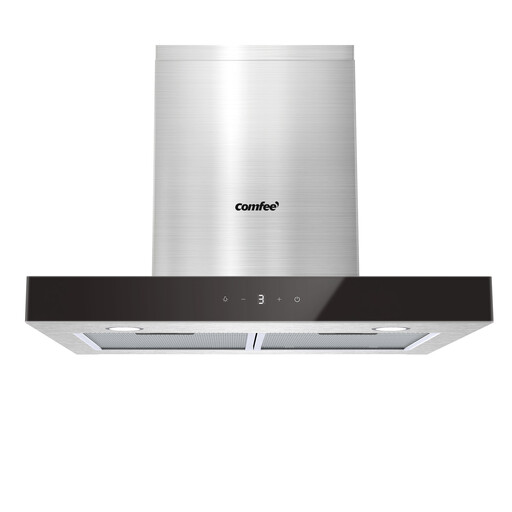 Image unavailable
Comfee TSHM77SS-60, 60 cm wall-mounted cooker hood
Worth considering if you want to choose between recirculation and extraction for a 60 cm wall-mounted hood. The product title lists both modes and an extraction rate of 650 m³/h. Find out which kit and filters are compatible with your planned installation.
View on Joybuy
Frequently asked questions
Can you connect a motorised cooker hood to shared ventilation?
No, not to a shared air outlet system. Article 14 of the Order of 24 March 1982, published on Légifrance, prohibits connecting an individual mechanical device, such as a hood with a fan, to one, whether the shared outlet is mechanical or uses natural draught.
Does a recirculating cooker hood send steam outside?
No: it returns treated air to the kitchen without using an outlet duct to the outside. Association Qualitel describes how this works. If your priority is to send the captured air out of your home, check whether a dedicated outlet is possible instead.
Can a cooker hood replace your home’s ventilation?
No: a cooker hood operates while you’re cooking, whereas your home’s ventilation provides air renewal beyond those periods. If a ventilation grille or air inlet doesn’t seem to be working properly, have it checked separately from your choice of cooker hood.
When should you replace the charcoal filter in a recirculating cooker hood?
Follow the replacement frequency recommended for the filter that’s compatible with your model and usage. For example, Electrolux states that its OdourClean Standard ECFB01ST filter lasts 4 to 6 months; this timescale doesn’t automatically apply to other filters.


