Which kitchen projects is this for?

Homes without a usable external duct

If no extraction route to the outside is available or permitted, your first priority should be a cooker hood that is genuinely compatible with recirculation, along with the correct kit and a suitable schedule for cleaning or replacing the carbon filters. UFC-Que Choisir and Bosch Home Appliances point out that the property and the chosen reference can determine whether this installation method is possible.

Open-plan kitchens and frequent cooking

To reduce the spread of smells, grease, fumes and steam into your living space, first check whether dedicated extraction is feasible. If not, recirculation requires particular attention to the carbon filter and its maintenance. UFC-Que Choisir distinguishes between these two operating methods.

Fully redesigned kitchen projects

The type of cooker hood should match the actual position of the hob: a wall-mounted model where there are no wall units, a built-in model beneath a suitable wall unit, or an island or ceiling solution for a central hob. UFC-Que Choisir, Bosch Home Appliances and Electrolux France describe these configurations.

Priorities before buying

External extraction

Consider it: if a dedicated duct leading outside already exists and the project is permitted for your property.

Plan for: the duct route, air inlet and minimising bends, all of which affect installation and performance.

Recirculation with a suitable filter

Consider it: when no external extraction is available, permitted or suitable for your project.

Plan for: the recirculation kit and carbon filter must match the model exactly, with regular maintenance required.

Priority What to check Your needs
Installation method Confirm that the reference is compatible with extraction or recirculation. For recirculation, check the matching kit and carbon filter; for extraction, make sure a dedicated duct exists. I want a cooker hood that can genuinely be installed in my home, rather than choosing a model before confirming which configuration is possible.
Fumes, smells and steam Compare the intended operating method: extraction sends the drawn-in air outside, while recirculation filters the air before returning it to the room. Compare the stated extraction rate with the kitchen’s volume and how open it is to the living area. I cook frequently or have an open-plan kitchen, and I want to limit the spread of smells, fumes and steam.
Noise during use Compare the stated decibel levels at minimum, maximum and intensive speeds using the same operating method. With extraction, take the duct layout, its length and its bends into account. In an open-plan kitchen or small home, I want to avoid having to run the hood at maximum power to achieve sufficient extraction.
Recirculation maintenance Identify the type and reference of the carbon filter: disposable, long-life or regenerable. Check its availability and follow the maintenance interval specified by the manufacturer. If I choose recirculation, I want to be able to maintain the filters without discovering the replacement requirements too late.

Mistakes to avoid

  • Choosing the design before the installation method

    A cooker hood may look perfect in your kitchen but still be unable to operate using the method required by your property. The choice between extraction and recirculation also affects maintenance, noise and everyday use.

    First confirm that a dedicated duct exists and that its use is permitted. If recirculation is necessary, check compatibility with the kit and filter specified for the model.

  • Underestimating carbon filters for recirculation

    The carbon filter helps remove smells when air is returned to the room. A missing, incompatible or poorly maintained filter will not deliver the expected results.

    Before buying, note the exact filter reference, its maintenance method and replacement interval. Electrolux France, for example, states a lifespan of 4 to 6 months for its OdourClean Standard ECFB01ST filter.

    Replacing or regenerating filters is a recurring consideration in everyday use, and requirements vary according to the compatible reference.

  • Comparing extraction rate and noise without specifying the method

    Extraction rates and noise levels may differ between extraction and recirculation. A single figure does not necessarily reflect the result in your installation.

    Compare the technical specifications for the method you will use, at the relevant speeds, then take the kitchen’s volume, openness and the hood’s position into account.

  • Planning extraction without checking the property rules

    Drilling through a wall, creating an outlet in the façade or altering shared building elements may require separate permissions in addition to buying the appliance.

    If you rent, obtain the landlord’s written permission before making any alteration. In a leasehold or shared-ownership building, check the building regulations and consult the managing agent before any project affecting communal areas or the external appearance; Légifrance requires such permissions to be governed by a general meeting.

Cooker hood brands to know

Bosch

Bosch offers cooker hoods and accessories for extraction or recirculation; its French documentation distinguishes between the two methods and the associated recirculation modules.

  • The brand states that the same hood can often be configured for both methods, depending on the reference.
  • Always check compatibility for the exact hood and the required kit; the results stated by the brand do not constitute an independent comparison.

Electrolux

Electrolux’s French product specifications cover wall-mounted and built-in cooker hoods, among others, with information on extraction rate, noise, filters and installation methods.

  • Some product specifications distinguish between extraction and recirculation data, as well as compatible standard and long-life filters.
  • These are manufacturer specifications: check them for the model, installation and kitchen concerned.

Roblin

Roblin offers wall-mounted, built-in and island solutions, with some models designed for extraction or recirculation depending on the reference.

  • The brand provides installation advice on air inlets, outlet diameter and minimising bends for extraction.
  • Check the chosen model’s compatibility and installation requirements before opting for an extraction solution.

Cooker hoods available on Joybuy

Joybuy options for wall-mounted cooker hoods advertised for extraction and recirculation, to consider for a hob positioned against a wall once you have confirmed your installation.
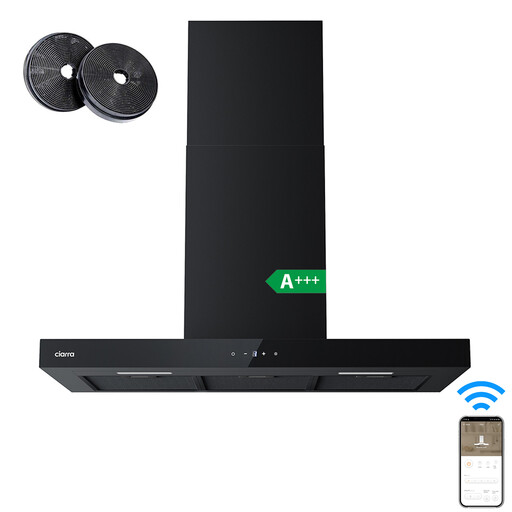
Ciarra 90 cm black Wi-Fi wall-mounted cooker hood

Ciarra 90 cm Wi-Fi wall-mounted cooker hood, 650 m³/h

For a hob positioned against a wall and a project requiring a wide cooker hood advertised for extraction or recirculation.

90 cm wide, stated maximum extraction rate of 650 m³/h, four speeds with booster, stated maximum of 59 dB and washable aluminium filters.

Check the figures for the installed operating method, the duct route for extraction and the future availability of CBCF003 carbon filters for recirculation.

Joybuy
Ciarra CBCS6765B 60 cm white angled wall-mounted cooker hood

Ciarra CBCS6765B 60 cm angled cooker hood, 580 m³/h

A 60 cm wall-mounted option advertised for a kitchen with extraction or recirculation.

Stated maximum extraction rate of 580 m³/h, three speeds, stated maximum of 64 dB, washable aluminium filter and advertised CBCF055 carbon filters.

Check the installation clearances above the hob and the data corresponding to the method permitted in your home.

Joybuy
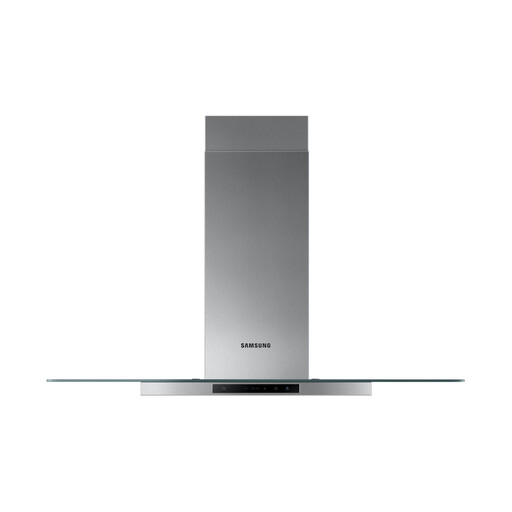
Samsung NK36M5070FS 90 cm decorative wall-mounted cooker hood

Samsung NK36M5070FS 90 cm wall-mounted cooker hood, 670 m³/h

Worth considering for a wall-mounted hob requiring a wide decorative cooker hood advertised for both installation methods.

90 cm wide, 150 mm external connection, four speeds, stated Boost extraction rate of 670 m³/h, stated maximum of 73 dB(A) and filter indicators.

For recirculation, a carbon filter is required but is not stated as included; check its reference before ordering.

Joybuy
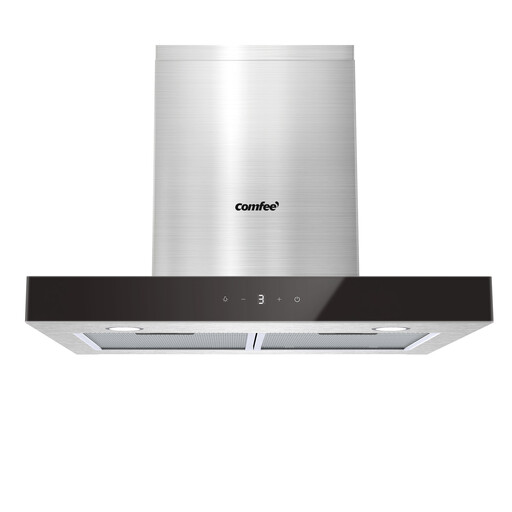
Comfee TSHM77SS-60 60 cm stainless steel wall-mounted cooker hood

Comfee TSHM77SS-60 60 cm wall-mounted cooker hood, 650 m³/h

For a 60 cm wall-mounted hob in a kitchen where extraction or recirculation is yet to be confirmed.

60 cm wide, stated maximum extraction rate of 650 m³/h, four speeds, stated maximum of 59 dB, adjustable chimney and five-layer washable aluminium filter.

Confirm the reference and whether the carbon filter or kit for recirculation is included before buying.

Joybuy
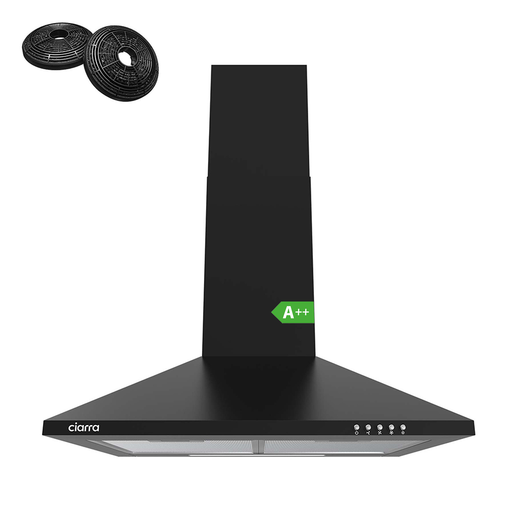
Ciarra 60 cm black wall-mounted cooker hood with button controls

Ciarra 60 cm black wall-mounted cooker hood with button controls

A compact wall-mounted cooker hood advertised as convertible between extraction and recirculation.

60 cm wide, three speeds from 221 to 367 m³/h, stated noise level from 51 to 63 dB depending on the speed and washable aluminium filters.

The CBCF002X2 carbon filter is identified for recirculation, but check whether it is actually included in the package.

Joybuy

Frequently asked questions

Can I connect a cooker hood to a mechanical ventilation system or chimney flue?

No. UFC-Que Choisir states that a cooker hood extraction duct must be used exclusively for that purpose, and that connecting it to a chimney or mechanical ventilation system is prohibited. Without a dedicated duct, consider a recirculation configuration compatible with the chosen model.

In a shared-ownership building, can I create or alter an external outlet?

Work affecting communal areas or the external appearance of the building may require authorisation from the general meeting, as provided for by Article 25 of the law of 10 July 1965 published by Légifrance. Check the building regulations and consult the managing agent before drilling or creating an outlet through the façade.

If I rent, do I need the landlord’s permission to create an extraction outlet?

Yes, when this involves altering the property. ANIL reminds tenants that they must not alter rented premises or equipment without the landlord’s written permission. Request approval before making any modification beyond reversible installation of the appliance.

Does a recirculating cooker hood also deal with water vapour?

Recirculation filters the air before returning it to the room, while extraction sends fumes and steam outside through a dedicated duct. If managing cooking-related humidity is a priority, extraction is preferable whenever it is technically feasible and permitted.

How do I choose between a wall-mounted, built-in and island cooker hood?

Choose the format once you have decided where the hob will go: wall-mounted against a wall without a wall unit, built-in beneath a suitable wall unit, or an island or ceiling hood for a central hob. Whatever the format, then confirm which extraction or recirculation method is compatible.